Psalm 49 – “Pedagogic Lesson About the Wealthy”

Hebrew-English Text
I. Summary
The psalmist condemns the wealthy.

II. Photo
The psalmist teaches a lesson: “Do not be afraid when a man becomes rich, when his household goods increase; for when he dies he can take none of it along; his goods cannot follow him down.” (vv. 17-18)

III. Select Verses    
2-3:  Hear this, all you peoples; give ear, all inhabitants of the world, men of all estates, rich and poor alike.
12: Their grave is their eternal home, the dwelling-place for all generations of those once famous on earth.
13: Man does not abide in honor; he is like the beasts that perish.
14-16:  Such is the fate of those who are self-confident, the end of those pleased with their own talk. Selah. Sheeplike they head for Sheol, with Death as their shepherd. The upright shall rule over them at daybreak, and their form shall waste away in Sheol till its nobility be gone. But God will redeem my life from the clutches of Sheol, for He will take me. Selah.
17-20: Do not be afraid when a man becomes rich, when his household goods increase;  for when he dies he can take none of it along; his goods cannot follow him down. Though he congratulates himself in his lifetime — “They must admit that you did well by yourself” — yet he must join the company of his ancestors, who will never see daylight again.

IV. Outline
1. Superscription
2-5. Exordium (introduction)
6-12. Lesson about the wealthy who are wicked
13. Refrain
14-16. Lesson about the righteous and wicked
17-20. Lesson about wealth
21. Refrain

V. Comment
No comment today. Stay tuned.

VI. Works Used
(see “Commentaries” page)
Collins, John J. “Introduction to the Hebrew Bible,” (Minneapolis: Fortress Press, 2004).
Craigie, Peter C. “Psalms 1-50” Word Biblical Commentary vol. 19 (Waco, Texas: Wordbooks, 1983).
Gerstenberger, Erhard S. “Psalms Part 1 with an Introduction to Cultic Poetry” Forms of Old Testament Literature (Michigan: Eerdmans, 1988).
Photo copied from http://farm4.static.flickr.com/3131/2888453842_8b76f26465_o.jpg

Psalm 48 – “Zion Hymn”

Hebrew-English Text
I. Summary
The psalmist recounts a victory in Zion and exhorts the people to celebrate around God’s city.

II. Photo
The psalmist recalls a battle: “[The enemies] were seized there with a trembling, like a woman in the throes of labor!” (v. 7)

III. Select Verses
2-3:  The LORD is great and much acclaimed in the city of our God, His holy mountain — fair-crested, joy of all the earth, Mount Zion, summit of Zaphon, city of the great king.
5-8: See, the kings joined forces; they advanced together. At the mere sight of it they were stunned, they were terrified, they panicked;  they were seized there with a trembling, like a woman in the throes of labor, as the Tarshish fleet was wrecked in an easterly gale.
12: Let Mount Zion rejoice! Let the towns of Judah exult, because of Your judgments.
13-15: Walk around Zion, circle it; count its towers, take note of its ramparts; go through its citadels, that you may recount it to a future age. For God — He is our God forever; He will lead us evermore.

IV. Outline

1. Superscription
2-4. Praise of God and Zion
5-9. Historical account
    5. Account of threat
    6-8. Account of victory
    9a. Affirmation statement
    9b. Wish
10-11. Invocations, praise
12. Summons for the Judaean hills to praise
13-14. Summons to procession around Zion
15. Rationale

V. Comment
Like Psalms 76, 84, 87 and 122, Psalm 48 is classified by many as a Song of Zion. Verse 3 describes “God’s holy mountain” as “fair-crested, joy of all the earth, Mount Zion, summit of Zaphon, city of the great king.” What is “Zaphon” and why is it equated with Zion? While the answer to this question may never be known, Hector Avalos describes Mount Zaphon in the Anchor Bible Dictionary as “A mountain identified with modern Jebel ‘el-Aqra{ (35°59’N; 36°00’E), and located near the mouth of the Orontes River in N Syria. Mt. Zaphon was the sacred mountain of the storm god Baal-Hadad in ancient Canaanite mythology. It was also known as Mt. Casius in classical sources, and Mt. Hazzi in Hurrian texts. Aside from the passages discussed below, zaphon is usually the general designation for “north” in the Hebrew Bible…
“Recent discussion of Mt. Zaphon has focused on the function of sacred mountains in Canaanite religion, especially as exemplified in Ugaritic texts… Mt. Zaphon was a feasting place for the gods and the site of Baal’s proclamations. It was also where Baal and his archrival Mot engaged in a cosmic battle. The mountain itself appears as a deity in many Ugaritic offering lists and in Phoenician personal names such as עבדצפן, “servant of Zaphon.” [“Zaphon, Mount” in ABD VI, 1040-1041]

VI. Works Used
(see “Commentaries” page)
Collins, John J. “Introduction to the Hebrew Bible,” (Minneapolis: Fortress Press, 2004).
Craigie, Peter C. “Psalms 1-50” Word Biblical Commentary vol. 19 (Waco, Texas: Wordbooks, 1983).
Gerstenberger, Erhard S. “Psalms Part 1 with an Introduction to Cultic Poetry” Forms of Old Testament Literature (Michigan: Eerdmans, 1988).
Photo copied from http://www.claritypointhealthcare.com/site/wp-content/uploads/2010/03/pregnancy.jpg

Psalm 47 – “Hymnic Praise and Thanks”

Hebrew-English Text
I. Summary
The psalmist praises God’s dominion over the nations.

II. Photo
The people are called to praise: “All you peoples, clap your hands, raise a joyous shout for God!” (v. 2)

III. Select Verses    
2-5: All you peoples, clap your hands, raise a joyous shout for God. For the LORD Most High is awesome, great king over all the earth; He subjects peoples to us, sets nations at our feet. He chose our heritage for us, the pride of Jacob whom He loved. Selah.
6-8:  God ascends midst acclamation; the LORD, to the blasts of the horn. Sing, O gods; sing, O sing to our king; for God is king over all the earth; sing a hymn.
9-10: God reigns over the nations; God is seated on His holy throne. The great of the peoples are gathered together, the retinue of Abraham’s God; for the guardians of the earth belong to God; He is greatly exalted.

IV. Outline

1. Superscription
2-5. Hymn #1
    2. Call to worship
    3. Rationale
    4-5. Thankful praise
6-10. Hymn #2
    6. Introductory praise
    7. Call to worship
    8. Rationale
    9-10. Praise

V. Comment
Psalm 47 is comprised of two hymnic sections, one in vv. 2-5 and the other in vv. 6-10. The sections are divided by the enigmatic word “selah”. In the received version of the masoretic text, the second hymn is directed towards אלהים “the gods” (v. 7). Yet, the Septuagint and many medieval manuscripts have  זמרו לאלהים “sing to God” instead of  זמרו אלהים “sing, O gods,” i.e., the psalm is directed towards the people, not the gods of the nations. Needless to say, further research is required.

In terms of classification, many consider Psalm 47 to be an “enthronement psalm.” Gerstenberger writes: “Psalm 47 belongs – in terms of form and contents – to Psalms 93; 96-99, even if the much-debated formula ‘Yahweh is/has become king’ is missing (but see vv. 6, 9).” (195)

VI. Works Used
(see “Commentaries” page)
Collins, John J. “Introduction to the Hebrew Bible,” (Minneapolis: Fortress Press, 2004).
Craigie, Peter C. “Psalms 1-50” Word Biblical Commentary vol. 19 (Waco, Texas: Wordbooks, 1983).
Gerstenberger, Erhard S. “Psalms Part 1 with an Introduction to Cultic Poetry” Forms of Old Testament Literature (Michigan: Eerdmans, 1988).
Photo copied from http://churchmusictoday.files.wordpress.com/2011/02/clapping.jpg

Psalm 46 – “Proclamations of Confidence”

Hebrew-English Text
I. Summary
The psalmist praises God and places his trust in him.

II. Photo
The psalmist praises God: “Nations rage, kingdoms topple; at the sound of his thunder the earth dissolves!” (v. 7)

III. Select Verses    
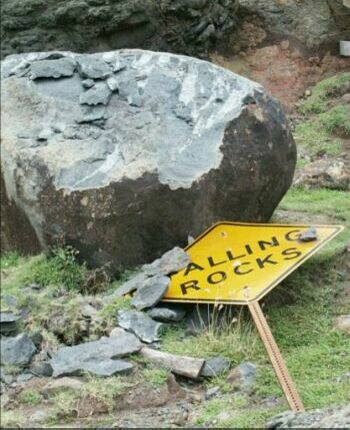
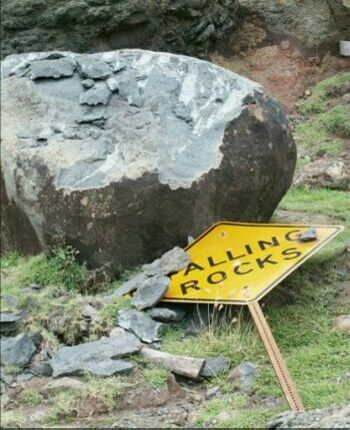
2-4: God is our refuge and stronghold, a help in trouble, very near. Therefore we are not afraid though the earth reels, though mountains topple into the sea — its waters rage and foam; in its swell mountains quake. Selah.
7-8: Nations rage, kingdoms topple; at the sound of His thunder the earth dissolves. The LORD of hosts is with us; the God of Jacob is our haven. Selah.
9-10:  Come and see what the LORD has done, how He has wrought desolation on the earth. He puts a stop to wars throughout the earth, breaking the bow, snapping the spear, consigning wagons to the flames.
11: “Desist! Realize that I am God! I dominate the nations; I dominate the earth.”

IV. Outline
1. Superscription
2-4. Proclamation of confidence #1
5-8. Proclamation of confidence #2
9-10. Pedagogic praise
11. Oracle
12. Proclamation of confidence #3

V. Comment
Psalm 46 is categorized by many scholars as a “Psalm of Confidence.” In terms of its structure, Craigie writes: “The psalm falls into three units, each of approximately equivalent length, each separated by the word SELAH. (1) God’s refuge in the context of natural phenomena (vv 2–4); (2) God’s refuge in the context of the nations of the world (vv 5–8); (3) God’s refuge in the context of both natural and national powers (vv 9–12). It is possible that the twice repeated refrain (vv 8, 12) originally occurred also after v 5 (cf BHS, note).”

VI. Works Used
(see “Commentaries” page)
Collins, John J. “Introduction to the Hebrew Bible,” (Minneapolis: Fortress Press, 2004).
Craigie, Peter C. “Psalms 1-50” Word Biblical Commentary vol. 19 (Waco, Texas: Wordbooks, 1983).
Gerstenberger, Erhard S. “Psalms Part 1 with an Introduction to Cultic Poetry” Forms of Old Testament Literature (Michigan: Eerdmans, 1988).
Photo copied from http://www.gamesdash.com/limg/1/391/falling-rocks.jpg

Psalm 45 – “Message for a Bride and Groom”

Hebrew-English Text
I. Summary
The psalmist praises a bride and groom and encourages them to act appropriately.

II. Photo
The psalmist comforts the bride: “Take heed, lass, and note, incline your ear: forget your people and your father’s house, and let the king be aroused by your beauty; since he is your lord, bow to him!” (vv. 11-12)

III. Select Verses    
3-6: You are fairer than all men; your speech is endowed with grace; rightly has God given you an eternal blessing. Gird your sword upon your thigh, O hero, in your splendor and glory; in your glory, win success; ride on in the cause of truth and meekness and right; and let your right hand lead you to awesome deeds. Your arrows, sharpened, [pierce] the breast of the king’s enemies; peoples fall at your feet. Your divine throne is everlasting; your royal scepter is a scepter of equity.
8: You love righteousness and hate wickedness; rightly has God, your God, chosen to anoint you with oil of gladness over all your peers.
9-10: All your robes are fragrant with myrrh and aloes and cassia; from ivoried palaces lutes entertain you. Royal princesses are your favorites; the consort stands at your right hand, decked in gold of Ophir.
11-12: Take heed, lass, and note, incline your ear: forget your people and your father’s house, and let the king be aroused by your beauty; since he is your lord, bow to him!
17: Your sons will succeed your ancestors; you will appoint them princes throughout the land.

IV. Outline
1. Superscription
2. Introduction
3-10. Praise/charge to the royal man
11-12. Charge to the bride
13-16. Praise to the bride
17-18. Blessing to the royal man

V. Comment
Psalm 45 has a singer’s introduction (v. 2), a message to a royal man (vv. 3-10), a message to a woman (vv. 11-16), and a blessing (vv. 17-18). While it seems that the psalm was used for a wedding ceremony, the question is “Whose wedding?” The psalm has many allusions to royalty, and Gerstenberger writes: “There are basically three options for interpreting this psalm: (1) as a popular love and wedding song, which addresses bride and bridegroom as ‘queen’ and ‘king’; (2) taken at face value, as a royal wedding song for the time of the Israelite monarchy; and (3) allegorically, as a song of the postexilic community extolling Yahweh’s (or his Messiah’s) betrothal with Israel (see Isa 62:1-5; Ezek 16; 23). Arguments can certainly be adduced in favor of the first and the last hypotheses, but the second possibility seems the most convincing. A singer of the royal court takes part in the official wedding festivities either in Jerusalem or Samaria. He extols bridegroom and bride according to the popular, royal, and mythic concepts that are common in his contemporary culture.” (189)

VI. Works Used
(see “Commentaries” page)
Collins, John J. “Introduction to the Hebrew Bible,” (Minneapolis: Fortress Press, 2004).
Craigie, Peter C. “Psalms 1-50” Word Biblical Commentary vol. 19 (Waco, Texas: Wordbooks, 1983).
Gerstenberger, Erhard S. “Psalms Part 1 with an Introduction to Cultic Poetry” Forms of Old Testament Literature (Michigan: Eerdmans, 1988).
Photo copied from http://www.lifesabitchbooks.com/wp-content/uploads/2009/09/crying_bride.jpg

Psalm 44 – “Historical Petition”

Hebrew-English Text
I. Summary
The psalmist describes God’s past deeds and asks for a military victory.

II. Photo
God has given up on his people: “You sell Your people for no fortune, You set no high price on them.” (v. 13)

III. Select Verses    
2-4:  We have heard, O God, our fathers have told us the deeds You performed in their time, in days of old. With Your hand You planted them, displacing nations; You brought misfortune on peoples, and drove them out. It was not by their sword that they took the land, their arm did not give them victory, but Your right hand, Your arm, and Your goodwill, for You favored them.
10-17: Yet You have rejected and disgraced us; You do not go with our armies.  You make us retreat before our foe; our enemies plunder us at will. You let them devour us like sheep; You disperse us among the nations. You sell Your people for no fortune, You set no high price on them.  You make us the butt of our neighbors, the scorn and derision of those around us. You make us a byword among the nations, a laughingstock among the peoples. I am always aware of my disgrace; I am wholly covered with shame at the sound of taunting revilers, in the presence of the vengeful foe.
23: It is for Your sake that we are slain all day long, that we are regarded as sheep to be slaughtered.
24-26: Rouse Yourself; why do You sleep, O Lord? Awaken, do not reject us forever! Why do You hide Your face, ignoring our affliction and distress? We lie prostrate in the dust; our body clings to the ground!

IV. Outline
1. Superscription
2a. Invocation
2b-4. Pedagogic history lesson
5-9. Affirmation of trust, praise
10-17. Complaint
18-23. Proclamation of innocence, complaint
24. Petition
25-26. Rationale/complaint
27. Petition

V. Comment
Psalm 44 speaks about God’s role in the battles of Israel. When would this psalm have been composed? Like many psalms, the answer to this question will probably never be known. Craigie writes: “The setting in which the psalm was used is not known with certainty. It is unlikely that the psalm was used merely with the threat of disaster facing the nation. Thus 2 Chr 20:4–13, in which Jehoshaphat proclaimed a fast in Judah in view of the impending military attack by Moab and Ammon, does not provide in principle an appropriate type of setting for Ps 44. The lament of this psalm presupposes the battle has already been lost (vv 10–11), prisoners have been taken and made slaves (v 13), and the army has been decimated in a long day of slaughter (v 23). The lament, then, was used following a defeat, not merely when disaster threatened. And though it is possible to suppose a national setting in the temple in Jerusalem, it is more likely that one should think of the lament being used at the end of the day of battle and defeat. Thus Ps 44 should be seen as the precise counterpart of the victory hymn (e.g. Judg 5); just as the latter was employed after battle to celebrate victory, so this psalm was used to lament defeat.” (332)

VI. Works Used
(see “Commentaries” page)
Collins, John J. “Introduction to the Hebrew Bible,” (Minneapolis: Fortress Press, 2004).
Craigie, Peter C. “Psalms 1-50” Word Biblical Commentary vol. 19 (Waco, Texas: Wordbooks, 1983).
Gerstenberger, Erhard S. “Psalms Part 1 with an Introduction to Cultic Poetry” Forms of Old Testament Literature (Michigan: Eerdmans, 1988).
Photo copied from http://annieandersonblog.com/wp-content/uploads/2008/09/pennies.jpg

Psalm 43 – “Petition of Longing – Part II”

Hebrew-English Text
I. Summary
The psalmist asks for salvation and expresses his devotion to God.

II. Photo
The psalmist asks God for guidance: “Send forth your light and your truth –
they will lead me!” (v. 3)

III. Select Verses
(The entire psalm)
1-3a: Vindicate me, O God, champion my cause against faithless people; rescue me from the treacherous, dishonest man. For You are my God, my stronghold; why have You rejected me? Why must I walk in gloom, oppressed by the enemy? Send forth Your light and Your truth;
3b-4: They will lead me; they will bring me to Your holy mountain, to Your dwelling-place, that I may come to the altar of God, God, my delight, my joy; that I may praise You with the lyre, O God, my God.
5: Why so downcast, my soul, why disquieted within me? Have hope in God; I will yet praise Him, my ever-present help, my God.

IV. Outline
1-3a. Complaint/petition/affirmation of confidence
3b-4. Rationale: vow
5. Third refrain

V. Comment
No comment today. Stay tuned.

VI. Works Used
(see “Commentaries” page)
Collins, John J. “Introduction to the Hebrew Bible,” (Minneapolis: Fortress Press, 2004).
Craigie, Peter C. “Psalms 1-50” Word Biblical Commentary vol. 19 (Waco, Texas: Wordbooks, 1983).
Gerstenberger, Erhard S. “Psalms Part 1 with an Introduction to Cultic Poetry” Forms of Old Testament Literature (Michigan: Eerdmans, 1988).
Photo taken from http://www.mymodernmet.com/profiles/blogs/rays-of-light-16-photos

Psalm 42 – “Petition of Longing – Part I”

Hebrew-English Text
I. Summary
The psalmist describes his yearning for God.

II. Photo
The psalmist is nostalgic: “When I think of this, I pour out my soul: how I walked with the crowd, moved with them, the festive throng, to the House of God with joyous shouts of praise!” (v. 5)

III. Select Verses    
2-4: Like a hind crying for water, my soul cries for You, O God; my soul thirsts for God, the living God; O when will I come to appear before God! My tears have been my food day and night; I am ever taunted with, “Where is your God?”
6: Why so downcast, my soul, why disquieted within me? Have hope in God; I will yet praise Him for His saving presence.
7-8:  O my God, my soul is downcast; therefore I think of You in this land of Jordan and Hermon, in Mount Mizar, where deep calls to deep in the roar of Your cataracts; all Your breakers and billows have swept over me.
10-11: I say to God, my rock, “Why have You forgotten me, why must I walk in gloom, oppressed by my enemy?” Crushing my bones, my foes revile me, taunting me always with, “Where is your God?”

IV. Outline
1. Superscription
2-5. Invocation, devotional complaint
6. First refrain
7-11. Devotional complaint
11-12. Second refrain

V. Comment
Note that the refrains in vv. 6, 12 and 43:5 are almost exactly the same: “Why so downcast, my soul, why disquieted within me? Have hope in God; I will yet praise Him, my ever-present help, my God.” Because of this, many scholars understand pss 42-43 as being one unit. Craigie writes: “There is extensive agreement among the majority of interpreters that Pss 42 and 43 should be interpreted as a single psalm, for the following reasons: (a) many [Hebrew manuscripts] present the psalms as a single unit; (b) Ps 43 has no title, which is surprising in Book II of the Psalter; and (c) they are joined by a common refrain (42:6, 12; 43:5). The reason for the separation into the two extant units is not known; it may originate with [the Septuagint], which provides a title for Ps 43 (“a psalm of David”), which in turn may have reflected an interpretation of the distinction between lament (Ps 42) and prayer (Ps 43). If the division of the original psalm was as early as [the Septuagint], then it is also the case that the unity (after the division) was recognized from an early period, at least as early as the time of Eusebius.” (326)

VI. Works Used
(see “Commentaries” page)
Collins, John J. “Introduction to the Hebrew Bible,” (Minneapolis: Fortress Press, 2004).
Craigie, Peter C. “Psalms 1-50” Word Biblical Commentary vol. 19 (Waco, Texas: Wordbooks, 1983).
Gerstenberger, Erhard S. “Psalms Part 1 with an Introduction to Cultic Poetry” Forms of Old Testament Literature (Michigan: Eerdmans, 1988).
Photo taken from http://blog.imagespacemedia.com/wp-content/uploads/2010/07/crowd.jpg

Psalm 41 – “Petition for Health”

Hebrew-English Text
I. Summary
The psalmist praises the righteous, denounces his enemies, and asks God to raise him from his sickbed.

II. Photo
God heals the righteous: “The Lord will sustain him on his sickbed; [He] shall wholly transform his bed of suffering.” (v. 4)

III. Select Verses    
2-4: Happy is he who is thoughtful of the wretched; in bad times may the LORD keep him from harm. May the LORD guard him and preserve him; and may he be thought happy in the land. Do not subject him to the will of his enemies. The LORD will sustain him on his sickbed; You shall wholly transform his bed of suffering.
5: I said, “O LORD, have mercy on me, heal me, for I have sinned against You.”
6: My enemies speak evilly of me, “When will he die and his name perish?”
10: My ally in whom I trusted, even he who shares my bread, has been utterly false to me.
14: Blessed is the LORD, God of Israel, from eternity to eternity. Amen and Amen.

IV. Outline
1. Superscription
2-4. Pedagogic description of the righteous
5. Invocation, initial plea, confession
6-10. Complaint: Enemies and past friends
11. Petition/imprecation
12-13. Hope/confidence
14. Conclusion of Psalm Book #1

V. Comment
No comment today. Stay tuned.

VI. Works Used
(see “Commentaries” page)
Collins, John J. “Introduction to the Hebrew Bible,” (Minneapolis: Fortress Press, 2004).
Craigie, Peter C. “Psalms 1-50” Word Biblical Commentary vol. 19 (Waco, Texas: Wordbooks, 1983).
Gerstenberger, Erhard S. “Psalms Part 1 with an Introduction to Cultic Poetry” Forms of Old Testament Literature (Michigan: Eerdmans, 1988).
Photo taken from http://ww1.prweb.com/prfiles/2005/06/28/256151/PatientComplaintHandlingSoftware.jpg

Psalm 40 – “Proclamation of Trust; Petition”

Hebrew-English Text
I. Summary
The psalmist proclaims his devotion to God and asks to be saved from his enemies.

II. Photo
The psalmist was saved: “[God] lifted me out of the miry pit, the slimy clay, and set my feet on a rock, steadied my legs!” (v. 3)

III. Select Verses    
2-4:  I put my hope in the LORD; He inclined toward me, and heeded my cry.  He lifted me out of the miry pit, the slimy clay, and set my feet on a rock, steadied my legs. He put a new song into my mouth, a hymn to our God. May many see it and stand in awe, and trust in the LORD.
5: Happy is the man who makes the LORD his trust, who turns not to the arrogant or to followers of falsehood.
6-8: You, O LORD my God, have done many things; the wonders You have devised for us cannot be set out before You; I would rehearse the tale of them, but they are more than can be told.  You gave me to understand that You do not desire sacrifice and meal offering; You do not ask for burnt offering and sin offering.  Then I said, “See, I will bring a scroll recounting what befell me.”
12-13: O LORD, You will not withhold from me Your compassion; Your steadfast love will protect me always. For misfortunes without number envelop me; my iniquities have caught up with me; I cannot see; they are more than the hairs of my head; I am at my wits’ end.
15-16: Let those who seek to destroy my life be frustrated and disgraced; let those who wish me harm fall back in shame. Let those who say “Aha! Aha!” over me be desolate because of their frustration.

IV. Outline

1. Superscription
2-11. Proclamation of trust/devotion/innocence
    2-4a. Account of trouble, faith, and salvation
    4b. Wish: People will trust in God
    5. Rationale
    6. Invocation, Hymnic praise
    7-9a. Description of service
    9b-11. Proclamation of innocence/faith
12-18. Petition
    12. Initial plea
    13. Complaint
    14. Petition
    15-16. Imprecation
    17. Wish/blessing
    18. Final plea

V. Comment
Like Psalm 27, Psalm 40 appears to be two psalms joined together. Craigie summarizes the argument as follows: “Psalm 40 is commonly identified as a composite psalm containing two originally independent units which have been linked into the present unified whole: A, vv 2–11 and B, vv 12–18 (though there is disagreement among holders of this view concerning where the precise point of transition might be; v 12 and/or v 13 could be viewed as a redactional link). The evidence giving rise to the two-psalm hypothesis is essentially twofold. (1) In formcritical terms, A is an individual thanksgiving psalm and B is an individual lament. (2) Verses 14–18 of this psalm are duplicated (with only minor changes) in Ps 70. If the latter is an independent composition, then Ps 40 might either be a composite work in which two psalms are joined by an editor, or a new composition in which the poet takes an older psalm (Ps 70) and develops it by additions into a new work. The two-psalm hypothesis, whatever its faults, is based on a particular interpretation of the evidence and has many adherents.” (318-319)

Like Gerstenberger, Craigie disagrees with this position: “Yet, for a number of reasons, the two-psalm hypothesis must be rejected. The problem and evidence are directly parallel to those encountered in the study of Ps 27; the argument for unity and the overall interpretation follow essentially along similar lines. First, it should be noted that the language in the two supposed “parts” of the psalm is intimately interrelated. Forms of the following roots are found in both “parts” of the psalm (the list omits duplicate forms in one or other part). (1) bvj (vv 6, 18); (2) Mxo (vv 6, 13); (3) rpsm (vv 6, 13); (4) rma (vv 8, 11, 16, 17); (5) har (vv 4, 13); (6) Xph (vv 7, 9, 15); (7) hxr (vv 9, 14);  howvt (vv 11, 17). The overlap in language and repetitive style strongly suggest a single, unified composition.

“But more persuasive than the argument of language, is that based on form and setting. As was the case in Ps 27, the apparent diversity of form is in reality not diversity at all; the two-psalm hypothesis, in fact, rises in part from too rigid a view of form-critical categories. The essence of Ps 40 is that it is a part of a liturgy, and the formal and substantial changes within the psalm are to be understood against the background of progression within the liturgy. The liturgy begins with thanksgiving, thereby establishing precedent and laying a foundation for what is to follow. It then moves on to lament and prayer; it is only in the prayer that the overall purpose of the liturgy emerges, and the preparatory role of the thanksgiving is clarified.” (319)

VI. Works Used
(see “Commentaries” page)
Collins, John J. “Introduction to the Hebrew Bible,” (Minneapolis: Fortress Press, 2004).
Craigie, Peter C. “Psalms 1-50” Word Biblical Commentary vol. 19 (Waco, Texas: Wordbooks, 1983).
Gerstenberger, Erhard S. “Psalms Part 1 with an Introduction to Cultic Poetry” Forms of Old Testament Literature (Michigan: Eerdmans, 1988).
Photo taken from