Psalm 78 – “Historical Sermon”

Hebrew-English Text
I. Summary
The psalmist recounts the people’s history from the exodus until the monarchy.

II. Photo
God performed wonders in Egypt: “He killed their vines with hail, their sycamores with frost.” (v. 47)

III. Select Verses    
2-3: I will expound a theme, hold forth on the lessons of the past, things we have heard and known, that our fathers have told us.
6-8: That a future generation might know — children yet to be born — and in turn tell their children that they might put their confidence in God, and not forget God’s great deeds, but observe His commandments, and not be like their fathers, a wayward and defiant generation, a generation whose heart was inconstant, whose spirit was not true to God.
13-16: He split the sea and took them through it; He made the waters stand like a wall. He led them with a cloud by day, and throughout the night by the light of fire. He split rocks in the wilderness and gave them drink as if from the great deep. He brought forth streams from a rock and made them flow down like a river.
19-20: They spoke against God, saying, “Can God spread a feast in the wilderness?  True, He struck the rock and waters flowed, streams gushed forth; but can He provide bread? Can He supply His people with meat?”
42-51: They did not remember His strength, or the day He redeemed them from the foe; how He displayed His signs in Egypt, His wonders in the plain of Zoan. He turned their rivers into blood; He made their waters undrinkable. He inflicted upon them swarms of insects to devour them, frogs to destroy them. He gave their crops over to grubs, their produce to locusts. He killed their vines with hail, their sycamores with frost. He gave their beasts over to hail, their cattle to lightning bolts.  He inflicted His burning anger upon them, wrath, indignation, trouble, a band of deadly messengers.  He cleared a path for His anger; He did not stop short of slaying them, but gave them over to pestilence. He struck every first-born in Egypt, the first fruits of their vigor in the tents of Ham.
67-68: He rejected the clan of Joseph; He did not choose the tribe of Ephraim.  He did choose the tribe of Judah, Mount Zion, which He loved.
70-72: He chose David, His servant, and took him from the sheepfolds. He brought him from minding the nursing ewes to tend His people Jacob, Israel, His very own. He tended them with blameless heart; with skillful hands he led them.

IV. Outline

1a. Superscription
1b-8. Exordium (introduction)
9-72. Historical lesson
    9-11. The failings of Ephraim
    12-14. Egypt
    15-16. The wilderness
    17-20. Doubting God
    21-22. Punishment
    23-29. God brings food
    30-33. Punishment
    34-35. Repentance
    36-37. Relapse
    38-39. God’s restraint
    40-41. The defiant nature of Israel
    42-51. Egypt
    52-53. The wilderness
    54-55. Settling the land of Israel
    56-58. Sinning in the land
    59-64. Punishment
    65-66. God the warrior
    67-68. Israel and Judah
    69. The temple
    70-72. David

V. Comment
Psalm 78, which is the second longest psalm in the Psalter, tells Israel’s history from the time of the exodus until the divided monarchy. Gerstenberger writes: “[The psalm] does not want simply to teach history, but to exemplify present faith in the light of a few historical situations… Edification of the community was the chief purpose of the liturgical teams, who would work on the texts to use them in solemn assemblies. This goal would include strengthening the faith and conscience of members of a Yahweh congregation.” (93, 98)

VI. Works Used
(see “Commentaries” page)
Gerstenberger, Erhard S. “Psalms Part 1 with an Introduction to Cultic Poetry” Forms of Old Testament Literature (Michigan: Eerdmans, 1988).
Tate, Marvin. “Psalms 51-100” Word Biblical Commentary vol. 20 (Waco, Texas: Wordbooks, 1990).
Photo copied from http://img.wallpaperstock.net:81/winter-frost-branches-wallpapers_1266_1600x1200.jpg

Psalm 77 – “Complaint; Hymnic Praise”

Hebrew-English Text
I. Summary
The psalmist questions God’s current behavior but praises his past actions.

II. Photo
The psalmist complains: “You have held my eyelids open; I am overwrought, I cannot speak.” (v. 5)

III. Select Verses    
4: I call God to mind, I moan, I complain, my spirit fails. Selah.
6-11: My thoughts turn to days of old, to years long past. I recall at night their jibes at me; I commune with myself; my spirit inquires, “Will the Lord reject forever and never again show favor? Has His faithfulness disappeared forever? Will His promise be unfulfilled for all time?  Has God forgotten how to pity? Has He in anger stifled His compassion?” Selah. And I said, “It is my fault that the right hand of the Most High has changed.”
14: O God, Your ways are holiness; what god is as great as God?
16-21: By Your arm You redeemed Your people, the children of Jacob and Joseph. Selah. The waters saw You, O God, the waters saw You and were convulsed; the very deep quaked as well. Clouds streamed water; the heavens rumbled; Your arrows flew about; Your thunder rumbled like wheels; lightning lit up the world; the earth quaked and trembled. Your way was through the sea, Your path, through the mighty waters; Your tracks could not be seen. You led Your people like a flock in the care of Moses and Aaron.

IV. Outline
1. Superscription
2-4. Description of unanswered prayer
5-11. Complaint
12-13. Hymnic introduction
14-21. Hymnic praise

V. Comment
No comment today. Stay tuned.

VI. Works Used
(see “Commentaries” page)
Gerstenberger, Erhard S. “Psalms Part 1 with an Introduction to Cultic Poetry” Forms of Old Testament Literature (Michigan: Eerdmans, 1988).
Tate, Marvin. “Psalms 51-100” Word Biblical Commentary vol. 20 (Waco, Texas: Wordbooks, 1990).
Photo copied from http://strokerecovery.com/wp-content/uploads/2011/01/tired-man.jpg

Psalm 76 – “Hymnic Address”

Hebrew-English Text
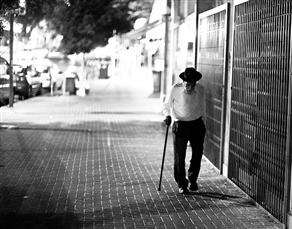
I. Summary
The psalmist praises God and urges his audience to offer sacrifices.

II. Photo
God dwells in Israel: “God has made Himself known in Judah, His name is great in Israel; Salem became His abode; Zion, His den.” (vv. 2-3)

III. Select Verses    
2-4: God has made Himself known in Judah, His name is great in Israel; Salem became His abode; Zion, His den. There He broke the fiery arrows of the bow, the shield and the sword of war. Selah.
5-8: You were resplendent, glorious, on the mountains of prey. The stout-hearted were despoiled; they were in a stupor; the bravest of men could not lift a hand. At Your blast, O God of Jacob, horse and chariot lay stunned. O You! You are awesome! Who can withstand You when You are enraged?
11: The fiercest of men shall acknowledge You, when You gird on the last bit of fury.
12: Make vows and pay them to the LORD your God; all who are around Him shall bring tribute to the Awesome One.

IV. Outline
1. Superscription
2-5. Hymnic praise
6-11. Hymnic direct address
12. Call to worship
13. Rationale

V. Comment
Psalm 76 is a hymn that praises God’s past deeds and his might. The word  hls  “selah” appears in vv. 4, 10. While it closes a third-person address in v. 4, it appears within the second-person address in v. 11. As Craigie notes in an excurcus, “Both the etymology of the term and its precise significance remain uncertain. It is used sometimes at the end of sections which may be equivalent to strophes or stanzas (e.g. Ps 3:3, 5), sometimes at the end of a psalm (e.g. Ps 3:9), sometimes after what appears to be a quotation (e.g. Ps 44:9), but sometimes no evident significance may be determined from its location; thus it is used in Ps 68:8 in the middle of what is probably a quotation from an ancient passage of Hebrew poetry. The wide distribution of the term throughout the Psalter, and throughout the collections within the Psalter, probably indicates that the use of the word goes back to ancient times, though whether the usage goes back to the time of the composition of the psalms within which it appears cannot be certain.
“One factor which seems to be fairly certain is that the term has some kind of musical significance, either with respect to the singing of the psalm or with respect to its musical accompaniment. With very few exceptions, the term is used in psalms which have titles; the majority of the titles identify the psalms containing hls with David or the Levitical singers, and about 75 percent of the titles also make reference to the “musical director” or “choirmaster.”
“A variety of theories, some ancient and some modern, have offered possible solutions to the meaning of the term:

  • (i) G rendered the Hebrew term by dia¿yalma, which might be taken to imply “pause,” or “instrumental interlude,” or even “louder.”
  • (ii) The Palestinian Jewish tradition, as represented in the Targum and followed by some early Christian interpreters such as Jerome, took the term to mean “for ever,” though no precise etymological basis can be found for this meaning for the term. The implication would be that a benediction or chorus was to be sung at this point in the psalm.
  • (iii) A third possible interpretation is to understand the term as referring to points in the use of the song in the context of worship at which the congregation prostrated themselves on the ground in obeisance before God (see S. Mowinckel, The Psalms in Israel’s Worship II 211)…


“With respect to the interpretation of the psalms in which the word is used, it must be admitted that in the light of current knowledge no precise significance can be attributed to hls. However, it may serve as a useful reminder to the modern reader of the Psalms that many psalms were initially sung with musical accompaniment. And in terms of probabilities, the tradition preserved by G should probably be considered as providing the most likely significance of the term.” (Psalms 1-50, pp. 76-77)

VI. Works Used
(see “Commentaries” page)
Gerstenberger, Erhard S. “Psalms Part 1 with an Introduction to Cultic Poetry” Forms of Old Testament Literature (Michigan: Eerdmans, 1988).
Tate, Marvin. “Psalms 51-100” Word Biblical Commentary vol. 20 (Waco, Texas: Wordbooks, 1990).
Photo copied from http://www.2eat.co.il/eng/ramak/images/GalB_20100228_122158270_45.jpg

Psalm 75 – “Pedagogic Lesson”

Hebrew-English Text
I. Summary
The psalmist asserts that God judges the wicked.

II. Photo
God has a glass of wine: “There is a cup in the Lord’s hand with foaming wine fully mixed; from this he pours; all the wicked of the earth drink, draining it to the very dregs.” (v. 9)

III. Select Verses    
(the entire psalm)
2: We praise You, O God; we praise You; Your presence is near; men tell of Your wondrous deeds.
3-4: “At the time I choose, I will give judgment equitably. Earth and all its inhabitants dissolve; it is I who keep its pillars firm.” Selah.
5-9: To wanton men I say, ‘Do not be wanton!’ to the wicked, ‘Do not lift up your horns!’” Do not lift your horns up high in vainglorious bluster. For what lifts a man comes not from the east or the west or the wilderness; for God it is who gives judgment; He brings down one man, He lifts up another. There is a cup in the LORD’s hand with foaming wine fully mixed; from this He pours; all the wicked of the earth drink, draining it to the very dregs.
10-11: As for me, I will declare forever, I will sing a hymn to the God of Jacob. “All the horns of the wicked I will cut; but the horns of the righteous shall be lifted up.”

IV. Outline
1. Superscription
2. Invocation, praise
3-4. Oracle
5-9. Pedagogic lesson
10-11. Vow

V. Comment
Psalm 75, which contains a divine oracle in vv. 3-4, is a pedagogic lesson about the wicked. The psalmist’s lesson culminates with v. 9: “There is a cup in the Lord’s hand with foaming wine fully mixed; from this He pours; all the wicked of the earth drink, draining it to the very dregs.” While this particular verse may be enigmatic, the theme of God’s wrathful cup of wine is found elsewhere in the Bible:

  • Is. 51:17-23: Rouse, rouse yourself! Arise, O Jerusalem, You who from the LORD’s hand Have drunk the cup of His wrath, You who have drained to the dregs The bowl, the cup of reeling! … Therefore, Listen to this, unhappy one, Who are drunk, but not with wine! Thus said the LORD, your Lord, Your God who champions His people: Herewith I take from your hand The cup of reeling, The bowl, the cup of My wrath; You shall never drink it again. I will put it in the hands of your tormentors, Who have commanded you, “Get down, that we may walk over you” — So that you made your back like the ground, Like a street for passersby.
  • Jer. 25:15-29: For thus said the LORD, the God of Israel, to me: “Take from My hand this cup of wine — of wrath — and make all the nations to whom I send you drink of it. Let them drink and retch and act crazy, because of the sword that I am sending among them.” So I took the cup from the hand of the LORD and gave drink to all the nations to whom the LORD had sent me: Jerusalem and the towns of Judah, and its kings and officials, to make them a desolate ruin, an object of hissing and a curse — as is now the case; Pharaoh king of Egypt, his courtiers, his officials, and all his people; all the mixed peoples; all the kings of the land of Uz; all the kings of the land of the Philistines — Ashkelon, Gaza, Ekron, and what is left of Ashdod; Edom, Moab, and Ammon;  all the kings of Tyre and all the kings of Sidon, and all the kings of the coastland across the sea; Dedan, Tema, and Buz, and all those who have their hair clipped; all the kings of Arabia, and all the kings of the mixed peoples who live in the desert; all the kings of Zimri and all the kings of Elam and all the kings of Media; all the kings of the north, whether far from or close to each other — all the royal lands which are on the earth. And last of all, the king of Sheshach shall drink. Say to them: “Thus said the LORD of Hosts, the God of Israel: Drink and get drunk and vomit; fall and never rise again, because of the sword that I send among you.” And if they refuse to take the cup from your hand and drink, say to them, “Thus said the LORD of Hosts: You must drink! If I am bringing the punishment first on the city that bears My name, do you expect to go unpunished? You will not go unpunished, for I am summoning the sword against all the inhabitants of the earth — declares the LORD of Hosts.”
  • Ezek. 23:31 You walked in your sister’s path; therefore I will put her cup into your hand. Thus said the Lord GOD: You shall drink of your sister’s cup, So deep and wide; It shall cause derision and scorn, It holds so much. You shall be filled with drunkenness and woe. The cup of desolation and horror, The cup of your sister Samaria — You shall drink it and drain it, And gnaw its shards; And you shall tear your breasts. For I have spoken — declares the Lord GOD.  Assuredly, thus said the Lord GOD: Because you have forgotten Me and cast Me behind your back, you in turn must suffer for your wanton whoring.
  • Psa. 60:5 You have made Your people suffer hardship; You have given us wine that makes us reel.

VI. Works Used
(see “Commentaries” page)
Gerstenberger, Erhard S. “Psalms Part 1 with an Introduction to Cultic Poetry” Forms of Old Testament Literature (Michigan: Eerdmans, 1988).
Tate, Marvin. “Psalms 51-100” Word Biblical Commentary vol. 20 (Waco, Texas: Wordbooks, 1990).
Photo copied from http://www.pfiwestern.com/magazine/wp-content/uploads/2008/09/redwine.jpg

Psalm 74 – “Petition”

Hebrew-English Text
I. Summary
The psalmist begs God to avenge the enemy.

II. Photo
The enemies have attacked: “It is like men wielding axes against a gnarled tree; with hatchet and pike they hacked away at its carved work!” (vv. 5-6)

III. Select Verses    
1b: Why, O God, do You forever reject us, do You fume in anger at the flock that You tend?
2-4: Remember the community You made Yours long ago, Your very own tribe that You redeemed, Mount Zion, where You dwell. Bestir Yourself because of the perpetual tumult, all the outrages of the enemy in the sanctuary. Your foes roar inside Your meeting-place; they take their signs for true signs.
9: No signs appear for us; there is no longer any prophet; no one among us knows for how long.
12-17:  O God, my king from of old, who brings deliverance throughout the land;  it was You who drove back the sea with Your might, who smashed the heads of the monsters in the waters; it was You who crushed the heads of Leviathan, who left him as food for the denizens of the desert; it was You who released springs and torrents, who made mighty rivers run dry; the day is Yours, the night also; it was You who set in place the orb of the sun; You fixed all the boundaries of the earth; summer and winter — You made them.
22: Rise, O God, champion Your cause; be mindful that You are blasphemed by base men all day long.

IV. Outline
1a. Superscription
1b. Complaint/accusation
2-3. Petition
4-11a. Complaint
11b. Petition
12-17. Hymnic praise
18-23. Petition

V. Comment
Psalm 74 belongs to the complaint/petition/imprecation genre. As Tate writes, the psalm exposes “the roaring enemies who have wreaked great damage to the divine dwelling place and to the people. The great distress which has resulted and the behavior of the enemies are described for God’s attention, and he is implored to intervene with power to rectify the situation. The fourth section (vv 12–17) is different, however; it is hymnic in nature, describing in a glorifying way the cosmic actions of God. These are, of course, put in the form of address to God. This section serves two major purposes in the psalm: (1) it looks back to the great acts of God and lays a foundation for the present appeal; (2) it contrasts in a striking way the cosmic strength and power of Yahweh with the seeming weakness which he has displayed toward his own major concerns: covenant, temple, and the poor and needy people of his “pasture.” He is a powerful cosmic king who is failing as a Divine Warrior in the view of the speaker in Ps 74— failing because of his unrelenting anger against his own people—while he tolerates outrageous behavior on the part of those who slander his name and destroy his temple (cf Young, 155–57). This section serves as a major motivation in the prayer (motivations are rather common in laments; see Gunkel-Begrich, Einleitung, 125, 129–32; S. Mowinckel, PIW, I, 204–6).” (246)

VI. Works Used
(see “Commentaries” page)
Gerstenberger, Erhard S. “Psalms Part 1 with an Introduction to Cultic Poetry” Forms of Old Testament Literature (Michigan: Eerdmans, 1988).
Tate, Marvin. “Psalms 51-100” Word Biblical Commentary vol. 20 (Waco, Texas: Wordbooks, 1990).
Photo copied from http://4.bp.blogspot.com/_QnIsgflDDLM/TLthWV8hkjI/AAAAAAAAAcM/lRPZjKABLc0/s1600/125.JPG

Psalm 73 – “Homily About the Wicked”

Hebrew-English Text
I. Summary
The psalmist comes to the realization that God punishes the wicked.

II. Photo
The psalmist was once tempted: “As for me, my feet had almost strayed, my steps were nearly led off course.” (v. 2)

III. Select Verses    
1b: God is truly good to Israel, to those whose heart is pure.
2-5: As for me, my feet had almost strayed, my steps were nearly led off course, for I envied the wanton; I saw the wicked at ease. Death has no pangs for them; their body is healthy. They have no part in the travail of men; they are not afflicted like the rest of mankind.
9-12: They set their mouths against heaven, and their tongues range over the earth. So they pound His people again and again, until they are drained of their very last tear. Then they say, “How could God know? Is there knowledge with the Most High?” Such are the wicked; ever tranquil, they amass wealth.
19: How suddenly are they ruined, wholly swept away by terrors.
24-26: You guided me by Your counsel and led me toward honor. Whom else have I in heaven? And having You, I want no one on earth. My body and mind fail; but God is the stay of my mind, my portion forever.

IV. Outline
1a. Superscription
1b. Affirmation of confidence
2-14. Personal account: admiring the wicked
15-17. Personal account: change of heart
18-20. Reflection on the wicked
21-22. Confession
23-27. Affirmation of confidence

V. Comment
Psalm 73, which begins the third book of Psalms, begins with a superscription: “A psalm of Asaph.” Who was Asaph? According to Rogers, he was “[Asaph] son of Berechiah, eponymous ancestor of ‘the Asaphites,’ and one of the great families or guilds of musicians and singers in the Jerusalem temple (1 Chr 6:39; 25:1, 2; 2 Chr 5:12). The headings of 12 psalms (50, 73–83) include the designation le’asaph “to Asaph,” most likely an indication that they were a part of an Asaphic collection or were performed according to the style or tradition of the guild bearing Asaph’s name (note also the Asaphic attribution of the psalm anthology in 1 Chr 16:7–36).” (471) As with many biblical figures, not much is known about this individual. It is interesting to note that by the time of Ezra and Nehemiah the appellation “Asaphite” was applied to all of the Levitical singers: “The singers: the sons of Asaph — 128.” (Ezra 2:41; Neh 7:44)

Psalm 73 is about the question of evil; the innocent people are wondering why God punishes them and lets the wicked prosper. “Interestingly enough,” Gerstenberger notes, “the solution lies with attending a worship service and taking the sum total to the very end of the life of the wicked.” This can be seen in vv. 18-20: “You [God] surround them with flattery; You make them fall through blandishments. How suddenly are they ruined, wholly swept away by terrors. When You are aroused You despise their image, as one does a dream after waking, O LORD.”

VI. Works Used
(see “Commentaries” page)
Collins, John J. “Introduction to the Hebrew Bible,” (Minneapolis: Fortress Press, 2004).
Craigie, Peter C. “Psalms 1-50” Word Biblical Commentary vol. 19 (Waco, Texas: Wordbooks, 1983).
Gerstenberger, Erhard S. “Psalms Part 1 with an Introduction to Cultic Poetry” Forms of Old Testament Literature (Michigan: Eerdmans, 1988).
Photo taken from http://images.tonic.com/legacy_variable/85869-360-800px-tightrope-walkingjpg.jpg

Psalm 72 – “Petition/Wish for the King”

Hebrew-English Text
I. Summary
The psalmist wishes power, prosperity, and justice upon the king and his people. The second book of the Psalter comes to a close.

II. Photo
The psalmist wishes well upon the king: “May his name be eternal; while the sun lasts, may his name endure!” (v. 17a)

III. Select Verses    
1b-2: O God, endow the king with Your judgments, the king’s son with Your righteousness; that he may judge Your people rightly, Your lowly ones, justly.
5: Let them fear You as long as the sun shines, while the moon lasts, generations on end.
8-11: Let him rule from sea to sea, from the river to the ends of the earth. Let desert-dwellers kneel before him, and his enemies lick the dust.  Let kings of Tarshish and the islands pay tribute, kings of Sheba and Seba offer gifts. Let all kings bow to him, and all nations serve him.
17: May his name be eternal; while the sun lasts, may his name endure; let men invoke his blessedness upon themselves; let all nations count him happy.
20: End of the prayers of David son of Jesse.

IV. Outline
1a. Superscription
1b-11. Petition/wish
12-14. Rationale
15-17. Petition/wish
18-19. Conclusion to Psalms Book #2
20. Postscript

V. Comment
Psalm 72 is a a petition/wish on behalf of the king. As Tate writes, Hermann Gunkel “identified ten psalms as royal: 2, 18, 20, 21, 45, 72, 101, 110, 132, and 144:1–11. The royal psalms bear no specific stylistic characteristics. Some are hymns of praise, and some are laments, but all deal with the person or the office of the king. Since Israel saw her kings as standing in a relationship of special endowment by and responsibility to God, her worship included concerns about them. Others have expanded the royal classification to cover more psalms, but 72 continues to be included among them. More specifically, Ps 72 is probably also an accession or coronation psalm, a prayer for the king at the beginning of his reign. It may have formed part of the coronation ceremony as well as of less spectacular occasions when praying for the king’s welfare was required.” (222)

Psalm 72 ends with a conclusion to the second book of the Psalter: “Blessed is the LORD God, God of Israel, who alone does wondrous things; Blessed is His glorious name forever; His glory fills the whole world. Amen and Amen.” (vv. 18-19)  For the similar conclusions to books one, three, and four, see:

  • Psa. 41:14: Blessed is the LORD, God of Israel, from eternity to eternity. Amen and Amen.
  • Psa. 89:53: Blessed is the LORD forever; Amen and Amen.
  • Psa. 106:48: Blessed is the LORD, God of Israel, From eternity to eternity. Let all the people say, “Amen.” Hallelujah.

Psalm 72 also has a postscript: “End of the prayers of David son of Jesse.” (v. 20) While this verse is unique in the Psalter, similar verses can be found in the book of Proverbs:

  • 1:1a: The proverbs of Solomon:
  • 24:23a: These also are by the sages:
  • 25:1a: These too are proverbs of Solomon, which the men of King Hezekiah of Judah copied:

VI. Works Used
(see “Commentaries” page)
Gerstenberger, Erhard S. “Psalms Part 1 with an Introduction to Cultic Poetry” Forms of Old Testament Literature (Michigan: Eerdmans, 1988).
Tate, Marvin. “Psalms 51-100” Word Biblical Commentary vol. 20 (Waco, Texas: Wordbooks, 1990).
Photo copied from http://i56.twitgoo.com/2yu12dv.jpg

Psalm 71 – “Petition / Affirmation of Confidence”

Hebrew-English Text
I. Summary
The psalmist puts his trust in God and begs to be saved from his enemies.

II. Photo
The psalmist asks for strength in old age: “And even in hoary old age do not forsake me, God, until I proclaim your strength to the next generation!” (v. 18)

III. Select Verses    
5-9: For You are my hope, O Lord GOD, my trust from my youth. While yet unborn, I depended on You; in the womb of my mother, You were my support; I sing Your praises always. I have become an example for many, since You are my mighty refuge. My mouth is full of praise to You, glorifying You all day long. Do not cast me off in old age; when my strength fails, do not forsake me!
10-11: For my enemies talk against me; those who wait for me are of one mind,  saying, “God has forsaken him; chase him and catch him, for no one will save him!”
16-19: I come with praise of Your mighty acts, O Lord GOD; I celebrate Your beneficence, Yours alone. You have let me experience it, God, from my youth; until now I have proclaimed Your wondrous deeds, and even in hoary old age do not forsake me, God, until I proclaim Your strength to the next generation, Your mighty acts, to all who are to come, Your beneficence, high as the heavens, O God, You who have done great things; O God, who is Your peer!
24: All day long my tongue shall recite Your beneficent acts, how those who sought my ruin were frustrated and disgraced.

IV. Outline
1-2a. Invocation, affirmation of confidence
2b-3a. Initial petition
3b. Affirmation of confidence
4. Petition
5-8. Affirmation of confidence
9. Petition
10-11. Complaint
12. Petition
13. Imprecation
14-18. Vow/affirmation of confidence
19. Hymnic praise
20-21. Affirmation of confidence
22-24. Hymnic vow

V. Comment
Although Psalm 71 is technically a petition/complaint/imprecation, it has a unique emphasis on trust and confidence (vv. 1-2, 3, 5-8, 14-18, 19, 20-21, 22-24). Gerstenberger writes: “Using the traditional complaint song as a model, psalm 71, along the line of psalm 119, portrays a life dedicated Yahweh as the highest ideal for all members of the community. Trust in this God will carry the faithful through all difficulties of a long life, and will serve well the congregation as a whole. Confessing one’s faith and abiding with God and God’s power over all evil forces become the commendable life project for everyone under the shelter of God’s power, i.e., within the community of believers.” (63)

It is interesting to note that Psalm 71 has no superscription in the  Masoretic text. While this is normal for the psalms of the 4th and 5th books, it is quite rare in the first two books. Indeed, only five other psalms are lacking superscriptions, and for good reason:

  • 1-2: These are introductions themselves.
  • 10, 43: These are the ends of the previous psalms, erroneously separated from their companions.
  • 33: This seems to have also been part of the preceding psalm, especially because of similar wording.

Gerstenberger writes: “Why, then, does Psalm 71 remain without redactional heading? And without an ordinary number in Codex Leningradensis, at that (see BHS appararatus)? The conclusion does not seem far-fetched: Psalm 71, too, was transmitted once as part and parcel of psalm 70. Other indications make this suggestion probable. In the third century B.C.E., to be sure, the LXX [=Septuagint] found the text separated from Psalm 70 and without a proper heading. Therefore, the Greek transmitters added their own: ‘For David. Of the sons of Jonadab and the first captives.’” (59)

VI. Works Used
(see “Commentaries” page)
Gerstenberger, Erhard S. “Psalms Part 2” Forms of Old Testament Literature (Michigan: Eerdmans, 1988).
Tate, Marvin. “Psalms 51-100” Word Biblical Commentary vol. 20 (Waco, Texas: Wordbooks, 1990).
Photo copied from http://cdn1.cnnturk.com/handlers/file.ashx?FileID=422964&Width=292&Height=0&BlackWhite=False

Psalm 70 – “Imprecation/Petition”

Hebrew-English Text
I. Summary
The psalmist asks God to punish his enemies and wishes happiness upon the righteous.

II. Photo
The psalmist is in trouble: “I am poor and needy; O God, hasten to me! You are my help and my rescuer; O Lord, do not delay!” (v. 6)

III. Select Verses    
2: Hasten, O God, to save me; O LORD, to aid me!
3-4: Let those who seek my life be frustrated and disgraced; let those who wish me harm, fall back in shame.  Let those who say, “Aha! Aha!” turn back because of their frustration.
5: But let all who seek You be glad and rejoice in You; let those who are eager for Your deliverance always say, “Extolled be God!”
6: But I am poor and needy; O God, hasten to me! You are my help and my rescuer; O LORD, do not delay.

IV. Outline
1. Superscription
2. Invocation, initial petition
3-4. Imprecation
5. Wish/blessing
6. Complaint, affirmation of confidence, closing petition

V. Comment
Aside from minor text critical differences, Psalm 70 is identical to Psalm 40:14-18. As was noted at Psalm 40, there are many ways to understand this reduplication. Craigie summarizes the argument as follows: “Psalm 40 is commonly identified as a composite psalm containing two originally independent units which have been linked into the present unified whole: A, vv 2–11 and B, vv 12–18 (though there is disagreement among holders of this view concerning where the precise point of transition might be; v 12 and/or v 13 could be viewed as a redactional link). The evidence giving rise to the two-psalm hypothesis is essentially twofold. (1) In formcritical terms, A is an individual thanksgiving psalm and B is an individual lament. (2) Verses 14–18 of this psalm are duplicated (with only minor changes) in Ps 70. If the latter is an independent composition, then Ps 40 might either be a composite work in which two psalms are joined by an editor, or a new composition in which the poet takes an older psalm (Ps 70) and develops it by additions into a new work. The two-psalm hypothesis, whatever its faults, is based on a particular interpretation of the evidence and has many adherents.” (318-319)

However, like Gerstenberger, Craigie disagrees with this position: “Yet, for a number of reasons, the two-psalm hypothesis must be rejected. The problem and evidence are directly parallel to those encountered in the study of Ps 27; the argument for unity and the overall interpretation follow essentially along similar lines. First, it should be noted that the language in the two supposed “parts” of the psalm is intimately interrelated. Forms of the following roots are found in both “parts” of the psalm (the list omits duplicate forms in one or other part). (1) bvj (vv 6, 18); (2) Mxo (vv 6, 13); (3) rpsm (vv 6, 13); (4) rma (vv 8, 11, 16, 17); (5) har (vv 4, 13); (6) Xph (vv 7, 9, 15); (7) hxr (vv 9, 14);  howvt (vv 11, 17). The overlap in language and repetitive style strongly suggest a single, unified composition.

“But more persuasive than the argument of language, is that based on form and setting. As was the case in Ps 27, the apparent diversity of form is in reality not diversity at all; the two-psalm hypothesis, in fact, rises in part from too rigid a view of form-critical categories. The essence of Ps 40 is that it is a part of a liturgy, and the formal and substantial changes within the psalm are to be understood against the background of progression within the liturgy. The liturgy begins with thanksgiving, thereby establishing precedent and laying a foundation for what is to follow. It then moves on to lament and prayer; it is only in the prayer that the overall purpose of the liturgy emerges, and the preparatory role of the thanksgiving is clarified.” (319)

It must be noted, however, that this author believes Psalm 70 to be the original and Psalm 40 to be a later work. Yet, the reasons for this opinion are no more valid than those that work against it. Needless to say, more research into this topic is necessary.

VI. Works Used
(see “Commentaries” page)
Gerstenberger, Erhard S. “Psalms Part 1 with an Introduction to Cultic Poetry” Forms of Old Testament Literature (Michigan: Eerdmans, 1988).
Tate, Marvin. “Psalms 51-100” Word Biblical Commentary vol. 20 (Waco, Texas: Wordbooks, 1990).
Photo copied from http://2.bp.blogspot.com/-24wOLA7YY88/TaUBfZ5Yg0I/AAAAAAAABi4/9VjGJBdB9_Q/s1600/homeless-feet.jpg

Psalm 69 – “Petition”

Hebrew-English Text
I. Summary
The psalmist laments his situation, confesses his innocence, begs for salvation, imprecates his enemies, and praises God.

II. Photo
The psalmist calls out to God: “Rescue me from the mire; let me not sink; let me be rescued from my enemies, and from the watery depths!” (v. 15)

III. Select Verses    
15-16:  Rescue me from the mire; let me not sink; let me be rescued from my enemies, and from the watery depths. Let the floodwaters not sweep me away; let the deep not swallow me; let the mouth of the Pit not close over me.
20-22: You know my reproach, my shame, my disgrace; You are aware of all my foes. Reproach breaks my heart, I am in despair; I hope for consolation, but there is none, for comforters, but find none. They give me gall for food, vinegar to quench my thirst.
23-27: May their table be a trap for them, a snare for their allies. May their eyes grow dim so that they cannot see; may their loins collapse continually. Pour out Your wrath on them; may Your blazing anger overtake them; may their encampments be desolate; may their tents stand empty. For they persecute those You have struck; they talk about the pain of those You have felled.
31-32: I will extol God’s name with song, and exalt Him with praise. That will please the LORD more than oxen, than bulls with horns and hooves.
36-37:  For God will deliver Zion and rebuild the cities of Judah; they shall live there and inherit it; the offspring of His servants shall possess it; those who cherish His name shall dwell there.

IV. Outline
1. Superscription
2a. Invocation, initial petition
2b-5. Complaint
6. Proclamation of innoncence
7. Petition
8-13. Rationale/complaint
14. Initial petition
15-16. Petition
17-19. Closing petition
20-22. Complaint
23-29. Imprecation, rationale
30a. Complaint
30b. Affirmation of confidence
31-32. Vow; Lesson about sacrifice
33-37. Hymnic praise/wish/call to worship

V. Comment
Psalm 69 is a good example of the complaint/petition/imprecation genre. Tate introduces it as follows: “This psalm is easily recognized as having elements characteristic of individual laments, in which a speaker sets forth to God complaints about adverse situations and sufferings, along with strong petitions for divine action to relieve the distress. The speaker prays about a situation in which he/she is desperately in need of help before sinking into the oblivion of the deep waters of the netherworld. As in other individual laments, the speaker has been falsely attacked by foes. Family (v 9) and community (v 13) have turned against the suppliant, who claims to be a faithful servant of God (vv 8, 18), and whose piety (vv 11–12) and zeal for the temple (v 10) have been rejected and made matters of reproach and scorn (vv 11, 13). The status of the speaker is so Job-like (cf Job 19) that it has become the talk of those in the gate and the subject of drunkards’ songs.

“The prayer of the suffering servant in this psalm involves fierce petitions regarding enemies in vv 23–29, petitions which end with the request that those who have so badly mistreated the speaker will be blotted out of the scroll of the living and not be recorded with the righteous (v 29). This is followed, however, by a section with a changed mood. The speaker expresses confidence in God and encourages other oppressed and depressed people to do the same. V 34 seems to be a key verse: “For Yahweh hears the needy / and he does not despise prisoners who belong to him.” The last two verses of the psalm expresses confidence that God will save Zion, rebuild the cities of Judah, and reestablish the community of the offspring of his servants who dwell there.” (192)

The vow in vv. 31-32 contains a lesson about sacrifice: “I will extol God’s name with song, and exalt Him with praise. That will please the LORD more than oxen, than bulls with horns and hooves.” As was pointed out at Psalm 50, the trivialization of sacrifice can be seen in many prophetic works:

  • Amos 5:21-22: I loathe, I spurn your festivals, I am not appeased by your solemn assemblies. If you offer Me burnt offerings — or your meal offerings — I will not accept them; I will pay no heed To your gifts of fatlings.
  • Hos. 6:6 For I desire goodness, not sacrifice; Obedience to God, rather than burnt offerings.
  • Is. 1:11-13: “What need have I of all your sacrifices?” Says the LORD. “I am sated with burnt offerings of rams, And suet of fatlings, And blood of bulls; And I have no delight In lambs and he-goats.  That you come to appear before Me — Who asked that of you? Trample My courts no more; Bringing oblations is futile, Incense is offensive to Me. New moon and sabbath, Proclaiming of solemnities, Assemblies with iniquity, I cannot abide.
  • Jer. 6:20: What need have I of frankincense That comes from Sheba, Or fragrant cane from a distant land? Your burnt offerings are not acceptable And your sacrifices are not pleasing to Me.
  • Jer. 7:22: For when I freed your fathers from the land of Egypt, I did not speak with them or command them concerning burnt offerings or sacrifice.

VI. Works Used
(see “Commentaries” page)
Gerstenberger, Erhard S. “Psalms Part 1 with an Introduction to Cultic Poetry” Forms of Old Testament Literature (Michigan: Eerdmans, 1988).
Tate, Marvin. “Psalms 51-100” Word Biblical Commentary vol. 20 (Waco, Texas: Wordbooks, 1990).
Photo copied from http://www.thingstodoinlandempire.com/wp-content/uploads/2011/04/mud02.jpg