

I. Summary
Qohelet reflects upon the futility of pleasure, wealth, wisdom, and hard work. He believes that people should enjoy life if they can.
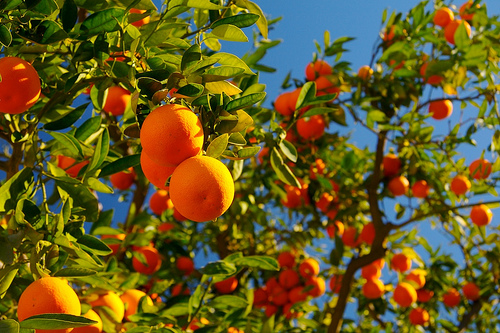
II. Photo
Qohelet worked hard: “I laid out gardens and groves, in which I planted every kind of fruit tree.” (v. 5)
III. Select Verses
1: I said to myself, “Come, I will treat you to merriment. Taste mirth!” That too, I found, was futile.
3: I ventured to tempt my flesh with wine, and to grasp folly, while letting my mind direct with wisdom, to the end that I might learn which of the two was better for men to practice in their few days of life under heaven.
4-11: I multiplied my possessions. I built myself houses and I planted vineyards. I laid out gardens and groves, in which I planted every kind of fruit tree. I constructed pools of water, enough to irrigate a forest shooting up with trees. I bought male and female slaves, and I acquired stewards. I also acquired more cattle, both herds and flocks, than all who were before me in Jerusalem. I further amassed silver and gold and treasures of kings and provinces; and I got myself male and female singers, as well as the luxuries of commoners — coffers and coffers of them. Thus, I gained more wealth than anyone before me in Jerusalem. In addition, my wisdom remained with me: I withheld from my eyes nothing they asked for, and denied myself no enjoyment; rather, I got enjoyment out of all my wealth. And that was all I got out of my wealth. Then my thoughts turned to all the fortune my hands had built up, to the wealth I had acquired and won — and oh, it was all futile and pursuit of wind; there was no real value under the sun!
13-15: I found that Wisdom is superior to folly As light is superior to darkness A wise man has his eyes in his head, Whereas a fool walks in darkness. But I also realized that the same fate awaits them both. So I reflected: “The fate of the fool is also destined for me; to what advantage, then, have I been wise?” And I came to the conclusion that that too was futile.
24: There is nothing worthwhile for a man but to eat and drink and afford himself enjoyment with his means. And even that, I noted, comes from God.
IV. Outline
1-11. The futility of pleasure and wealth
12-17. The wise die just like the foolish
18-23. Future generations and the futility of toil
24-26. Enjoy life if you can
V. Comment
No comment today. Stay tuned.
VI. Works Used
(see “Commentaries” page)
C. L. Seow, Ecclesiastes (Anchor Yale Bible 18C; New Haven: Yale, 1997).
Photo copied from http://badhuman.files.wordpress.com/2008/03/orange-tree.jpg
