Micah 2 – “Doom for the Wicked; The Gathering of Israel”

Hebrew-English Text
I. Summary
Micah challenges the wicked and prophesies the gathering of the people.

II. Photo
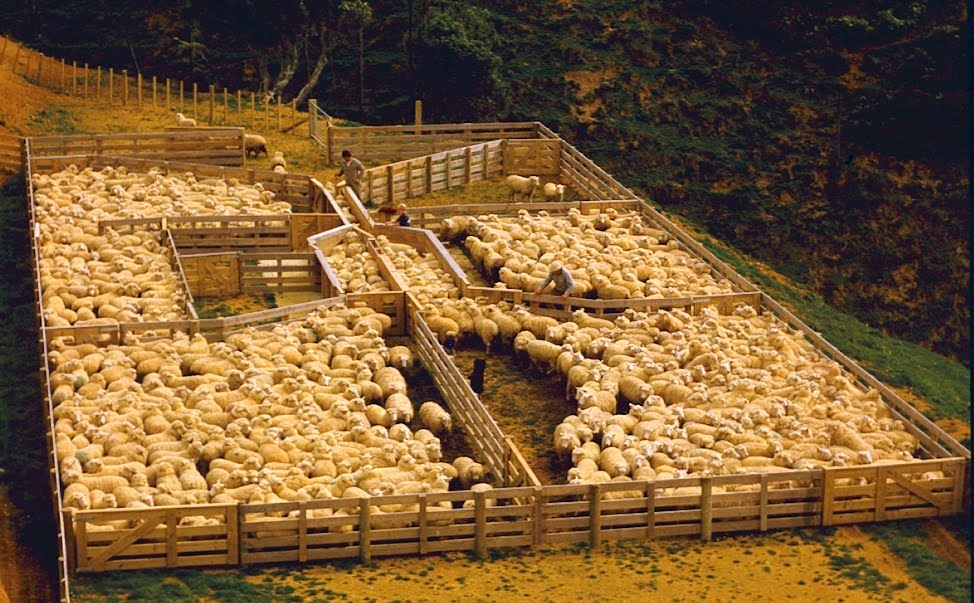
God will gather in the people: “I will make them all like sheep of Bozrah, like a flock inside its pen.” (v. 12)

III. Select Verses    
3: Assuredly, thus said the LORD: I am planning such a misfortune against this clan that you will not be able to free your necks from it. You will not be able to walk erect; it will be such a time of disaster.
6-8: “Stop preaching!” they preach. “That’s no way to preach; Shame shall not overtake [us].  Is the House of Jacob condemned? Is the LORD’s patience short? Is such His practice?” To be sure, My words are friendly To those who walk in rectitude;  But an enemy arises against My people. You strip the mantle with the cloak Off such as pass unsuspecting, Who are turned away from war.
9: You drive the women of My people away From their pleasant homes; You deprive their infants Of My glory forever.
11: If a man were to go about uttering Windy, baseless falsehoods: “I’ll preach to you in favor of wine and liquor” — He would be a preacher [acceptable] to that people.
12-13:  I will assemble Jacob, all of you; I will bring together the remnant of Israel; I will make them all like sheep of Bozrah, Like a flock inside its pen — They will be noisy with people.  One who makes a breach Goes before them; They enlarge it to a gate And leave by it. Their king marches before them, The LORD at their head.

IV. Outline
1-2. Description of the wicked
3-5. Prophecy of doom
6-11. Response to doubters and false prophets
12-13. The ingathering of Israel

V. Comment
No comment today. Stay tuned.

VI. Works Used
(see “Commentaries” page)
Photo copied from http://4.bp.blogspot.com/_W19ZkFqGT-M/S8BGZXGYXwI/AAAAAAAAEOU/wsxxCzlGdwk/s1600/B+Range+yards+.jpg

Micah 1 – “Doom for Samaria and Judah”

Hebrew-English Text
I. Summary
Micah speaks of doom for Samaria and Judah.

II. Photo
Micah goes to extremes: “Because of this I will lament and wail; I will go stripped and naked!” (v. 9)

III. Select Verses    
1: The word of the LORD that came to Micah the Morashtite, who prophesied concerning Samaria and Jerusalem in the reigns of Kings Jotham, Ahaz, and Hezekiah of Judah.
5: All this is for the transgression of Jacob, And for the sins of the House of Israel. What is the transgression of Jacob But Samaria, And what the shrines of Judah But Jerusalem?
6-7: So I will turn Samaria Into a ruin in open country, Into ground for planting vineyards; For I will tumble her stones into the valley And lay her foundations bare. All her sculptured images shall be smashed, And all her harlot’s wealth be burned, And I will make a waste heap of all her idols, For they were amassed from fees for harlotry, And they shall become harlots’ fees again.
8: Because of this I will lament and wail; I will go stripped and naked! I will lament as sadly as the jackals, As mournfully as the ostriches.
9: For her wound is incurable, It has reached Judah, It has spread to the gate of my people, To Jerusalem.

IV. Outline
1. Introduction to prophecy
2a. Call to listen
2b-4. The coming of God
5. The sins of Judah and Samaria
6-7. Doom for Samaria
8. Micah’s mournful existence
9. The spread of Samaria’s sin
10-16. Doom for twelve cities around Jerusalem

V. Comment
In vv. 10-16, Micah speaks of doom and captivity for twelve cities. As Ralph L. Smith notes, “There is a word-play on the names of the cities. The word-plays are not to be taken lightly. The prophet was very serious in describing the misfortune that was coming on his home territory. It is difficult to discover the pun intended with every city… The historical situation to which this language refers is probably Sennacherib’s invasion of Judah in 701 BC According to 2 Kgs 18:13–16 and Sennacherib’s own accounts, the Assyrian king came into Palestine attacking Tyre which was one of the leaders of the rebellion against the empire. Sennacherib then marched against Ashkelon and Ekron putting down their resistance. He met and defeated an Egyptian army at Eltekeh, near Ekron, then turned on Judah. He reports that he reduced forty-six cities of Judah and deported their population. He shut up Hezekiah, king of Judah and the remnant of his troops in Jerusalem “like a bird in a cage” (Bright 269). The twelve cities mentioned in Micah 1:10–15 were in the path of Sennacherib’s march to Jerusalem.” (21, 20-21)

VI. Works Used
(see “Commentaries” page)
Smith, Ralph L. Micah-malachi. Waco, Tex: Word Books, 1984.
Photo copied from http://fc05.deviantart.net/fs71/f/2010/212/6/9/Open_Land_by_silentdreams08.jpg

Jonah 4 – “Jonah Learns a Lesson”

Hebrew-English Text
I. Summary
Yahweh teaches Jonah that Nineveh deserves to be saved.

II. Photo
Yahweh dries Jonah’s plant: “But the next day at dawn God provided a worm, which attacked the plant so that it withered.”

III. Select Verses    
(the entire chapter)
1-3: This displeased Jonah greatly, and he was grieved. He prayed to the LORD, saying, “O LORD! Isn’t this just what I said when I was still in my own country? That is why I fled beforehand to Tarshish. For I know that You are a compassionate and gracious God, slow to anger, abounding in kindness, renouncing punishment. Please, LORD, take my life, for I would rather die than live.”
4-11: The LORD replied, “Are you that deeply grieved?”  Now Jonah had left the city and found a place east of the city. He made a booth there and sat under it in the shade, until he should see what happened to the city.  The LORD God provided a ricinus plant, which grew up over Jonah, to provide shade for his head and save him from discomfort. Jonah was very happy about the plant.  But the next day at dawn God provided a worm, which attacked the plant so that it withered.  And when the sun rose, God provided a sultry east wind; the sun beat down on Jonah’s head, and he became faint. He begged for death, saying, “I would rather die than live.” Then God said to Jonah, “Are you so deeply grieved about the plant?” “Yes,” he replied, “so deeply that I want to die.”  Then the LORD said: “You cared about the plant, which you did not work for and which you did not grow, which appeared overnight and perished overnight.  And should not I care about Nineveh, that great city, in which there are more than a hundred and twenty thousand persons who do not yet know their right hand from their left, and many beasts as well!”

IV. Outline
1-2. Jonah realizes the implications for Israel
3. Jonah asks for death
4-11. God teaches Jonah a lesson

V. Comment
No comment today. Stay tuned.

VI. Works Used
(see “Commentaries” page)
Photo copied from http://us.123rf.com/400wm/400/400/alptraum/alptraum0809/alptraum080900052/3600360-dead-plant-with-dry-leaves-closeup-isolated-on-white.jpg

Jonah 3 – “Nineveh Repents”

Hebrew-English Text
I. Summary
Jonah warns Nineveh of doom, the people repent, and Yahweh forgives them.

II. Photo
The people of Nineveh repent: “By decree of the king and his nobles: No man or beast — of flock or herd — shall taste anything!“ (v. 7)

III. Select Verses    
(the entire chapter)
1-4: The word of the LORD came to Jonah a second time: “Go at once to Nineveh, that great city, and proclaim to it what I tell you.” Jonah went at once to Nineveh in accordance with the LORD’s command. Nineveh was an enormously large city a three days’ walk across. Jonah started out and made his way into the city the distance of one day’s walk, and proclaimed: “Forty days more, and Nineveh shall be overthrown!”
5-9: The people of Nineveh believed God. They proclaimed a fast, and great and small alike put on sackcloth.  When the news reached the king of Nineveh, he rose from his throne, took off his robe, put on sackcloth, and sat in ashes.  And he had the word cried through Nineveh: “By decree of the king and his nobles: No man or beast — of flock or herd — shall taste anything! They shall not graze, and they shall not drink water!  They shall be covered with sackcloth — man and beast — and shall cry mightily to God. Let everyone turn back from his evil ways and from the injustice of which he is guilty.  Who knows but that God may turn and relent? He may turn back from His wrath, so that we do not perish.”
10: God saw what they did, how they were turning back from their evil ways. And God renounced the punishment He had planned to bring upon them, and did not carry it out.

IV. Outline
1-2. God repeats his command
3-4. Jonah delivers the message
5-9. The king and people of Nineveh fast and pray
10. God renounces the decree

V. Comment
The city of Nineveh is described in v. 3: “Nineveh was an enormously large city a three days’ walk across.” As Stuart notes, this passage comes up in the discussion about the date and authorship of Jonah: “Solely on the basis of the use of היה “to be” in the past tense in describing Nineveh in 3:3, it has usually been assumed that the narrator had to be someone living after 612, ie, after Nineveh fell to the Babylonians and was destroyed. This dating depends upon taking the sentence in question to read, in essence, “Nineveh was a city . . .,” ie, is a city no longer from the perspective of the narrator and his or her audience. However, if the sentence emphasizes the type of city Nineveh was at the time Jonah visited it, rather than the fact that it was simply a city at all, the matter may be considered differently. That is, we must ask whether the narrator’s object in 3:3 may not be to point out that Nineveh “then” was more important than it is “now,” ie, in the narrator’s lifetime. This would be possible if, for example, (1) Nineveh was no longer the royal residence at the time of the composition of the story; or (2) Nineveh had ceased to be “important to God” (גדולה לאלהים) if that is indeed the sense of the unusual Hebrew wording. Thus even the relative distance of the narrator from the story is impossible to fix with certainty. Besides this, the Hebrew narrative style calls for the past tense regardless of proximity to the events. Thus the importance of the verb in 3:3 is easily overrated.” (432)

VI. Works Used
(see “Commentaries” page)
Stuart, Douglas K. Hosea-jonah. Waco, Tex: Word Books, 1987.
Photo copied from  http://smallbiztechnology.com/media/empty-plate.jpg

Jonah 2 – “Jonah’s Prayer in the Fish”


Hebrew-English Text
I. Summary
Jonah is swallowed by a large fish. After three days, Jonah prays to Yahweh and is brought up to dry land.

II. Photo
Jonah is swallowed: “Yahweh provided a huge fish to swallow Jonah; and Jonah remained in the fish’s belly three days and three nights.” (v. 1)

III. Select Verses    
1:  The LORD provided a huge fish to swallow Jonah; and Jonah remained in the fish’s belly three days and three nights.
4-6: You cast me into the depths, Into the heart of the sea, The floods engulfed me; All Your breakers and billows Swept over me. I thought I was driven away Out of Your sight: Would I ever gaze again Upon Your holy Temple?  The waters closed in over me, The deep engulfed me. Weeds twined around my head.  7
8: When my life was ebbing away, I called the LORD to mind; And my prayer came before You, Into Your holy Temple.
9-10: They who cling to empty folly Forsake their own welfare, But I, with loud thanksgiving, Will sacrifice to You; What I have vowed I will perform. Deliverance is the LORD’s!
11: The LORD commanded the fish, and it spewed Jonah out upon dry land.

IV. Outline

1. Jonah is swallowed by a large fish
2-10. Jonah’s prayer
    2-3a. Introduction
    3b. Account of  trouble, prayer, and salvation
    4. Account of complaint
    5. Account of trust
    6-7a. Account of trouble
    7b-8. Account of prayer and salvation
    9. Lesson
    10. Vow/Thanksgiving
11. Jonah is brought to dry land

V. Comment
Jonah 2 contains a psalm embedded in a narrative. Other examples of this phenomenon are Hannah’s prayer in 1 Samuel 2, David’s thanksgiving in 2 Samuel 22, and Jehoshaphat’s prayer in 2 Chronicles 20:5-12. In terms of structure, Jonah 2 can be classified along the “complaint” and “thanksgiving” spectrum, meaning there is an account of suffering and salvation, an acknowledgement of Yahweh’s ability to save, a vow to sacrifice, and the imprecation of enemies. Below is a chart highlighting the striking parallels between Jonah 2 and the book of Psalms.

Jonah 2 Parallels from Psalms
Jonah 2:3 [2] In my trouble I was crying to the Lord, and he gave me an answer;

out of the deepest underworld I sent up a cry, and you gave ear to my voice.

Psa. 118:5 I made my prayer to the Lord in my trouble: and the Lord gave me an answer…

Psa. 30:3 [2] O Lord my God, I sent up my cry to you, and you have made me well.


Jonah 2:4 [3] For you have put me down into the deep, into the heart of the sea; and the river was round about me; all your waves and your rolling waters went over me.


Psa. 69:2 [1] …the waters have come in, even to my neck.

Psa. 69:3 [2] My feet are deep in the soft earth, where there is no support; I have come into deep waters, the waves are flowing over me.


Jonah 2:5 [4] And I said, I have been sent away from before your eyes; how may I ever again see your holy Temple?


Psa. 31:23 [22] And as for me, I said in my fear, I am cut off from before your eyes…

Psa. 26:8 Lord, your house has been dear to me, and the resting-place of your glory.


Jonah 2:6 [5] The waters were circling round me, even to the neck; the deep was about me; the sea-grass was twisted round my head.


Psa. 18:5 [4] The cords of death were round me, and the seas of evil put me in fear.

Psa. 18:6 [5] The cords of hell were round me: the nets of death came on me.

Jonah 2:7 [6] I went down to the bases of the mountains; as for the earth, her walls were about me for ever: but you have taken up my life from the underworld, O Lord my God.


Psa. 69:3 [2] My feet are deep in the soft earth, where there is no support; I have come into deep waters, the waves are flowing over me.


Psa. 30:4 [3] O Lord, you have made my soul come again from the underworld…


Jonah 2:8 [7] When my soul in me was overcome, I kept the memory of the Lord: and my prayer came in to you, into your holy Temple.


Psa. 18:6 In my trouble my voice went up to the Lord, and my cry to my God: my voice came to his hearing in his holy Temple, and my prayer came before him, even into his ears.


Jonah 2:9 [8] The worshippers of false gods have given up their only hope.


Psa. 31:6 I am full of hate for those who go after false gods; but my hope is in the Lord.


Jonah 2:10 [9] But I will make an offering to you with the voice of praise; I will give effect to my oaths. Salvation is the Lord’s.


Psa. 116:17 I will give an offering of praise to you, and make my prayer in the name of the Lord.


Jonah 2 Parallels from Psalms
Jonah 2:3

וַיֹּ֗אמֶר קָ֠רָאתִי מִצָּ֥רָה לִ֛י אֶל־יְהוָ֖הוַֽיַּעֲנֵ֑נִי מִבֶּ֧טֶן שְׁא֛וֹל שִׁוַּ֖עְתִּי שָׁמַ֥עְתָּקוֹלִֽי׃


Psa. 118:5

‏ מִֽן־הַ֭מֵּצַ֥ר קָרָ֣אתִי יָּ֑הּ עָנָ֖נִי בַמֶּרְחָ֣ב יָֽהּ׃

Psa. 30:3

יְהוָ֥ה אֱלֹהָ֑י שִׁוַּ֥עְתִּי אֵ֝לֶ֗יךָ וַתִּרְפָּאֵֽנִי׃


Jonah 2:4

‏ וַתַּשְׁלִיכֵ֤נִי מְצוּלָה֙ בִּלְבַ֣ב יַמִּ֔ים וְנָהָ֖ריְסֹבְבֵ֑נִי כָּל־מִשְׁבָּרֶ֥יךָ וְגַלֶּ֖יךָ עָלַ֥י עָבָֽרוּ׃

Psa. 69:2

הוֹשִׁיעֵ֥נִי אֱלֹהִ֑ים כִּ֤י בָ֖אוּ מַ֣יִם עַד־נָֽפֶשׁ׃

Psa. 69:3

טָבַ֤עְתִּי ׀ בִּיוֵ֣ן מְ֭צוּלָה וְאֵ֣ין מָעֳמָ֑דבָּ֥אתִי בְמַעֲמַקֵּי־מַ֝֗יִם וְשִׁבֹּ֥לֶת שְׁטָפָֽתְנִי׃


Jonah 2:5

וַאֲנִ֣י אָמַ֔רְתִּי נִגְרַ֖שְׁתִּי מִנֶּ֣גֶד עֵינֶ֑יךָ אַ֚ךְאוֹסִ֣יף לְהַבִּ֔יט אֶל־הֵיכַ֖ל קָדְשֶֽׁךָ׃


Psa. 31:23

‏ וַאֲנִ֤י ׀ אָ֘מַ֤רְתִּי בְחָפְזִ֗י נִגְרַזְתִּי֮ מִנֶּ֪גֶדעֵ֫ינֶ֥יךָ אָכֵ֗ן שָׁ֭מַעְתָּ ק֥וֹל תַּחֲנוּנַ֗י בְּשַׁוְּעִ֥יאֵלֶֽיךָ׃

Psa. 26:8

‏ יְֽהוָ֗ה אָ֭הַבְתִּי מְע֣וֹן בֵּיתֶ֑ךָ וּ֝מְק֗וֹםמִשְׁכַּ֥ן כְּבוֹדֶֽךָ׃

Jonah 2:6

אֲפָפ֤וּנִי מַ֙יִם֙ עַד־נֶ֔פֶשׁ תְּה֖וֹם יְסֹבְבֵ֑נִיס֖וּף חָב֥וּשׁ לְרֹאשִֽׁי׃

Psa. 18:5

‏ אֲפָפ֥וּנִי חֶבְלֵי־מָ֑וֶת וְֽנַחֲלֵ֖י בְלִיַּ֣עַליְבַֽעֲתֽוּנִי׃

Psa. 18:6

‏ חֶבְלֵ֣י שְׁא֣וֹל סְבָב֑וּנִי קִ֝דְּמ֗וּנִי מ֣וֹקְשֵׁימָֽוֶת׃


Jonah 2:7

‏ לְקִצְבֵ֤י הָרִים֙ יָרַ֔דְתִּי הָאָ֛רֶץ בְּרִחֶ֥יהָבַעֲדִ֖י לְעוֹלָ֑ם וַתַּ֧עַל מִשַּׁ֛חַת חַיַּ֖י יְהוָ֥האֱלֹהָֽי׃

Psa. 69:3

טָבַ֤עְתִּי ׀ בִּיוֵ֣ן מְ֭צוּלָה וְאֵ֣ין מָעֳמָ֑דבָּ֥אתִי בְמַעֲמַקֵּי־מַ֝֗יִם וְשִׁבֹּ֥לֶת שְׁטָפָֽתְנִי׃


Psa. 30:4

‏ יְֽהוָ֗ה הֶֽעֱלִ֣יתָ מִן־שְׁא֣וֹל נַפְשִׁ֑י חִ֝יִּיתַ֗נִימִיּוֹרְדֵי־[מִ][יָּֽרְדִי]־בֽוֹר׃

Jonah 2:8

‏ בְּהִתְעַטֵּ֤ף עָלַי֙ נַפְשִׁ֔י אֶת־יְהוָ֖ה זָכָ֑רְתִּיוַתָּב֤וֹא אֵלֶ֙יךָ֙ תְּפִלָּתִ֔י אֶל־הֵיכַ֖ל קָדְשֶֽׁךָ׃

Psa. 18:7

‏ בַּצַּר־לִ֤י ׀ אֶֽקְרָ֣א יְהוָה֮ וְאֶל־אֱלֹהַ֪יאֲשַׁ֫וֵּ֥עַ יִשְׁמַ֣ע מֵהֵיכָל֣וֹ קוֹלִ֑י וְ֝שַׁוְעָתִ֗ילְפָנָ֤יו ׀ תָּב֬וֹא בְאָזְנָֽיו׃

Jonah 2:9

‏ מְשַׁמְּרִ֖ים הַבְלֵי־שָׁ֑וְא חַסְדָּ֖ם יַעֲזֹֽבוּ׃


Psa. 31:7

‏ שָׂנֵ֗אתִי הַשֹּׁמְרִ֥ים הַבְלֵי־שָׁ֑וְא וַ֝אֲנִ֗יאֶל־יְהוָ֥ה בָּטָֽחְתִּי׃


Jonah 2:10

‏ וַאֲנִ֗י בְּק֤וֹל תּוֹדָה֙ אֶזְבְּחָה־לָּ֔ךְ אֲשֶׁ֥רנָדַ֖רְתִּי אֲשַׁלֵּ֑מָה יְשׁוּעָ֖תָה לַיהוָֽה׃

Psa. 116:17

לְֽךָ־אֶ֭זְבַּח זֶ֣בַח תּוֹדָ֑ה וּבְשֵׁ֖ם יְהוָ֣האֶקְרָֽא׃

Psa. 116:18

נְ֭דָרַי לַיהוָ֣ה אֲשַׁלֵּ֑ם נֶגְדָה־נָּ֝֗אלְכָל־עַמּֽוֹ׃


VI. Works Used
(see “Commentaries” page)
Photo copied from http://2.bp.blogspot.com/_Wdf0mY4LBvE/THuBmmLG3kI/AAAAAAAAArw/pZ6dBkab1rQ/s1600/Sperm+Whale+pictures+underwater+photos.jpg

Jonah 1 – “Jonah is Thrown Overboard”

Hebrew-English Text
I. Summary
Yahweh tells Jonah to speak to the wicked city of Nineveh. Jonah flees on a ship but is thrown overboard when the sailors realize that he is the cause for a horrible storm.

II. Photo
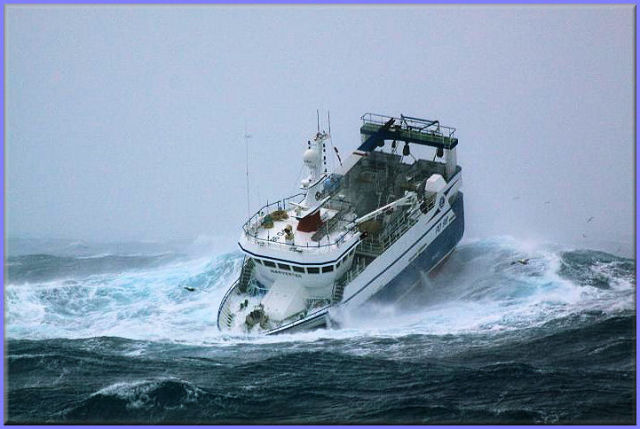
Jonah’s ship is in peril: “Yahweh cast a mighty wind upon the sea, and such a great tempest came upon the sea that the ship was in danger of breaking up!” (v. 4)

III. Select Verses    
1-2:  The word of the LORD came to Jonah son of Amittai:  Go at once to Nineveh, that great city, and proclaim judgment upon it; for their wickedness has come before Me.
3-4:  Jonah, however, started out to flee to Tarshish from the LORD’s service. He went down to Joppa and found a ship going to Tarshish. He paid the fare and went aboard to sail with the others to Tarshish, away from the service of the LORD.  But the LORD cast a mighty wind upon the sea, and such a great tempest came upon the sea that the ship was in danger of breaking up.
7-9: The men said to one another, “Let us cast lots and find out on whose account this misfortune has come upon us.” They cast lots and the lot fell on Jonah.  They said to him, “Tell us, you who have brought this misfortune upon us, what is your business? Where have you come from? What is your country, and of what people are you?”  “I am a Hebrew,” he replied. “I worship the LORD, the God of Heaven, who made both sea and land.”
11-15: they said to him, “What must we do to you to make the sea calm around us?” For the sea was growing more and more stormy.  He answered, “Heave me overboard, and the sea will calm down for you; for I know that this terrible storm came upon you on my account.” Nevertheless, the men rowed hard to regain the shore, but they could not, for the sea was growing more and more stormy about them.  Then they cried out to the LORD: “Oh, please, LORD, do not let us perish on account of this man’s life. Do not hold us guilty of killing an innocent person! For You, O LORD, by Your will, have brought this about.” And they heaved Jonah overboard, and the sea stopped raging.
16: The men feared the LORD greatly; they offered a sacrifice to the LORD and they made vows.

IV. Outline
1-2. God’s charge to Jonah
3. Jonah tries to flee on a ship
4. God brings a storm
5-6. Jonah does not call out to God
7-10. The lots are cast on Jonah
11-15. The innocent sailors cast Jonah overboard
16. The sailors serve God

V. Comment
No comment today. Stay tuned.

VI. Works Used
(see “Commentaries” page)
Photo copied from http://zuzutop.com/wp-content/uploads/2010/06/ship_in_a_storm_01.jpg

Obadiah 1 – “Oracle Against Edom”

Hebrew-English Text
I. Summary
God tells the people of Edom that Israel will destroy them.

II. Photo
God is angry: “The House of Jacob shall be fire, And the House of Joseph flame, And the House of Esau shall be straw; They shall burn it and devour it, And no survivor shall be left of the House of Esau — for the LORD has spoken.” (v. 18)

III. Select Verses    
3-4: Your arrogant heart has seduced you, You who dwell in clefts of the rock, In your lofty abode. You think in your heart, “Who can pull me down to earth?”  Should you nest as high as the eagle, Should your eyrie be lodged ’mong the stars, Even from there I will pull you down — declares the LORD.
8: In that day — declares the LORD – I will make the wise vanish from Edom, Understanding from Esau’s mount.
10-11: For the outrage to your brother Jacob, Disgrace shall engulf you, And you shall perish forever.  On that day when you stood aloof, When aliens carried off his goods, When foreigners entered his gates And cast lots for Jerusalem, You were as one of them.
12-14: How could you gaze with glee On your brother that day, On his day of calamity! How could you gloat Over the people of Judah On that day of ruin! How could you loudly jeer On a day of anguish! How could you enter the gate of My people On its day of disaster, Gaze in glee with the others On its misfortune On its day of disaster, And lay hands on its wealth On its day of disaster! How could you stand at the passes To cut down its fugitives! How could you betray those who fled On that day of anguish!
17-18: But on Zion’s mount a remnant shall survive, And it shall be holy. The House of Jacob shall dispossess Those who dispossessed them.  The House of Jacob shall be fire, And the House of Joseph flame, And the House of Esau shall be straw; They shall burn it and devour it, And no survivor shall be left of the House of Esau — for the LORD has spoken.

IV. Outline
1a. Superscription
1b. Introduction
2-4. God will lower Edom
5-7a. There will be nobody left
7b-8. God will remove the wise ones
9. Edom’s annihilation
10-11. Rationale: Edom watched as others ransacked Israel
12-14. Challenge to Edom
15-21. Israel will avenge itself

V. Comment
In regards to the date of the book of Obadiah, Stuart writes: “A date for the composition of Obadiah can be established only in terms of likelihood, rather than certainty. There is a single question to be asked in this regard: What era does the apparent situation and perspective of the prophecy most likely reflect? A ninth-century date is difficult to sustain because of the paucity of information about the supposed occasion, the Edomite revolt against Jehoram (2 Kgs 8:20–22). Similarly, we know little about the fifth-century Nabatean conquest of Edom, which is at any rate the fulfillment of what is predicted in Obadiah rather than a thing narrated as a past event. It is the exilic period, particularly the early exile (580s or shortly thereafter) that meets the criterion best. Most importantly, four other OT passages from the same early sixth-century period reflect the same sort of situation and perspective found in Obadiah: Ps 137:7; Lam 4:18–22; Ezek 25:12–14; 35:1–15. These parallels echo the furious resentment expressed in Obadiah at the way the Edomites took advantage of Jerusalem’s subjugation by the Babylonians. They also display an anticipation of the reversal of the (then) present painful circumstances of Judah. 1 Esd 4:45 claims that “the Edomites burned the temple when Judah was devastated by the Chaldeans,” but this secondcentury BC (?) source contains much that is spurious. We know for sure only that the Edomites somehow aided and abetted the Babylonian conquest of 588–586 BC, and profited from it, perhaps almost entirely by taking southern Judean land. The exact extent of their involvement with Babylon against Judah is not clear in Obadiah or any other trustworthy source.” (403-404)

VI. Works Used
(see “Commentaries” page)
Stuart, Douglas K. Hosea-jonah. Waco, Tex: Word Books, 1987.
Photo copied from http://www.geringcitizen.com/articles.php?ID=32&Title=County,%20state%20begin%20fire%20investigation+%5Bpublished+2010-08-27%5D&Member_ID=&l=&First_Name=&Last_Name=
Ecclesiastes 8 – “Reflections”

Hebrew-English Text
I. Summary
Qohelet reflects upon wisdom, obeying the king, the unfairness of the world, and how the future is unknowable. He says that enjoying life is the best that one can do.

II. Photo
Death is inevitable: “No man has authority over the lifebreath… there is no authority over the day of death.” (v. 8)

III. Select Verses    
9-14: All these things I observed; I noted all that went on under the sun, while men still had authority over men to treat them unjustly.  And then I saw scoundrels coming from the Holy Site and being brought to burial, while such as had acted righteously were forgotten in the city. And here is another frustration:  the fact that the sentence imposed for evil deeds is not executed swiftly, which is why men are emboldened to do evil —  the fact that a sinner may do evil a hundred times and his [punishment] still be delayed. For although I am aware that “It will be well with those who revere God since they revere Him,  and it will not be well with the scoundrel, and he will not live long, because he does not revere God” —  here is a frustration that occurs in the world: sometimes an upright man is requited according to the conduct of the scoundrel; and sometimes the scoundrel is requited according to the conduct of the upright. I say all that is frustration.
15: I therefore praised enjoyment. For the only good a man can have under the sun is to eat and drink and enjoy himself. That much can accompany him, in exchange for his wealth, through the days of life that God has granted him under the sun.
16-17: For I have set my mind to learn wisdom and to observe the business that goes on in the world — even to the extent of going without sleep day and night —  and I have observed all that God brings to pass. Indeed, man cannot guess the events that occur under the sun. For man tries strenuously, but fails to guess them; and even if a sage should think to discover them he would not be able to guess them.

IV. Outline
1. Wisdom
2-5a. Obey the king
5b-8. The future is unknowable; Death is a certainty
9-14. An unfair world
15. Enjoy life
16-17. The future is unknowable

V. Comment
No comment today. Stay tuned.

VI. Works Used
(see “Commentaries” page)
C. L. Seow, Ecclesiastes (Anchor Yale Bible 18C; New Haven: Yale, 1997).
Photo copied from http://futurity.org/wp-content/uploads/2010/03/emergency_room.jpg

Ecclesiastes 7 – “Assorted Sayings and Lessons”

Hebrew-English Text
I. Summary
Qohelet speaks about revelry, wisdom, women, and a number of other matters.

II. Photo
A lesson about nostalgia: “Don’t say, ‘How has it happened that former times were better than these?’ For it is not wise of you to ask that question.” (v. 10)

III. Select Verses    
1: A good name is better than fragrant oil, and the day of death than the day of birth.
2:  It is better to go to a house of mourning than to a house of feasting; for that is the end of every man, and a living one should take it to heart.
5: It is better to listen to a wise man’s reproof than to listen to the praise of fools.
8: The end of a matter is better than the beginning of it. Better a patient spirit than a haughty spirit.
10: Don’t say, “How has it happened that former times were better than these?” For it is not wise of you to ask that question.
15-17:  In my own brief span of life, I have seen both these things: sometimes a good man perishes in spite of his goodness, and sometimes a wicked one endures in spite of his wickedness. So don’t overdo goodness and don’t act the wise man to excess, or you may be dumfounded. Don’t overdo wickedness and don’t be a fool, or you may die before your time.
20: For there is not one good man on earth who does what is best and doesn’t err.
25-26: I put my mind to studying, exploring, and seeking wisdom and the reason of things, and to studying wickedness, stupidity, madness, and folly. Now, I find woman more bitter than death; she is all traps, her hands are fetters and her heart is snares. He who is pleasing to God escapes her, and he who is displeasing is caught by her.

IV. Outline
1. A good name
2. A house of mourning
3. Jokery
4. A house of mourning
5-6a. The wise man and the fool
7b-8. The futility of wisdom
9. The end of a matter
10. The days of old
11-12. Wisdom
13-14. The ways of God
15-18.  Being good and wicked
19-20. Wisdom and sin
21-22. Ignoring what others say
23-26. Wisdom and the bitterness of women
27-29. Wisdom and reasoning

V. Comment
No comment today. Stay tuned.

VI. Works Used
(see “Commentaries” page)
C. L. Seow, Ecclesiastes (Anchor Yale Bible 18C; New Haven: Yale, 1997).
Photo copied from http://www.photographycorner.com/galleries/data/1393/Group-N—Old-Vintage-Clock.jpg

Ecclesiastes 6 – “Reflections”

Hebrew-English Text
I. Summary
Qohelet reflects upon satisfaction and the unknowable fate of man.

II. Photo
Nobody has the answers: “Who can possibly know what is best for a man to do in life — the few days of his fleeting life?” (v. 12)

III. Select Verses    
1-2:  There is an evil I have observed under the sun, and a grave one it is for man: that God sometimes grants a man riches, property, and wealth, so that he does not want for anything his appetite may crave, but God does not permit him to enjoy it; instead, a stranger will enjoy it. That is futility and a grievous ill.
3: Even if a man should beget a hundred children and live many years — no matter how many the days of his years may come to, if his gullet is not sated through his wealth, I say: The stillbirth, though it was not even accorded a burial, is more fortunate than he.
10: Whatever happens, it was designated long ago and it was known that it would happen; as for man, he cannot contend with what is stronger than he.
12: Who can possibly know what is best for a man to do in life — the few days of his fleeting life? For who can tell him what the future holds for him under the sun?

IV. Outline
1-6. People who cannot enjoy
7-9. People who are never satisfied
10-12. The fate of man

V. Comment
No comment today. Stay tuned.

VI. Works Used
(see “Commentaries” page)
C. L. Seow, Ecclesiastes (Anchor Yale Bible 18C; New Haven: Yale, 1997).
Photo copied from http://a57.foxnews.com/static/managed/img/Health/660/371/depression_woman_640.jpg