Jeremiah 46: Oracles Against Egypt; Promise to Israel

balm medicine tins jars cansHebrew-English Text

I. Summary

Jeremiah poetically relates how the Egyptian army will be defeated and how the land of Egypt will be conquered by Nebuchadnezzar. Although Yahweh will punish Israel, he will restore them to their land and never wipe them out.

II. Photo

Egypt will not recover from its loss: “Go up to Gilead and get balm, fair maiden Egypt. In vain do you seek many remedies, there is no healing for you” (v. 11).

III. Select Verses

1: The word of the LORD to the prophet Jeremiah concerning the nations.

2: Concerning Egypt, about the army of Pharaoh Neco, king of Egypt, which was at the river Euphrates near Carchemish, and which was defeated by King Nebuchadrezzar of Babylon, in the fourth year of King Jehoiakim son of Josiah of Judah.

6: The swift cannot get away, The warrior cannot escape. In the north, by the river Euphrates, They stagger and fall.

11: Go up to Gilead and get balm, Fair Maiden Egypt. In vain do you seek many remedies, There is no healing for you.

13-16a: The word which the LORD spoke to the prophet Jeremiah about the coming of King Nebuchadrezzar of Babylon to attack the land of Egypt. Declare in Egypt, proclaim in Migdol, Proclaim in Noph and Tahpanhes! Say: Take your posts and stand ready, For the sword has devoured all around you!  Why are your stalwarts swept away? They did not stand firm, For the LORD thrust them down; He made many stumble, They fell over one another.

19: Equip yourself for exile, Fair Egypt, you who dwell secure! For Noph shall become a waste, Desolate, without inhabitants.

25-26: The LORD of Hosts, the God of Israel, has said: I will inflict punishment on Amon of No and on Pharaoh — on Egypt, her gods, and her kings — on Pharaoh and all who rely on him.  I will deliver them into the hands of those who seek to kill them, into the hands of King Nebuchadrezzar of Babylon and into the hands of his subjects. But afterward she shall be inhabited again as in former days, declares the LORD.

27-28: But you, Have no fear, My servant Jacob, Be not dismayed, O Israel! I will deliver you from far away, Your folk from their land of captivity; And Jacob again shall have calm And quiet, with none to trouble him.  But you, have no fear, My servant Jacob — declares the LORD — ¶ For I am with you. I will make an end of all the nations Among which I have banished you, But I will not make an end of you! I will not leave you unpunished, But I will chastise you in measure.

IV. Outline

1. Introduction: Oracles about the nations

2-12. Oracle for Egypt and Pharaoh Neco’s defeated army by the Euphrates

    2. Introduction

    3-9. Song of defeat

    10. Yahweh will sacrifice Egypt

    11-12. There is no healing for Egypt’s loss

13-26. Oracle about Nebuchadnezzar’s attack on Egypt itself

    13. Introduction

    14-17. The soldiers will stumble

    18-19. Yahweh declares exile for Egypt

    20-21. Egypt is like a calf (to be slaughtered)

    22-23a. Egypt is like a forest cut down

    23b-24. Egypt will be given to the Babylonians

    25-26a. Punishment for the gods and the Pharaoh

    26b. Egypt will be restored as before

27-28. Yahweh will punish Israel but they will be returned home

V. Comment

Thre are two oracles about Egypt in Jeremiah 46 and they each concern historical events. The first is introduced in verse 2:

  • Concerning Egypt, about the army of Pharaoh Neco, king of Egypt, which was at the river Euphrates near Carchemish, and which was defeated by King Nebuchadrezzar of Babylon, in the fourth year of King Jehoiakim son of Josiah of Judah.

Gerald Lynwood Keown, Pamela J Scalise, and Thomas G Smothers shed light on the history of this event (Jeremiah 26-52, pp. 285-286): “The historical context of the first oracle concerning Egypt (46:2–12) is the battle at Carchemish in 605, as indicated by 46:2. This crucial battle settled the question of what nation would inherit international supremacy from the Assyrians. In 609 the Egyptian army marched to the aid of the remnant of the Assyrian army at Haran, but Babylon shattered the Assyrians and pushed Neco’s army beyond the Euphrates, leaving Egypt temporarily in command of Syria-Palestine. In 605 Egypt was encamped at Carchemish, and it was there that Nebuchadrezzar decisively defeated Neco. A second battle was fought near Hamath, and the rout of the Egyptian forces was complete. These campaigns of 605 effectively ended Egyptian control of Syria-Palestine.”

They also explain that this oracle is more about Jeremiah’s audience, the people of Judah, than the Egyptians themselves: “Although the oracle in 46:3–12 functioned on one level as a taunt against Egypt, its real purpose seems to have been to deter Jehoiakim and the pro-Egyptian party in Judah from rejecting Babylonian overlordship in favor of an alliance with Egypt, in light of the Egyptian debacle at Carchemish. 46:25–26, a prose addition to the first two oracles, suggests the key to understanding the purpose of the oracles: the LORD would bring punishment upon Amon of Thebes, upon Pharaoh, and upon “all those who trust in him” (v 25) (cf Ezek 29:6–8, 16). According to Jeremiah, safety for Judah lay in submission to Babylon, and, indeed, in his view the LORD was using Babylon to achieve divine purposes. In this way Jeremiah incorporated international events into the domain of Judah’s religious and political affairs. However, Jeremiah was not successful in his attempt to dissuade Jehoiakim from revolt against Babylon (2 Kgs 24:1).”

The second oracle is introduced in verse 13:

  •  The word which the LORD spoke to the prophet Jeremiah about the coming of King Nebuchadrezzar of Babylon to attack the land of Egypt.

As Keown, Scalise, and Smothers write, we are less sure about the exact year of this event (Jeremiah 26-52, pp. 287): “Neither the redactional introduction (v 13) nor the internal data permit one to determine the historical context for the second oracle concerning Egypt (46:13–24). The introduction mentions that Jeremiah delivered the oracle in the context of an attack against Egypt by Nebuchadrezzar. Four dates come into view as possibilities: 604, 601, 588, and 568.”

VI. Works Used

(see “Commentaries” page)

Gerald Lynwood Keown, Pamela J Scalise, and Thomas G Smothers. Jeremiah 26-52. Waco: Word Books, 1995.

Photo copied from http:// assets.inhabitat .com/wp-content/blogs.dir/1/files/2012/11/DIY-Lip-Balm-Tins.jpg
Jeremiah 45: Life for Baruch son of Neriah

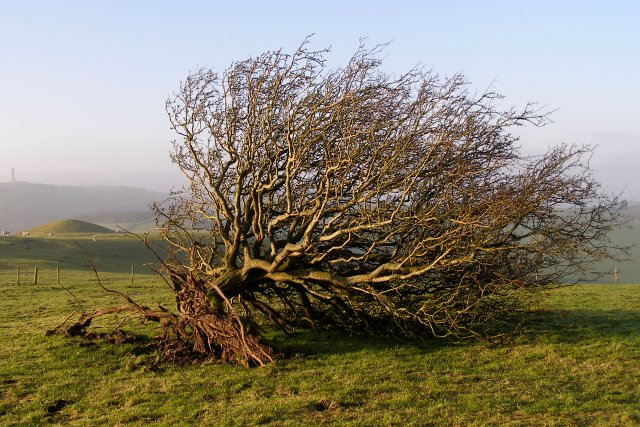
uprooted tree destructionHebrew-English Text

I. Summary

Yahweh tells Baruch son of Neriah that he will continue to punish mankind but Baruch will not be killed.

II. Photo

Yahweh will not stop punishing: “Thus said the Lord: I am going to overthrow what I have built and uproot what I have planted” (v. 4).

III. Select Verses

(The whole chapter)

1-5: The word which the prophet Jeremiah spoke to Baruch son of Neriah, when he was writing these words in a scroll at Jeremiah’s dictation, in the fourth year of King Jehoiakim son of Josiah of Judah: Thus said the LORD, the God of Israel, concerning you, Baruch: You say, “Woe is me! The LORD has added grief to my pain. I am worn out with groaning, and I have found no rest.” Thus shall you speak to him: “Thus said the LORD: I am going to overthrow what I have built, and uproot what I have planted — this applies to the whole land. And do you expect great things for yourself? Don’t expect them. For I am going to bring disaster upon all flesh — declares the LORD — but I will at least grant you your life in all the places where you may go.”

IV. Outline

1. Introduction: Jeremiah dictates to Baruch son of Neriah

2. Introduction: Yahweh’s message for Baruch

3. Baruch’s complaint: pain and no rest

4-5. Yahweh will destroy but Baruch will not be killed

V. Comment

No comment today. Stay tuned.

VI. Works Used

(see “Commentaries” page)

Photo copied from https:// upload.wikimedia .org/wikipedia/commons/6/6c/Uprooted_tree_on_Bronkham_Hill_-_geograph.org.uk_-_298170.jpg

Jeremiah 44: Doom for the Defiant Judahites in Egypt

Egypt Pyramids Camels DesertHebrew-English Text

I. Summary

Jeremiah warns the Judahites in Egypt that they will be destroyed for their idolatry. The people are defiant and continue to serve the Queen in Heaven.

II. Photo

Jeremiah has a message to deliver: “The word which came to Jeremiah for all the Judeans living in the land of Egypt, living in Migdol, Tahpanhes, and Noph, and in the land of Pathros” (v. 1).

III. Select Verses

1: The word which came to Jeremiah for all the Judeans living in the land of Egypt, living in Migdol, Tahpanhes, and Noph, and in the land of Pathros

9-10: Have you forgotten the wicked acts of your forefathers, of the kings of Judah and their wives, and your own wicked acts and those of your wives, which were committed in the land of Judah and in the streets of Jerusalem? No one has shown contrition to this day, and no one has shown reverence. You have not followed the Teaching and the laws that I set before you and before your fathers.

13-14: I will punish those who live in the land of Egypt as I punished Jerusalem, with the sword, with famine, and with pestilence. Of the remnant of Judah who came to sojourn here in the land of Egypt, no survivor or fugitive shall be left to return to the land of Judah. Though they all long to return and dwell there, none shall return except [a few] survivors.

15-19: Thereupon they answered Jeremiah — all the men who knew that their wives made offerings to other gods; all the women present, a large gathering; and all the people who lived in Pathros in the land of Egypt:  “We will not listen to you in the matter about which you spoke to us in the name of the LORD. On the contrary, we will do everything that we have vowed — to make offerings to the Queen of Heaven and to pour libations to her, as we used to do, we and our fathers, our kings and our officials, in the towns of Judah and the streets of Jerusalem. For then we had plenty to eat, we were well-off, and suffered no misfortune. But ever since we stopped making offerings to the Queen of Heaven and pouring libations to her, we have lacked everything, and we have been consumed by the sword and by famine. And when we make offerings to the Queen of Heaven and pour libations to her, is it without our husbands’ approval that we have made cakes in her likeness and poured libations to her?”

29-30: “And this shall be the sign to you — declares the LORD — that I am going to deal with you in this place, so that you may know that My threats of punishment against you will be fulfilled: Thus said the LORD: I will deliver Pharaoh Hophra, king of Egypt, into the hands of his enemies, those who seek his life, just as I delivered King Zedekiah of Judah into the hands of King Nebuchadrezzar of Babylon, his enemy who sought his life.”

IV. Outline

1-14. Oracle: Doom for the Judahites in Egypt

    1-2a. Introduction: message for the Judahites in Egypt

    2b-6. Judah was destroyed for disobeying Yahweh (idolatry)

    7-8. The sin of idolatry in Egypt will lead to doom

    9-14. Sin will lead to death for those in Egypt

15-19. Response: the people will continue serving the Queen of Heaven as they did in Judah

20-25. Oracle: Doom for the Judahites in Egypt

    20-23. Idolatry is what caused Judah’s destruction

    24-25. Men and their wives have carried out idolatry to the Queen of Heaven

    26. People in Egypt will never invoke Yahweh’s name

    27-28. Yahweh will take care to punish them, all but a few will die

    29-30. Sign as a guarantee: Pharaoh Hophra will be dethroned

V. Comment

Verses 29-30 mention the fall of Pharaoh Hophra, better known as Apries (r. 589 – 570 BCE):

  • And this shall be the sign to you — declares the LORD — that I am going to deal with you in this place, so that you may know that My threats of punishment against you will be fulfilled: Thus said the LORD: I will deliver Pharaoh Hophra, king of Egypt, into the hands of his enemies, those who seek his life, just as I delivered King Zedekiah of Judah into the hands of King Nebuchadrezzar of Babylon, his enemy who sought his life.

Donald B. Redford writes the following about the death of Hophra (“Hophra,” Anchor Bible Dictionary [New York : Doubleday, 1992], 3:286-287): “Certainly the events which terminated his reign betray a lamentable lack of judgment. Perceiving a threat in the growing power of the Greek colony at Cyrene, Hophra directed his attention first to buffering the Kharga and Bahriya oases, finally to sending an expeditionary force against the town. This army, composed largely of native levies, was soundly defeated by the Cyreneans. At the news of this disaster, open revolt broke out back in Egypt, and despite a desperate effort to employ his Carians, Hophra was deposed in favor of one of his generals, Amasis, and was forced to flee (570 B.C.). Three years later, when Nebuchadnezzar attempted to take advantage of the stasis in Egypt to invade the land, Hophra threw in his lot with the foreigners. But the invading force was repulsed, and Hophra was captured and put to death. His tomb at Sais was still visible in Herodotus’ day (Herod. 2.161–67; Diod. 1.68.1; Edel 1978).”


VI. Works Used

(see “Commentaries” page)

Donald B. Redford, “Hophra,” Anchor Bible Dictionary (New York : Doubleday, 1992), 3:286-287.

Photo copied from http://ancientegypthistorykingdom .weebly .com/uploads/1/7/8/7/17879807/8557849_orig.jpg

Jeremiah 43: Defying Yahweh in Egypt; Doom for Egypt

blanket wrapped cozy warm cloakHebrew-English Text

I. Summary

A group of Judeans defy Yahweh’s will and travel to Egypt. Jeremiah places stones in front of Pharaoh’s palace for the eventual throne of Nebuchadnezzar. Nebuchadnezzar will destroy Egypt’s temples and bring death and captivity to its inhabitants.

II. Photo

Nebuchadnezzar will make himself comfortable: “[Nebuchadnezzar] will wrap himself up in the land of Egypt as a shepherd wraps himself up in his garment” (v. 12).

III. Select Verses

1-3: When Jeremiah had finished speaking all these words to all the people — all the words of the LORD their God, with which the LORD their God had sent him to them — Azariah son of Hoshaiah and Johanan son of Kareah and all the arrogant men said to Jeremiah, “You are lying! The LORD our God did not send you to say, ‘Don’t go to Egypt and sojourn there’! It is Baruch son of Neriah who is inciting you against us, so that we will be delivered into the hands of the Chaldeans to be killed or to be exiled to Babylon!”

8-11: And the word of the LORD came to Jeremiah in Tahpanhes: Get yourself large stones, and embed them in mortar in the brick structure at the entrance to Pharaoh’s palace in Tahpanhes, with some Judeans looking on. And say to them: “Thus said the LORD of Hosts, the God of Israel: I am sending for My servant King Nebuchadrezzar of Babylon, and I will set his throne over these stones which I have embedded. He will spread out his pavilion over them.  He will come and attack the land of Egypt, delivering ¶ Those destined for the plague, to the plague, Those destined for captivity, to captivity, And those destined for the sword, to the sword.

12-13. And I will set fire to the temples of the gods of Egypt; he will burn them down and carry them off. He shall wrap himself up in the land of Egypt, as a shepherd wraps himself up in his garment. And he shall depart from there in safety. He shall smash the obelisks of the Temple of the Sun which is in the land of Egypt, and he shall burn down the temples of the gods of Egypt.

IV. Outline

1-3. Johanan and his men impugn Jeremiah’s decision, attributing it to Baruch

4-7. Johanan travels to Egypt with the remnant of Judah, the kings daughters, and Jeremiah and Baruch

8-13. Oracle for symbolic action

    8. Introduction: message to Jeremiah in Tahpanhes, Egypt

    9.-10 Symbolic action: place stones in Pharaoh’s palace for Nebuchadnezzar’s throne

    11. Nebuchadnezzar will bring death and captivity

    12-13. Nebuchadnezzar will destroy the temples and gods of Egypt


V. Comment

Yahweh speaks to Jeremiah at Tahpanhes. Many identify this site with the city called Daphnae by the Greeks, probably modern Tell ed-Defenna, situated about 8 km W of el-Qantara and about 24 km SW of Pelusium/Farmea/Tell el-Farama on the eastern delta of Egypt bordering Sinai. (Richard N. Jones, Zbigniew T. Fiema, “Tahpanhes (Place),” Anchor Bible Dictionary 6: 308).

If this identification is correct, the Judahites would have been approximately 191 miles (308 km) from their homeland.

Tahpanhes


VI. Works Used

(see “Commentaries” page)

Photo copied from http://www.clickinmoms .com/blog/wp-content/uploads/2013/03/wrapped-in-a-red-blanket-by-Sarah-Wilkerson-640×425.jpg

Jeremiah 42: Johanan’s Group is Told to Remain in Judah

Planting trees sapling seedsHebrew-English Text

I. Summary

Johanan and his group ask Jeremiah where Yahweh wants them to go. Yahweh tells them to remain in Judah and warns that they will die if they sojourn to Egypt.

II. Photo

Yahweh regrets destroying Judah: “If you remain in this land, I will build you and not overthrow, I will plant you and not uproot; for I regret the punishment I have brought upon you.” (v. 10)

III. Select Verses

1-3: Then all the army officers, with Johanan son of Kareah, Jezaniah son of Hoshaiah, and all the rest of the people, great and small, approached the prophet Jeremiah and said, “Grant our plea, and pray for us to the LORD your God, for all this remnant! For we remain but a few out of many, as you can see. Let the LORD your God tell us where we should go and what we should do.”

10-12: If you remain in this land, I will build you and not overthrow, I will plant you and not uproot; for I regret the punishment I have brought upon you.  Do not be afraid of the king of Babylon, whom you fear; do not be afraid of him — declares the LORD — for I am with you to save you and to rescue you from his hands.  I will dispose him to be merciful to you: he shall show you mercy and bring you back to your own land.

17: All the men who turn their faces toward Egypt, in order to sojourn there, shall die by the sword, by famine, and by pestilence. They shall have no surviving remnant of the disaster that I will bring upon them.

19-20:  The LORD has spoken against you, O remnant of Judah! Do not go to Egypt! Know well, then — for I warn you this day that you were deceitful at heart when you sent me to the LORD your God, saying, ‘Pray for us to the LORD our God; and whatever the LORD our God may say, just tell us and we will do it.’

IV. Outline

1-3. Johanan’s group ask Jeremiah where to go

4. Jeremiah agrees to answer them

5-6. The group guarantees to listen

7-22. Oracle

    7-9. Jeremiah’s introduction to the answer, which comes 10 days later

    10-12. Remain and do not fear the king of Babylon, who will be merciful

    13-17. Those who flee to Egypt will die by the sword, by famine, or by plague

    18-22. Further condemnation, warning, and commands not to flee to Egypt

V. Comment

No comment today. Stay tuned.

VI. Works Used

(see “Commentaries” page)

Photo copied from http:// http://www.mississaugalife .ca/wp-content/uploads/2014/04/sapling.jpg

Jeremiah 41: The Assassination of Gedaliah

cistern reservoir plughole drain Hebrew-English Text

I. Summary

Ishmael son of Nethaniah, a man of royal descent, assassinates Gedaliah and takes his allies prisoner. Johanan frees Ishmael’s prisoners and sets off for Egypt. Ishmael escapes to Ammon.

II. Photo

Ishmael is confronted at the great pool: “They took all their men and went to fight against Ishmael son of Nethaniah; and they encountered him by the great pool in Gibeon.” (v. 12)

III. Select Verses

1-3: In the seventh month, Ishmael son of Nethaniah son of Elishama, who was of royal descent and one of the king’s commanders, came with ten men to Gedaliah son of Ahikam at Mizpah; and they ate together there at Mizpah. Then Ishmael son of Nethaniah and the ten men who were with him arose and struck down Gedaliah son of Ahikam son of Shaphan with the sword and killed him, because the king of Babylon had put him in charge of the land. Ishmael also killed all the Judeans who were with him — with Gedaliah in Mizpah — and the Chaldean soldiers who were stationed there.

9: The cistern into which Ishmael threw all the corpses of the men he had killed in the affair of Gedaliah was the one that King Asa had constructed on account of King Baasha of Israel. That was the one which Ishmael son of Nethaniah filled with corpses.

10: Ishmael carried off all the rest of the people who were in Mizpah, including the daughters of the king — all the people left in Mizpah, over whom Nebuzaradan, the chief of the guards, had appointed Gedaliah son of Ahikam. Ishmael son of Nethaniah carried them off, and set out to cross over to the Ammonites.

13-15: When all the people held by Ishmael saw Johanan son of Kareah and all the army officers with him, they were glad; all the people whom Ishmael had carried off from Mizpah turned back and went over to Johanan son of Kareah. But Ishmael son of Nethaniah escaped from Johanan with eight men, and went to the Ammonites.

17-18: They set out, and they stopped at Geruth Chimham, near Bethlehem, on their way to go to Egypt because of the Chaldeans. For they were afraid of them, because Ishmael son of Nethaniah had killed Gedaliah son of Ahikam, whom the king of Babylon had put in charge of the land.

IV. Outline

1-3. Ishmael son of Nethaniah, a man of royal descent, and his men kill Gedaliah, his comrades, and the Babylonian guards

4-9. Ishmael and his men kill 70 of 80 of Gedaliah’s visitors

10. Ishmael sets off to Ammon with prisoners that include the king’s daughters

11-14. Johanan rescuses Ishmael’s prisoners at the great pool of Gibeon

15. Ishmael escapes with 8 men to the Ammonites

16-18. Johanan and his party set out for Egypt, wary of the Babylonians whose comrades were just murdered

V. Comment

No comment today. Stay tuned.

VI. Works Used

(see “Commentaries” page)

Photo copied from http://resources.jamespictures .co.uk/wp-content/uploads/2012/09/ladybower-reservoir-peak-district-photography.jpg

Jeremiah 40: Gedaliah Ignores Life-Saving Information

Hebrew-English Text

I. Summary

Refugees remain in Judah and Gedaliah urges them to serve Babylon. Gedaliah ignores life-saving information about an assassination attempt on his person.

II. Photo

Gedaliah ignores life-saving information: “[The men] said to him, ‘Do you know that King Baalis of Ammon has sent Ishmael son of Nethaniah to kill you?’ But Gedaliah son of Ahikam would not believe them. ”

III. Select Verses

2-3: The chief of the guards took charge of Jeremiah, and he said to him, “The LORD your God threatened this place with this disaster; and now the LORD has brought it about. He has acted as He threatened, because you sinned against the LORD and did not obey Him. That is why this has happened to you.

9-10: Gedaliah son of Ahikam son of Shaphan reassured them and their men, saying, “Do not be afraid to serve the Chaldeans. Stay in the land and serve the king of Babylon, and it will go well with you.  I am going to stay in Mizpah to attend upon the Chaldeans who will come to us. But you may gather wine and figs and oil and put them in your own vessels, and settle in the towns you have occupied.”

11-12: Likewise, all the Judeans who were in Moab, Ammon, and Edom, or who were in other lands, heard that the king of Babylon had let a remnant stay in Judah, and that he had put Gedaliah son of Ahikam son of Shaphan in charge of them. All these Judeans returned from all the places to which they had scattered. They came to the land of Judah, to Gedaliah at Mizpah, and they gathered large quantities of wine and figs.

13-16: Johanan son of Kareah, and all the officers of the troops in the open country, came to Gedaliah at Mizpah and said to him, “Do you know that King Baalis of Ammon has sent Ishmael son of Nethaniah to kill you?” But Gedaliah son of Ahikam would not believe them.  Johanan son of Kareah also said secretly to Gedaliah at Mizpah, “Let me go and strike down Ishmael son of Nethaniah before anyone knows about it; otherwise he will kill you, and all the Judeans who have gathered about you will be dispersed, and the remnant of Judah will perish!” But Gedaliah son of Ahikam answered Johanan son of Kareah, “Do not do such a thing: what you are saying about Ishmael is not true!”

IV. Outline

1. Introduction: Jeremiah is freed at Ramah

2-5. Sin and punishment; Jeremiah is given the choice of staying or going to Babylon

6. Jeremiah stays with Gedaliah at Mizpah

7-12. Some people return to Judah; Gedaliah urges subservience to Babylon

13-16. Johanan informs Gedaliah that Ishmael intends to kill him; Gedaliah denies the information


V. Comment

No comment today. Stay tuned.

VI. Works Used

(see “Commentaries” page)

Photo copied from http:// i.huffpost .com/gen/1766674/images/n-CLIMATE-DENIAL-large570.jpg

Jeremiah 39 – “Jerusalem’s Destruction and Exile; Zedekiah’s Downfall; Jeremiah is Saved”

blindfolded-man-prisonerHebrew-English Text

I. Summary

King Nebuchadnezzar of Babylon captures Jerusalem and exiles its wealthy citizens. King Zedekiah’s children and officers are killed before his own eyes, which are then gouged out. Jeremiah is spared by Nebuchadnezzar.

II. Photo

Zedekiah’s eyes are gouged out: “Then the eyes of Zedekiah were put out and he was chained in bronze fetters, that he might be brought to Babylon.” (v. 7)

III. Select Verses

1-2: In the ninth year of King Zedekiah of Judah, in the tenth month, King Nebuchadrezzar of Babylon moved against Jerusalem with his whole army, and they laid siege to it. And in the eleventh year of Zedekiah, on the ninth day of the fourth month, the [walls of] the city were breached.

4-7: When King Zedekiah of Judah saw them, he and all the soldiers fled. They left the city at night, by way of the king’s garden, through the gate between the double walls; and he set out toward the Arabah. But the Chaldean troops pursued them, and they overtook Zedekiah in the steppes of Jericho. They captured him and brought him before King Nebuchadrezzar of Babylon at Riblah in the region of Hamath; and he put him on trial. The king of Babylon had Zedekiah’s children slaughtered at Riblah before his eyes; the king of Babylon had all the nobles of Judah slaughtered. Then the eyes of Zedekiah were put out and he was chained in bronze fetters, that he might be brought to Babylon.

8-10:  The Chaldeans burned down the king’s palace and the houses of the people by fire, and they tore down the walls of Jerusalem. The remnant of the people that was left in the city, and the defectors who had gone over to him — the remnant of the people that was left — were exiled by Nebuzaradan, the chief of the guards, to Babylon. But some of the poorest people who owned nothing were left in the land of Judah by Nebuzaradan, the chief of the guards, and he gave them vineyards and fields at that time.

11-12: King Nebuchadrezzar of Babylon had given orders to Nebuzaradan, the chief of the guards, concerning Jeremiah: “Take him and look after him; do him no harm, but grant whatever he asks of you.”

IV. Outline

1. Babylon laid siege to Jerusalem in Zedekiah’s 9th year

2-3. The walls were breached in Zedekiah’s 11th year

4-5. Zedekiah and his officers were caught fleeing the city

6-7. Zedekiah’s children and officers are killed before his own eyes, which are then gouged out

8. Jerusalem’s walls, palace, and houses are destroyed

9-10. The wealthy were exiled, the poor remained

11-14. Jeremiah is treated well by order of Nebuchadnezzar

15-18. A prophecy while Jeremiah was still in prison: Ebed-melech will be spared death because he trusted in Yahweh

V. Comment

No comment today. Stay tuned.

VI. Works Used

(see “Commentaries” page)

Photo copied from http://nicolettelodge.com/wp-content/uploads/2014/10/blindfolded-man-2.jpg

Jeremiah 38 – “Jeremiah’s Secret Message for Zedekiah”

deep pit giant cave spelunker ropeHebrew-English Text
I. Summary
Jeremiah is placed in a pit and subsequently removed from it. Jeremiah secretly informs king Zedekiah that surrendering to the Babylonians will save Jerusalem but resisting will destroy it.

II. Photo
Jeremiah is captured: “[The officials] took Jeremiah and put him down in the pit of Malchiah, the king’s son, which was in the prison compound; they let Jeremiah down by ropes.” (v. 6)

III. Select Verses
4-6: Then the officials said to the king, “Let that man be put to death, for he disheartens the soldiers, and all the people who are left in this city, by speaking such things to them. That man is not seeking the welfare of this people, but their harm!” King Zedekiah replied, “He is in your hands; the king cannot oppose you in anything!” So they took Jeremiah and put him down in the pit of Malchiah, the king’s son, which was in the prison compound; they let Jeremiah down by ropes. There was no water in the pit, only mud, and Jeremiah sank into the mud.
12-13: And Ebed-melech the Ethiopian called to Jeremiah, “Put the worn cloths and rags under your armpits, inside the ropes.” Jeremiah did so, and they pulled Jeremiah up by the ropes and got him out of the pit. And Jeremiah remained in the prison compound.
17-18: Then Jeremiah said to Zedekiah, “Thus said the LORD, the God of Hosts, the God of Israel: If you surrender to the officers of the king of Babylon, your life will be spared and this city will not be burned down. You and your household will live. But if you do not surrender to the officers of the king of Babylon, this city will be delivered into the hands of the Chaldeans, who will burn it down; and you will not escape from them.”
24-27: Zedekiah said to Jeremiah, “Don’t let anyone know about this conversation, or you will die. If the officials should hear that I have spoken with you, and they should come and say to you, ‘Tell us what you said to the king; hide nothing from us, or we’ll kill you. And what did the king say to you?’ say to them, ‘I was presenting my petition to the king not to send me back to the house of Jonathan to die there.’” All the officials did come to Jeremiah to question him; and he replied to them just as the king had instructed him. So they stopped questioning him, for the conversation had not been overheard.

IV. Outline
1-3. The officials of Jerusalem hear Jeremiah’s prophecy of doom
4-5. The officials persuade the king to kill Jeremiah
6. Jeremiah is placed in a pit of mud
7-9. Ebed-melech asks the king to save Jeremiah
10-13. Jeremiah is lifted from the pit by 30 men but stays in prison
14-16. Zedekiah allows Jeremiah to speak without repercussions
17-23. Jeremiah’s message: surrender will save the city and its people, resistance will lead to death and destruction
24-27. Zedekiah and Jeremiah keep the conversation a secret
28. Jeremiah remained in prison until the day Jerusalem was conquered

V. Comment
No comment today. Stay tuned.

VI. Works Used

(see “Commentaries” page)

Photo copied from http://images.nationalgeographic .com/wpf/media-live/photos/000/601/cache/spelunker-cave-alvarez_60128_990x742.jpg

Jeremiah 37 – “Doom for King Zedekiah; Jeremiah in Prison”

prison cell key jail doorHebrew-English Text

I. Summary

Jeremiah informs the new king that he will be captured by the Babylonians. Jeremiah is falsely accused of joining the Babylonians and is placed in prison.

II. Photo

Jeremiah is locked up: “The officials were enraged at Jeremiah, and they beat him and imprisoned him in the house of the secretary Jonathan, for it had been made a prison.” (v. 15)

III. Select Verses

5: Meanwhile, the army of Pharaoh had come out of Egypt; and when the Chaldeans who were besieging Jerusalem heard news of them, they withdrew from Jerusalem.

9-10: Thus says the LORD: Do not deceive yourselves, saying, “The Chaldeans will surely go away from us,” for they will not go away. Even if you defeated the whole army of Chaldeans who are fighting against you, and there remained of them only wounded men in their tents, they would rise up and burn this city with fire.

11-16: Now when the Chaldean army had withdrawn from Jerusalem at the approach of Pharaoh’s army, Jeremiah set out from Jerusalem to go to the land of Benjamin to receive his share of property among the people there. When he reached the Benjamin Gate, a sentinel there named Irijah son of Shelemiah son of Hananiah arrested the prophet Jeremiah saying, “You are deserting to the Chaldeans.” And Jeremiah said, “That is a lie; I am not deserting to the Chaldeans.” But Irijah would not listen to him, and arrested Jeremiah and brought him to the officials. The officials were enraged at Jeremiah, and they beat him and imprisoned him in the house of the secretary Jonathan, for it had been made a prison.  Thus Jeremiah was put in the cistern house, in the cells, and remained there many days.

20-21: Now please hear me, my lord king: be good enough to listen to my plea, and do not send me back to the house of the secretary Jonathan to die there.”So King Zedekiah gave orders, and they committed Jeremiah to the court of the guard; and a loaf of bread was given him daily from the bakers’ street, until all the bread of the city was gone. So Jeremiah remained in the court of the guard.

IV. Outline

1. Introduction: Zedekiah son of Josiah succeeded Coniah son of Jehoiakim as king

2. The king and the people ignored Jeremiah

3-4. Zedekiah asks Jeremiah to pray for him as he moves about Jerusalem

5. The Babylonians retreat from Jerusalem as the Egyptians approach

6-10. Prophecy for Jeremiah

    6. Introduction

    7-8. Message for Zedekiah: Egypt will leave and Babylon will capture the city

    9-10. The Babylonians will capture the city no matter what

11-16. Jeremiah is imprisoned on the false charges of joining the Babylonians

17. Jeremiah informs Zedekiah that he will be captured

18-20. Jeremiah pleads for his freedom

21. Jeremiah is sent to the court of the guard (which is presumably better than prison)

V. Comment

No comment today. Stay tuned.

VI. Works Used

(see “Commentaries” page)

Photo copied from https://static-secure.guim .co.uk/sys-images/Guardian/Pix/pictures/2014/9/13/1410607795186/key-in-jail-cell-doorr-014.jpg