Isaiah 48 – “God’s Involvement in the Fall of Babylon”

Hebrew-English Text
I. Summary
God insists that he predicted and caused the fall of Babylon. He also urges the exiles to return.

II. Photo
God urges the people to follow him: “If only you would heed my commands! Then your prosperity would be like a river, your triumph like the waves of the sea!” (v. 18)

III. Important Verses
3-5: Long ago, I foretold things that happened, From My mouth they issued, and I announced them; Suddenly I acted, and they came to pass. Because I know how stubborn you are (Your neck is like an iron sinew And your forehead bronze), Therefore I told you long beforehand, Announced things to you ere they happened — That you might not say, “My idol caused them, My carved and molten images ordained them.”
8b-9: Though I know that you are treacherous, That you were called a rebel from birth, For the sake of My name I control My wrath; To My own glory, I am patient with you, And I will not destroy you.
20-21: Go forth from Babylon, Flee from Chaldea! Declare this with loud shouting, Announce this, Bring out the word to the ends of the earth! Say: “The LORD has redeemed His servant Jacob!” They have known no thirst, Though He led them through parched places; He made water flow for them from the rock; He cleaved the rock and water gushed forth.

IV. Outline

1-16a. Speech #1
    1-2. Condemnatory address to Israel
    3-8a. God told Israel of the things to come
    8b-11. God punishes Israel instead of destroying it
    12-13a. God is the creator
    13b-16a. God predicted Babylon’s fall before it happened
16b-22. Speech #2
    16b-17a. The prophet’s introductory remarks
    17b-19. Following God engenders success
    20-21. The Babylonian exiles should be told to return
    22. The wicked will not prosper

V. Comment
No comment today. Stay tuned.

VI. Works Used
(see “Commentaries” page)
Collins, John J. “Introduction to the Hebrew Bible,” (Minneapolis: Fortress Press, 2004).
Sweeney, Marvin A. “Isaiah 1-39 with an Introduction to Prophetic Literature” The Forms of Old Testament Literature vol. 16 (Grand Rapids, Michigan: William B. Eerdmans, 1996).
Photo taken from http://i381.photobucket.com/albums/oo255/blue2happy/image007.jpg

Isaiah 47 – “Doom for Babylon”

Hebrew-English Text
I. Summary
Babylon is criticized and many of its citizens are doomed to die.

II. Photo
Babylon’s astrologers are futile: “You are helpless, despite all your art. Let them stand up and help you now, the scanners of heaven, the star-gazers, who announce, month by month, whatever will come upon you!” (v. 13)

III. Important Verses
1-3: Get down, sit in the dust, Fair Maiden Babylon; Sit, dethroned, on the ground, O Fair Chaldea; Nevermore shall they call you The tender and dainty one. Grasp the handmill and grind meal. Remove your veil, Strip off your train, bare your leg, Wade through the rivers. Your nakedness shall be uncovered, And your shame shall be exposed. I will take vengeance, And let no man intercede.
6: I was angry at My people, I defiled My heritage; I put them into your hands, But you showed them no mercy. Even upon the aged you made Your yoke exceedingly heavy.
9: These two things shall come upon you, Suddenly, in one day: Loss of children and widowhood Shall come upon you in full measure, Despite your many enchantments And all your countless spells.
13-14: You are helpless, despite all your art. Let them stand up and help you now, The scanners of heaven, the star-gazers, Who announce, month by month, Whatever will come upon you. See, they are become like straw, Fire consumes them; They cannot save themselves From the power of the flame; This is no coal for warming oneself, No fire to sit by!

IV. Outline
1-5. Shame for Babylon
6-7. Babylon’s crime: excessively punishing Israel
8-9. Babylon’s men and children will die
10-15. Babylon’s futile star-gazers

V. Comment
No comment today. Stay tuned.

VI. Works Used
(see “Commentaries” page)
Collins, John J. “Introduction to the Hebrew Bible,” (Minneapolis: Fortress Press, 2004).
Sweeney, Marvin A. “Isaiah 1-39 with an Introduction to Prophetic Literature” The Forms of Old Testament Literature vol. 16 (Grand Rapids, Michigan: William B. Eerdmans, 1996).
Photo taken from http://www.globalchange.umich.edu/globalchange1/current/lectures/universe/stars.jpg

Isaiah 46 – “God Praises Himself”

Hebrew-English Text
I. Summary
God announces the defeat of the Babylonian gods, praises himself, and guarantees glory for Zion.

II. Photo
God boasts: “I summoned that swooping bird from the East; From a distant land, the man for My purpose. I have spoken, so I will bring it to pass; I have designed it, so I will complete it.” (v. 11)

III. Important Verses
1-2: Bel is bowed, Nebo is cowering, Their images are a burden for beasts and cattle; The things you would carry [in procession] Are now piled as a burden On tired [beasts]. They cowered, they bowed as well, They could not rescue the burden, And they themselves went into captivity.
5-7: To whom can you compare Me Or declare Me similar? To whom can you liken Me, So that we seem comparable? Those who squander gold from the purse And weigh out silver on the balance, They hire a metal worker to make it into a god, To which they bow down and prostrate themselves. They must carry it on their backs and transport it; When they put it down, it stands, It does not budge from its place. If they cry out to it, it does not answer; It cannot save them from their distress.
12-13: Listen to Me, you stubborn of heart, Who are far from victory: I am bringing My victory close; It shall not be far, And My triumph shall not be delayed. I will grant triumph in Zion To Israel, in whom I glory.

IV. Outline
1-2. Babylon’s gods are defeated
3-4. God is unchanging
5. God cannot be compared to another
6-7. God mocks the making of idols
8-11. God declares his greatness
12-13. God guarantees glory for Zion

V. Comment
No comment today. Stay tuned.

VI. Works Used
(see “Commentaries” page)
Collins, John J. “Introduction to the Hebrew Bible,” (Minneapolis: Fortress Press, 2004).
Sweeney, Marvin A. “Isaiah 1-39 with an Introduction to Prophetic Literature” The Forms of Old Testament Literature vol. 16 (Grand Rapids, Michigan: William B. Eerdmans, 1996).
Photo taken from http://i1.trekearth.com/photos/81204/bird-of-prey-copy.jpg

Isaiah 45 – “God’s Address to Cyrus; God Praises Himself”

Hebrew-English Text
I. Summary
God promises to protect Cyrus, praises himself, and urges the idol worshipers to turn to him.

II. Photo
God will protect Cyrus: “I will march before you and level the hills that loom up; I will shatter doors of bronze and cut down iron bars.” (v. 2)

III. Important Verses
1-4: Thus said the LORD to Cyrus, His anointed one — Whose right hand He has grasped, Treading down nations before him, Ungirding the loins of kings, Opening doors before him And letting no gate stay shut: I will march before you And level the hills that loom up; I will shatter doors of bronze And cut down iron bars. I will give you treasures concealed in the dark And secret hoards — So that you may know that it is I the LORD, The God of Israel, who call you by name.  For the sake of My servant Jacob, Israel My chosen one, I call you by name, I hail you by title, though you have not known Me.
9-11: Shame on him who argues with his Maker, Though naught but a potsherd of earth! Shall the clay say to the potter, “What are you doing? Your work has no handles”?  Shame on him who asks his father, “What are you begetting?” Or a woman, “What are you bearing?” Thus said the LORD, Israel’s Holy One and Maker: Will you question Me on the destiny of My children, Will you instruct Me about the work of My hands?
22-25: Turn to Me and gain success, All the ends of earth! For I am God, and there is none else. By Myself have I sworn, From My mouth has issued truth, A word that shall not turn back: To Me every knee shall bend, Every tongue swear loyalty. They shall say: “Only through the LORD Can I find victory and might. When people trust in Him, All their adversaries are put to shame. It is through the LORD that all the offspring of Israel Have vindication and glory.”

IV. Outline
1-3. God will grant Cyrus success
4. God favors Cyrus on behalf of Israel
5-7. God is above all things
8. Call to praise
9-13. God has a master plan
14-17. Israel will conquer its enemies and they will praise God
18-19. God reveals himself as the creator
20-25. God urges the nations to turn to him

V. Comment
No comment today. Stay tuned.

VI. Works Used
(see “Commentaries” page)
Collins, John J. “Introduction to the Hebrew Bible,” (Minneapolis: Fortress Press, 2004).
Sweeney, Marvin A. “Isaiah 1-39 with an Introduction to Prophetic Literature” The Forms of Old Testament Literature vol. 16 (Grand Rapids, Michigan: William B. Eerdmans, 1996).
Photo taken from http://invisiblethreads.com/potd_i/2004_06/20040609.jpg

Isaiah 44 – “God’s Polemic Against Idol Making; Reassuring Words for Israel”

Hebrew-English Text
I. Summary
God mocks those who make idols, asks the people to return to him, and proclaims that Cyrus will usher in the rebuilding of the temple.

II. Photo
God mocks those who make idols: “He makes a god out of the rest [of the wood] — his own carving! He bows down to it, worships it; He prays to it and cries, ‘Save me, for you are my god!’” (v. 17)

III. Important Verses
3-5: Even as I pour water on thirsty soil, And rain upon dry ground, So will I pour My spirit on your offspring, My blessing upon your posterity. And they shall sprout like grass, Like willows by watercourses. One shall say, “I am the LORD’s,” Another shall use the name of “Jacob,” Another shall mark his arm “of the LORD” And adopt the name of “Israel.”
13-17: The craftsman in wood measures with a line And marks out a shape with a stylus; He forms it with scraping tools, Marking it out with a compass. He gives it a human form, The beauty of a man, to dwell in a shrine. For his use he cuts down cedars; He chooses plane trees and oaks. He sets aside trees of the forest; Or plants firs, and the rain makes them grow. All this serves man for fuel: He takes some to warm himself, And he builds a fire and bakes bread. He also makes a god of it and worships it, Fashions an idol and bows down to it! Part of it he burns in a fire: On that part he roasts meat, He eats the roast and is sated; He also warms himself and cries, “Ah, I am warm! I can feel the heat!” Of the rest he makes a god — his own carving! He bows down to it, worships it; He prays to it and cries, “Save me, for you are my god!”
27-28: I, who said to the deep, “Be dry; I will dry up your floods,” Am the same who says of Cyrus, “He is My shepherd; He shall fulfill all My purposes! He shall say of Jerusalem, ‘She shall be rebuilt,’ And to the Temple: ‘You shall be founded again.’”

IV. Outline

1. God addresses the people
2-5. The people’s offspring will serve God
6-22. Polemic against idol making
    6-9. God is the only God and beyond time
    10-11. Idol makers are fools
    12-17. Description of making and worshipping an idol
    18-20. Idol makers are fools
    21-22. God asks Israel to return
23. Words of assurance
    23. Hymnic call to praise
    24-26. God can be believed to rebuild Jerusalem
    27-28. God can be believed regarding Cyrus and the rebuilding of the temple

V. Comment
No comment today. Stay tuned.

VI. Works Used
(see “Commentaries” page)
Blenkinsopp, Joseph. “Isaiah 1-39” The Anchor Bible vol. 19 (New York: Doubleday, 2000).
Collins, John J. “Introduction to the Hebrew Bible,” (Minneapolis: Fortress Press, 2004).
Sweeney, Marvin A. “Isaiah 1-39 with an Introduction to Prophetic Literature” The Forms of Old Testament Literature vol. 16 (Grand Rapids, Michigan: William B. Eerdmans, 1996).
Photo taken from http://www.toolsforworkingwood.com/storeimages/title6A.jpg

Isaiah 43 – “God’s Reassuring Words for Israel”

Hebrew-English Text
I. Summary
God vows to protect Israel, perform miracles, destroy Babylon, and pardon Israel of its sins.

II. Photo
God promises to protect Israel: “When you walk through fire, You shall not be scorched; Through flame, It shall not burn you.” (v. 2b)

III. Important Verses
2: When you pass through water, I will be with you; Through streams, They shall not overwhelm you. When you walk through fire, You shall not be scorched; Through flame, It shall not burn you.
5-8:  Fear not, for I am with you: I will bring your folk from the East, Will gather you out of the West;  will say to the North, “Give back!” And to the South, “Do not withhold! Bring My sons from afar, And My daughters from the end of the earth — All who are linked to My name, Whom I have created, Formed, and made for My glory — Setting free that people, Blind though it has eyes And deaf though it has ears.”
14: When you pass through water, I will be with you; Through streams, They shall not overwhelm you. When you walk through fire, You shall not be scorched; Through flame, It shall not burn you.
16-21: Thus said the LORD, Who made a road through the sea And a path through mighty waters, Who destroyed chariots and horses, And all the mighty host — They lay down to rise no more, They were extinguished, quenched like a wick: Do not recall what happened of old, Or ponder what happened of yore! I am about to do something new; Even now it shall come to pass, Suddenly you shall perceive it: I will make a road through the wilderness And rivers in the desert. The wild beasts shall honor Me, Jackals and ostriches, For I provide water in the wilderness, Rivers in the desert, To give drink to My chosen people, The people I formed for Myself That they might declare my praise.

IV. Outline
1a. Introduction to the oracle
1b-3a. God will protect Israel
3b-4. Others will be exchanged for Israel
5-8. The exiles will be gathered
9-13. Witnesses are called to testify to God’s almightiness
14-15. God will destroy Babylon for Israel’s sake
16-17. God has performed miracles in the past
18-21. God will perform more miracles
21-24. Israel is guilty of sin
25. God pardons Israel
26-28. The reasons for Israel’s suffering

V. Comment
No comment today. Stay tuned.

VI. Works Used
(see “Commentaries” page)
Blenkinsopp, Joseph. “Isaiah 1-39” The Anchor Bible vol. 19 (New York: Doubleday, 2000).
Collins, John J. “Introduction to the Hebrew Bible,” (Minneapolis: Fortress Press, 2004).
Sweeney, Marvin A. “Isaiah 1-39 with an Introduction to Prophetic Literature” The Forms of Old Testament Literature vol. 16 (Grand Rapids, Michigan: William B. Eerdmans, 1996).
Photo taken from http://media.mlive.com/chronicle/news_impact/photo/ksm-mill-pond-trail-fire-1-54810cef2f9ca840_large.jpg

Isaiah 42 – “God’s Servants”

Hebrew-English Text
I. Summary
God chooses a righteous leader, promises to perform miracles, and praises a handicapped servant. The prophet urges the nations to praise God and condemns the people for sinning.

II. Photo
God will punish the land: “I will scorch hills and heights, cause all their green to wither!” (v. 15a)

III. Important Verses
1-2: This is My servant, whom I uphold, My chosen one, in whom I delight. I have put My spirit upon him, He shall teach the true way to the nations. He shall not cry out or shout aloud, Or make his voice heard in the streets.
6: I the LORD, in My grace, have summoned you, And I have grasped you by the hand. I created you, and appointed you A covenant people, a light of nations.
10: Sing to the LORD a new song, His praise from the ends of the earth — You who sail the sea and you creatures in it, You coastlands and their inhabitants!
13-15: The LORD goes forth like a warrior, Like a fighter He whips up His rage. He yells, He roars aloud, He charges upon His enemies. “I have kept silent far too long, Kept still and restrained Myself; Now I will scream like a woman in labor, I will pant and I will gasp. Hills and heights will I scorch, Cause all their green to wither; I will turn rivers into isles, And dry the marshes up.”
18-20:  Listen, you who are deaf; You blind ones, look up and see! Who is so blind as My servant, So deaf as the messenger I send? Who is so blind as the chosen one, So blind as the servant of the LORD? Seeing many things, he gives no heed; With ears open, he hears nothing.

IV. Outline

1-12. Oracle #1
    1-4. God’s servant will teach justice
    5-7. God personally chose the leader
    8. God is greater than idols
    9. God is a faithful predictor of events
10-12. Imperative: the nations should praise God
13-17. Oracle #2
    13. Introduction: God is a warrior
    14-15. God will take out his aggression on the earth
    16a. God will give sight to the blind
    16b. Assurance
    17. Shamed are those who trust in idols
    18-20. God’s servant is blind and deaf
21-25. Prophetic condemnation
    21. God’s just ways
    22. The people are in dire straits
    23-25. The people were punished for their sins

V. Comment
No comment today. Stay tuned.

VI. Works Used
(see “Commentaries” page)
Blenkinsopp, Joseph. “Isaiah 1-39” The Anchor Bible vol. 19 (New York: Doubleday, 2000).
Collins, John J. “Introduction to the Hebrew Bible,” (Minneapolis: Fortress Press, 2004).
Sweeney, Marvin A. “Isaiah 1-39 with an Introduction to Prophetic Literature” The Forms of Old Testament Literature vol. 16 (Grand Rapids, Michigan: William B. Eerdmans, 1996).
Photo http://www.ricfrancis.org/content/photos/SCORCHED_EARTH_001.jpg

Isaiah 41 – “God Proclaims the Coming of a Mighty Warrior”

Hebrew-English Text
I. Summary
God proclaims the coming of a mighty warrior, assures Israel that it is safe, and mocks the inefficacy of idols.

II. Photo
God addresses Israel: “Fear not, O worm Jacob, O men of Israel – I will help you!” (v. 14a)

III. Important Verses
1-4: Stand silent before Me, coastlands, And let nations renew their strength. Let them approach to state their case; Let us come forward together for argument. Who has roused a victor from the East, Summoned him to His service? Has delivered up nations to him, And trodden sovereigns down? Has rendered their swords like dust, Their bows like wind-blown straw? He pursues them, he goes on unscathed; No shackle is placed on his feet. Who has wrought and achieved this? He who announced the generations from the start — I, the LORD, who was first And will be with the last as well.
8-10: But you, Israel, My servant, Jacob, whom I have chosen, Seed of Abraham My friend — You whom I drew from the ends of the earth And called from its far corners, To whom I said: You are My servant; I chose you, I have not rejected you — Fear not, for I am with you, Be not frightened, for I am your God; I strengthen you and I help you, I uphold you with My victorious right hand.
14: Fear not, O worm Jacob, O men of Israel: I will help you — declares the LORD — I your Redeemer, the Holy One of Israel.
23-24: Foretell what is yet to happen, That we may know that you are gods! Do anything, good or bad, That we may be awed and see. Why, you are less than nothing, Your effect is less than nullity; One who chooses you is an abomination.

IV. Outline

1-29. Oracle
    1-7. Warning to the coastlands
        1a. God calls the coastlands to bear witness
        1b-4. God tells the nations he has brought a mighty warrior
        5-7. The coastlands are in fear
    8-20. Reassurance to Israel
        8-10. Israel has nothing to fear
        11-12. Israel’s enemies will be destroyed
        13-14. Reassurance: Israel has nothing to fear
        15-16a. Israel will destroy its enemies
        16b. Israel will rejoice in God
        17-18. God will provide water for the thirsty
        19-20. God will plant trees
    21-29. Mocking the other gods
        21-24. God mocks the other gods
        25. God is the one who summoned a mighty warrior
        26-29. Only God, and not the idols, predicted this

V. Comment
No comment today. Stay tuned.

VI. Works Used
(see “Commentaries” page)
Blenkinsopp, Joseph. “Isaiah 1-39” The Anchor Bible vol. 19 (New York: Doubleday, 2000).
Collins, John J. “Introduction to the Hebrew Bible,” (Minneapolis: Fortress Press, 2004).
Sweeney, Marvin A. “Isaiah 1-39 with an Introduction to Prophetic Literature” The Forms of Old Testament Literature vol. 16 (Grand Rapids, Michigan: William B. Eerdmans, 1996).
Photo taken from http://firstfloorfilms.typepad.com/photos/uncategorized/2007/05/17/inchworm.jpg

Isaiah 40 – “Praise for God”

Hebrew-English Text
I. Summary
The prophet praises God, belittles the other nations, and urges the people to trust in God.

II. Photo
The prophet praises God: “Grass withers, flowers fade — but the word of our God is always fulfilled!” (v. 8 )

III. Important Verses
1-2: Comfort, oh comfort My people, Says your God. Speak tenderly to Jerusalem, And declare to her That her term of service is over, That her iniquity is expiated; For she has received at the hand of the LORD Double for all her sins.
6b-8: “All flesh is grass, All its goodness like flowers of the field: Grass withers, flowers fade When the breath of the LORD blows on them. Indeed, man is but grass: Grass withers, flowers fade — But the word of our God is always fulfilled!”
11: Like a shepherd He pastures His flock: He gathers the lambs in His arms And carries them in His bosom; Gently He drives the mother sheep.
13: Who has plumbed the mind of the LORD, What man could tell Him His plan?
18-19:  To whom, then, can you liken God, What form compare to Him? The idol? A woodworker shaped it, And a smith overlaid it with gold, Forging links of silver.
26: Lift high your eyes and see: Who created these? He who sends out their host by count, Who calls them each by name: Because of His great might and vast power, Not one fails to appear.
30-31: Youths may grow faint and weary, And young men stumble and fall; But they who trust in the LORD shall renew their strength As eagles grow new plumes: They shall run and not grow weary, They shall march and not grow faint.

IV. Outline

1. The prophet is called by God
2. The assignment: placate Jerusalem
3-5. A voice proclaims God’s coming
6-8. A voice proclaims man’s precariousness
9. Imperative for Jerusalem to announce the coming of God
10-25. Hymnic praise
    10. God’s strength
    11. God’s care for his people
    12-14. Nobody understands God
    15-17. God is greater than the other nations
    18-20. God is greater than idols
    21-22. God rules the earth
    23-24. Men are not truly powerful
    25. Oracle: Who can compare to God?
    26. God maintains the stars
27. Confrontation: why hide actions from God?
28. God’s is the creator and all-knowing
29-31. God gives strength to those who trust in him

V. Comment
Chapter 40 begins a section of our book (chapters 40-55) that many call “Second Isaiah.” Clifford summarizes this section as follows: “Second Isaiah urges his fellow exiles to regard Babylon as their ancestors had regarded Egypt and to depart with him on a new Exodus and entry into Zion, by which acts they will become Israel once again. His program is clear and pervades all the speeches. The speeches, by their nature occasional and responsive to audience moods and changing circumstances of which we are not well informed, do not appear to be arranged according to an overarching design.” (491)

Although Second Isaiah’s identity remains unknown (there is neither an introductory statement to precede his speeches nor a narrative that surrounds them), some scholars believe that he was a Babylonian who lived during the 540’s BCE. Clifford writes: “Though they provide little biographical information, the speeches do permit fairly precise dating. They assume that the readers or hearers know that Cyrus, king of Persia, will soon conquer the Babylonian Empire. Such an assumption was only possible after Cyrus deposed his sovereign Astyages in 550 B.C., incorporating Media into the Persian Empire, and conquered Lydia in 546 B.C. That conquest, along with the palpable decline of the Babylonian Empire, signaled one of those great changes of fortune that every so often reshaped the ancient Near East. The speeches do not mention the entry of Cyrus’ army into Babylon in 539 B.C. The speeches were therefore given in the 540s B.C. [Also,] it is reasonably assumed, because of the immediacy of his preaching, that the prophet lived in Babylon, in one of several exiled Jewish communities of the time. His message consistently is addressed to the Babylonian community (cf. esp. 48:20; 52:11–12; chaps. 46; 47), inviting them to join him in a new Exodus-Conquest (esp. 49:1–12).” (492)

VI. Works Used
(see “Commentaries” page)
Collins, John J. “Introduction to the Hebrew Bible,” (Minneapolis: Fortress Press, 2004).
Sweeney, Marvin A. “Isaiah 1-39 with an Introduction to Prophetic Literature” The Forms of Old Testament Literature vol. 16 (Grand Rapids, Michigan: William B. Eerdmans, 1996).
Photo taken from http://cloudprofile.tangle.com/55bbef3e1ad8d4dbd543835366c617e0.jpg

Isaiah 39 – “A Babylonian Visit to Jerusalem”

Hebrew-English Text
I. Summary
Babylonian messengers visit Jerusalem, Hezekiah shows them his treasures, and Isaiah predicts a Babylonian invasion of Jerusalem.

II. Photo
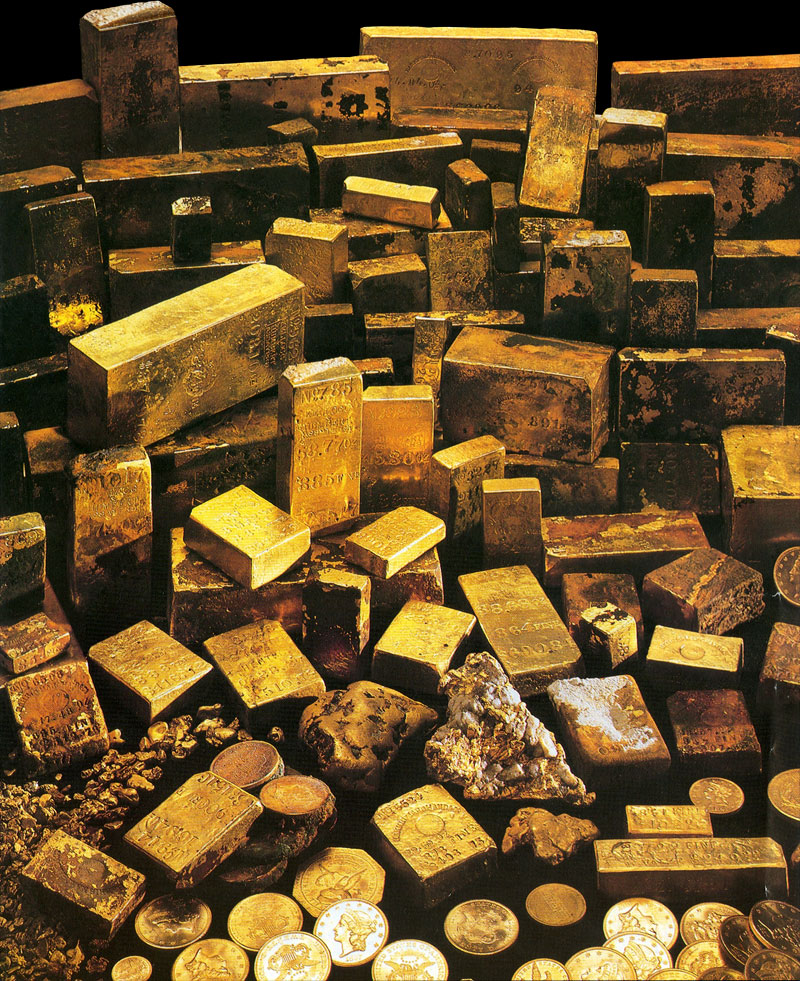
Hezekiah shows the Babylonians his treasures: “Hezekiah was pleased by their coming, and he showed them his treasure house — the silver, the gold, the spices, and the fragrant oil — and all his armory, and everything that was to be found in his storehouses. There was nothing in his palace or in all his realm that Hezekiah did not show them.” (v. 2)

III. Important Verses
1-2: At that time, Merodach-baladan son of Baladan, the king of Babylon, sent [envoys with] a letter and a gift to Hezekiah, for he had heard about his illness and recovery. Hezekiah was pleased by their coming, and he showed them his treasure house — the silver, the gold, the spices, and the fragrant oil — and all his armory, and everything that was to be found in his storehouses. There was nothing in his palace or in all his realm that Hezekiah did not show them.
5-7: Then Isaiah said to Hezekiah, “Hear the word of the LORD of Hosts: A time is coming when everything in your palace, which your ancestors have stored up to this day, will be carried off to Babylon; nothing will be left behind, said the LORD. And some of your sons, your own issue, whom you will have fathered, will be taken to serve as eunuchs in the palace of the king of Babylon.”
8: Hezekiah declared to Isaiah, “The word of the LORD that you have spoken is good.” For he thought, “It means that safety is assured for my time.”

IV. Outline
1. Merodach-baladan sends a gift to Hezekiah
2. Hezekiah shows the messengers his treasures
3-4. Hezekiah tells Isaiah what he has done
5-7. Isaiah predicts a Babylonian invasion
8. Hezekiah’s selfish agreement

V. Comment
Chapter 39 describes a visit by the messengers of Merodach-baladan and its repercussions. Who was Merodach-baladan? Ronald H. Sack writes: “During a career that spanned nearly 60 years, Merodach-baladan (Akk Marduk-apla-iddina) brought Chaldean and Aramean tribes together in opposition to Assyrian expansion in S Babylonia. Unfortunately, most of the surviving sources for Merodach-baladan’s career are Assyrian. Like the Verse Account of Nabonidus, they paint a picture of an ‘outsider’ who not only seized power by force, but also took prisoners and removed divine images from their temples. In his own accounts, he claims to have been a descendant of Eriba-Marduk, a king responsible for expansion and consolidation in Babylonia before 760 B.C. Brinkman’s observation, that Merodach-baladan was Eriba-Marduk’s grandson, is probably correct. During the reign of Tiglath-pileser III (745–727 B.C.), he sent tribute to the Assyrian capital. However, after the accession of Sargon II (722–705 B.C.) he attempted, with Elamite assistance, to thwart Assyrian intervention in S Babylonian affairs by seizing power himself. Under his leadership, after 721 B.C., both Chaldean and Aramean tribes constituted a formidable threat to the stability of the Assyrian Empire not only in Babylonia, but in Elam, Arabia, and Judah as well.” (Ronald H. Sack, “Merodach-baladan” in Anchor Bible Dictionary v. 4 p. 704-5)

Although most of chapters 1-39 deal with the events of the 8th century BCE (Isaiah was an 8th century prophet), the chapters that follow deal with events of the 6th century. While many traditional commentators (e.g. Amos Hakham in “Da’at Miqra’”) view the entire book to have been written by Isaiah, many modern scholars disagree. Collins writes: “Only a small part of the book of Isaiah, however, can be associated with the prophet of the eighth century. Chapters 40-66 clearly relate to the Babylonian exile and its aftermath. Cyrus of Persia, who lived in teh sixth century B.C.E., is mentioned by name in Isa 44:28 ad 45:1. With the rise of critical scholarship in the late eighteenth centur, sholars were unwilling to believe that a prophet who lived in the eighth century would have prophesied so specifically about the sixth. (Some conservatives still fight a rearguard action on this question.) It was more reasonable to assume that these oracles were composed by an anonymous prophet who lived in the sixth century. This prophet was dubbed ‘Second Isaiah’ or ‘Deutero-Isaiah,’ although there is no evidence that he spoke in the name of Isaiah. At the end of the nineteenth century, the German scholar Bernhard Duhm argued that chapters 56-66 should be distinguished as the work of a third prophet, dubbed ‘Third Isaiah’ or ‘Trito-Isaiah.’ For the last century or so it has been customary to refer to chapters 1-39 as ‘First Isaiah.’” (308)

VI. Works Used
(see “Commentaries” page)
Blenkinsopp, Joseph. “Isaiah 1-39” The Anchor Bible vol. 19 (New York: Doubleday, 2000).
Collins, John J. “Introduction to the Hebrew Bible,” (Minneapolis: Fortress Press, 2004).
Sweeney, Marvin A. “Isaiah 1-39 with an Introduction to Prophetic Literature” The Forms of Old Testament Literature vol. 16 (Grand Rapids, Michigan: William B. Eerdmans, 1996).
Photo taken from http://krafttelerobotics.com/industries/undersea/treasure/images/gold.jpg