Ezekiel 32 – “Doom for Egypt – Part IV”

Hebrew-English Text
I. Summary
God vows to annihilate the Egyptians and to send them to the underworld.

II. Photo
Egypt’s cattle will disappear: “I will make all her cattle vanish from beside abundant waters.” (v. 13a)

III. Important Verses
2-6: O mortal, intone a dirge over Pharaoh king of Egypt. Say to him: O great beast among the nations, you are doomed! You are like the dragon in the seas, Thrusting through their streams, Stirring up the water with your feet And muddying their streams! Thus said the Lord GOD: I will cast My net over you In an assembly of many peoples, And you shall be hauled up in My toils. And I will fling you to the ground, Hurl you upon the open field. I will cause all the birds of the sky To settle upon you. I will cause the beasts of all the earth To batten on you. I will cast your carcass upon the hills And fill the valleys with your rotting flesh. I will drench the earth With your oozing blood upon the hills, And the watercourses shall be filled with your [gore].
16: This is a dirge, and it shall be intoned; The women of the nations shall intone it, They shall intone it over Egypt and all her multitude — declares the Lord GOD.
21-23: From the depths of Sheol the mightiest of warriors speak to him and his allies; the uncircumcised, the slain by the sword, have gone down and lie there. Assyria is there with all her company, their graves round about, all of them slain, fallen by the sword. Their graves set in the farthest recesses of the Pit, all her company are round about her tomb, all of them slain, fallen by the sword — they who struck terror in the land of the living.
29: Edom is there, her kings and all her chieftains, who, for all their might, are laid among those who are slain by the sword; they too lie with the uncircumcised and with those who have gone down to the Pit.

IV. Outline

1-16. Oracle #1
    1-2a. Introduction
    2b-14. Lament for Egypt
        2b-6. God will utterly destroy Egypt
        7-8. God will bring darkness to the land
        9-10. Fear will spread
        11-12. Babylon will annihilate the Egyptians
        13-14a. The cattle will disappear
        14b. Conclusion
    15. Conclusion
    16a. Description of the lament
    16b. Conclusion
17-32. Oracle #2
    17-18. Introduction
    19-21. Egypt will descend to Sheol
    22-23. Assyria resides in Sheol
    24-25. Elam resides in Sheol
    26-27. Meshech and Tubal reside in Sheol
    28. Egypt will descend to Sheol
    29. Edom resides in Sheol
    30. The [Phoenician] princes of the north reside in Sheol
    31a. Pharaoh will be killed
    31b. Conclusion
    32a. Egypt will be terrified
    32b. Conclusion

V. Comment
No comment today. Stay tuned.

VI. Works Used
(see “Commentaries” page)
Allen, Leslie C. “Ezekiel 1-19” Word Biblical Commentary vol. 28 (Waco, Texas: Wordbook, 1994).
Collins, John J. “Introduction to the Hebrew Bible,” (Minneapolis: Fortress Press, 2004).
Hals, Ronald M. “Ezekiel” The forms of the Old Testament Literature vol. 19 (Grand Rapids, Michigan: Eerdmans, 1989)
Photo taken from http://www.siouxnationag.com/uploads/image/cattleriver.jpg

Ezekiel 31 – “Doom for Egypt – Part III”

Hebrew-English Text
I. Summary
Pharaoh’s empire will fall like the Assyrian empire.

II. Photo
Assyria is likened to a mighty tree: “In its branches nested All the birds of the sky.” (v. 6a)

III. Important Verses
3-9: Assyria was a cedar in Lebanon With beautiful branches and shady thickets, Of lofty stature, With its top among leafy trees. Waters nourished it, The deep made it grow tall, Washing with its streams The place where it was planted, Making its channels well up To all the trees of the field. Therefore it exceeded in stature All the trees of the field; Its branches multiplied and its boughs grew long Because of the abundant water That welled up for it.  In its branches nested All the birds of the sky; All the beasts of the field Bore their young under its boughs, And in its shadow lived All the great nations. It was beautiful in its height, In the length of its branches, Because its stock stood By abundant waters. Cedars in the garden of God Could not compare with it; Cypresses could not match its boughs, And plane trees could not vie with its branches; No tree in the garden of God Was its peer in beauty. I made it beautiful In the profusion of its branches; And all the trees of Eden envied it In the garden of God.
12: Strangers, the most ruthless of nations, cut it down and abandoned it; its branches fell on the mountains and in every valley; its boughs were splintered in every watercourse of the earth; and all the peoples of the earth departed from its shade and abandoned it.
18: [Now you know] who is comparable to you in glory and greatness among the trees of Eden. And you too shall be brought down with the trees of Eden to the lowest part of the netherworld; you shall lie among the uncircumcised and those slain by the sword. Such shall be [the fate of] Pharaoh and all his hordes — declares the Lord GOD.

IV. Outline
1-2a. Introduction
2b. Query to the haughty Pharaoh
3-9. Assyria is a towering cedar tree
10-14. The mighty tree fell
15-17. The tree’s supporters also fell
18a. Egypt will suffer a similar fate
18b. Conclusion

V. Comment
Chapter 31 describes the fall of Assyria and portends doom for Egypt. For the historical background to this period of Israelite history, see “Ezekiel, Book of” by Lawrence Boadt in the Anchor Bible Dictionary (vol. 2, pp. 713-714): “Ezekiel lived through the greatest crisis in ancient Israel’s history: the final destruction of Judah and its capital, Jerusalem; the loss of independence in the promised land, exile of all the leading citizens to Babylonia; and the tearing down of the temple and removal of the House of David from kingship (2 Kings 25; Jeremiah 39–41, 52; Lamentations 1–5; 2 Chronicles 36). It was a double tragedy, for each of the losses just listed had both political and theological ramifications for the people, and not only were their physical lives disrupted but their faith was shaken as well.

“Since the middle of the 8th century B.C.E., events in Palestine had been determined by the policies of Assyria, the world power of the day. The N kingdom had come under Assyrian domination by the middle of the 9th century and was treated as a vassal state. Rebellion led to its fall in 722 B.C.E., and its territory had been made into a full Assyrian province. The wars surrounding this traumatic loss had brought the S kingdom of Judah into the Assyrian orbit as well (cf. Isaiah 6–8). Its king, Hezekiah, had tried to revolt in 705–701, but failed; and although Judah was not wiped out completely, its next king, Manasseh, remained a faithful servant of Assyria throughout his long reign (2 Kings 18–21).
“Manasseh’s grandson, Josiah, came to the throne in 640 as an eight-year-old boy. When he came of age to rule in 628, he began a religious reform as well as a political effort to retake the N territories (2 Chronicles 34). The Assyrian empire had become seriously weakened after the death of its last strong king, Assurbanipal, and the Babylonians were building a new empire at its expense. Josiah was succeeding in both his religious and political goals until a foolish attempt to intervene against an Egyptian army going to the aid of Assyria led to his premature death in battle in 609 B.C.E. His son and successor Jehoiakim ended any further religious reform.
“In 605 a victory over Egypt brought the Babylonians to power over Judah. Jehoiakim pledged loyalty to Babylon but was soon attempting to rebel and win back Judah’s independence. The prophet Jeremiah’s ministry was largely carried out in opposition to this political opportunism of Jehoiakim. Jeremiah called for loyalty to the covenant with God and to the covenant treaty with Babylon; he warned that the God of Israel would not stand by a pledge to defend the people if they continued to rebel. Jeremiah’s words were only too accurate, and in 598 a Babylonian army sacked the city of Jerusalem and led most of its educated and gifted citizens into exile (2 Kgs 24:1–7). Jehoiakim died during the siege, and the Babylonians took his young son Jehoiachin with them as a captured pledge so that further rebellion would not occur. In his place they named his uncle Zedekiah to rule as regent (2 Kgs 24:8–20). But he, too, in the following years began plotting to be free, and in a second prolonged attack of three years (588–586), Nebuchadrezzar’s army leveled the cities of Judah and finally burned Jerusalem to the ground, taking away whatever remained of value and exiling the rest of its leading citizens in the summer of 586 (see 2 Kings 25; Jeremiah 52). Jeremiah survived this period of horror but disappeared soon after being forcibly taken to Egypt in 583 or so (see Jeremiah 37–45).”

VI. Works Used
(see “Commentaries” page)
Allen, Leslie C. “Ezekiel 1-19” Word Biblical Commentary vol. 28 (Waco, Texas: Wordbook, 1994).
Collins, John J. “Introduction to the Hebrew Bible,” (Minneapolis: Fortress Press, 2004).
Hals, Ronald M. “Ezekiel” The forms of the Old Testament Literature vol. 19 (Grand Rapids, Michigan: Eerdmans, 1989)
Photo taken from http://131.111.69.66/~grant/wp/wp-content/uploads/2009/03/dsc_0457.jpg

Ezekiel 30 – “Doom For Egypt – Part II”

Hebrew-English Text
I. Summary
The king of Babylon will ravage Egypt and its allies.

II. Photo
Egypt’s day has come: “Wail, alas for the day! For a day is near; A day of the Lord is near! It will be a day of cloud, an hour of [invading] nations!” (vv. 2b-3)

III. Important Verses
4-5: A sword shall pierce Egypt, And Nubia shall be seized with trembling, When men fall slain in Egypt And her wealth is seized And her foundations are overthrown. Nubia, Put, and Lud, and all the mixed populations, and Cub, and the inhabitants of the allied countries shall fall by the sword with them.
10-12: Thus said the Lord GOD: I will put an end to the wealth of Egypt through King Nebuchadrezzar of Babylon. He, together with his troops, the most ruthless of the nations, shall be brought to ravage the land. And they shall unsheathe the sword against Egypt and fill the land with the slain. I will turn the channels into dry ground, and I will deliver the land into the hands of evil men. I will lay waste the land and everything in it by the hands of strangers. I the LORD have spoken.
25-26: I will make firm the arms of the king of Babylon, but the arms of Pharaoh shall fail. And they shall know that I am the LORD, when I put My sword into the hand of the king of Babylon, and he lifts it against the land of Egypt. I will scatter the Egyptians among the nations and disperse them throughout the countries. Thus they shall know that I am the LORD.

IV. Outline

1-12. Oracle #1
    1-2a. Introduction
    2b-12a. Nebuchadrezzar will destroy Egypt and its allies
    12b. Conclusion
13-19. Oracle #2
    13a. Introduction
    13b-19a. God will annihilate Egypt and its allies
    19b. Conclusion
20-26. Oracle #3
    20. Introduction
    21-26a. God will deliver Egypt to Babylon and scatter the Egyptians
    26b. Conclusion

V. Comment
No comment today. Stay tuned.

VI. Works Used
(see “Commentaries” page)
Allen, Leslie C. “Ezekiel 1-19” Word Biblical Commentary vol. 28 (Waco, Texas: Wordbook, 1994).
Collins, John J. “Introduction to the Hebrew Bible,” (Minneapolis: Fortress Press, 2004).
Hals, Ronald M. “Ezekiel” The forms of the Old Testament Literature vol. 19 (Grand Rapids, Michigan: Eerdmans, 1989)
Photo taken from http://mnewmanphoto.com/gallery/img/clouds.jpg

Ezekiel 29 – “Doom for Egypt”

Hebrew-English Text
I. Summary
God vows to punish Pharaoh and to give Egypt to the king of Babylon.

II. Photo
God vows to punish Pharaoh: “I will haul you up from your channels, with all the fish of your channels clinging to your scales!” (v. 4b)

III. Important Verses
3-6: Speak these words: Thus said the Lord GOD: I am going to deal with you, O Pharaoh king of Egypt, Mighty monster, sprawling in your channels, Who said, My Nile is my own; I made it for myself. I will put hooks in your jaws, And make the fish of your channels Cling to your scales; I will haul you up from your channels, With all the fish of your channels Clinging to your scales. And I will fling you into the desert, With all the fish of your channels. You shall be left lying in the open, Ungathered and unburied: I have given you as food To the beasts of the earth And the birds of the sky. Then all the inhabitants of Egypt shall know That I am the LORD. Because you were a staff of reed To the House of Israel:
10-12: Assuredly, I am going to deal with you and your channels, and I will reduce the land of Egypt to utter ruin and desolation, from Migdol to Syene, all the way to the border of Nubia. No foot of man shall traverse it, and no foot of beast shall traverse it; and it shall remain uninhabited for forty years. For forty years I will make the land of Egypt the most desolate of desolate lands, and its cities shall be the most desolate of ruined cities. And I will scatter the Egyptians among the nations and disperse them throughout the countries.
18-20: O mortal, King Nebuchadrezzar of Babylon has made his army expend vast labor on Tyre; every head is rubbed bald and every shoulder scraped. But he and his army have had no return for the labor he expended on Tyre. Assuredly, thus said the Lord GOD: I will give the land of Egypt to Nebuchadrezzar, king of Babylon. He shall carry off her wealth and take her spoil and seize her booty; and she shall be the recompense of his army. As the wage for which he labored, for what they did for Me, I give him the land of Egypt — declares the Lord GOD.

IV. Outline

1-16. Oracle #1
    1-3a. Introduction
    3b. Pharaoh’s conceit
    4-7. God will punish Pharaoh for harming Israel
    8-9. God will punish Egypt for Pharaoh’s pride
    10-12. God will destroy Egypt for 40 years
    13-16. Egypt will rise, but never to its former glory
17-20. Oracle #2
    17. Introduction
    18-19. Nebuchadrezzar will conquer Egypt
    20. Israel will be strengthened

V. Comment
No comment today. Stay tuned.

VI. Works Used
(see “Commentaries” page)
Allen, Leslie C. “Ezekiel 1-19” Word Biblical Commentary vol. 28 (Waco, Texas: Wordbook, 1994).
Collins, John J. “Introduction to the Hebrew Bible,” (Minneapolis: Fortress Press, 2004).
Hals, Ronald M. “Ezekiel” The forms of the Old Testament Literature vol. 19 (Grand Rapids, Michigan: Eerdmans, 1989)
Photo taken from http://www.featuredpix.com/uploads/0/157_640x480.jpg

Ezekiel 28 – “Rebuke for the Prince of Tyre; A Lament for Tyre; Doom for Sidon; God’s Vow to the Israelites”

Hebrew-English Text
I. Summary
God reprimands the prince of Tyre, laments the fall of that city, promises to destroy Sidon, and vows to return Israel to its land.

II. Photo
Tyre once enjoyed an abundance of riches: “Every precious stone was your adornment: Carnelian, chrysolite, and amethyst; Beryl, lapis lazuli, and jasper; Sapphire, turquoise, and emerald.” (v. 13)

III. Important Verses
2, 7-9: O mortal, say to the prince of Tyre: Thus said the Lord GOD: Because you have been so haughty and have said, “I am a god; I sit enthroned like a god in the heart of the seas,” whereas you are not a god but a man, though you deemed your mind equal to a god’s… I swear I will bring against you Strangers, the most ruthless of nations. They shall unsheathe their swords Against your prized shrewdness, And they shall strike down your splendor. They shall bring you down to the Pit; In the heart of the sea you shall die The death of the slain. Will you still say, “I am a god” Before your slayers, When you are proved a man, not a god, At the hands of those who strike you down?
13: You were in Eden, the garden of God; Every precious stone was your adornment: Carnelian, chrysolite, and amethyst; Beryl, lapis lazuli, and jasper; Sapphire, turquoise, and emerald; And gold beautifully wrought for you, Mined for you, prepared the day you were created.
15: You were blameless in your ways, From the day you were created Until wrongdoing was found in you.
19: All who knew you among the peoples Are appalled at your doom. You have become a horror And have ceased to be forever.
25-26: Thus said the Lord GOD: When I have gathered the House of Israel from the peoples among which they have been dispersed, and have shown Myself holy through them in the sight of the nations, they shall settle on their own soil, which I gave to My servant Jacob, and they shall dwell on it in security. They shall build houses and plant vineyards, and shall dwell on it in security, when I have meted out punishment to all those about them who despise them. And they shall know that I the LORD am their God.

IV. Outline

1-10. Oracle #1
    1-2a. Introduction
    2b. The prince of Tyre compared himself to God
    3-5. The prince’s wisdom has brought him great wealth
    6-10. The prince’s mortality will be proven when foreigners kill him
11-19. Oracle #2
    10-12a. Introduction
    12b-. Lament for Tyre
        12b. Tyre’s perfection
        13. The precious stones of Tyre
        14. Tyre was like a cherub
        15. Tyre was blameless
        16. Tyre’s lawlessness and punishment
        17. Tyre’s pride led to its downfall
        18. God burned Tyre for its thievery
        19. Tyre has become a byword for destruction
20-24. Oracle #3
    20-22a. Intro
    22b-23. God will wreak havoc upon the city of Sidon
    24. Israel will benefit from Tyre’s downfall
25-26. Oracle #4
    25-26. God will let Israel prosper in its land

V. Comment
No comment today. Stay tuned.

VI. Works Used
(see “Commentaries” page)
Allen, Leslie C. “Ezekiel 1-19” Word Biblical Commentary vol. 28 (Waco, Texas: Wordbook, 1994).
Collins, John J. “Introduction to the Hebrew Bible,” (Minneapolis: Fortress Press, 2004).
Hals, Ronald M. “Ezekiel” The forms of the Old Testament Literature vol. 19 (Grand Rapids, Michigan: Eerdmans, 1989)
Photo taken from http://lilacjewelry.com/images/semi-precious.jpg

Ezekiel 27 – “Doom for Tyre – Part II”

Hebrew-English Text
I. Summary
Tyre, a wealthy center of international trade, will be mourned by the sailors that once traded in its port.

II. Photo
Tyre is likened to a rowing ship: “The inhabitants of Sidon and Arvad were your rowers; Your skilled men, O Tyre, were within you, they were your pilots.” (v. 8 )

III. Important Verses
9b: All the ships of the sea, with their crews, Were in your harbor To traffic in your wares.
13-25: Javan, Tubal, and Meshech — they were your merchants; they trafficked with you in human beings and copper utensils. From Beth-togarmah they bartered horses, horsemen, and mules for your wares. The people of Dedan were your merchants; many coastlands traded under your rule and rendered you tribute in ivory tusks and ebony. Aram traded with you because of your wealth of merchandise, dealing with you in turquoise, purple stuff, embroidery, fine linen, coral, and agate. Judah and the land of Israel were your merchants; they trafficked with you in wheat of Minnith and Pannag, honey, oil, and balm. Because of your wealth of merchandise, because of your great wealth, Damascus traded with you in Helbon wine and white wool. Vedan and Javan from Uzal traded for your wares; they trafficked with you in polished iron, cassia, and calamus. Dedan was your merchant in saddlecloths for riding. Arabia and all Kedar’s chiefs were traders under your rule; they traded with you in lambs, rams, and goats. The merchants of Sheba and Raamah were your merchants; they bartered for your wares all the finest spices, all kinds of precious stones, and gold. Haran, Canneh, and Eden, the merchants of Sheba, Assyria, and Chilmad traded with you. These were your merchants in choice fabrics, embroidered cloaks of blue, and many-colored carpets tied up with cords and preserved with cedar — among your wares. The ships of Tarshish were in the service of your trade. So you were full and richly laden On the high seas.
29-31:  And all the oarsmen and mariners, All the pilots of the sea, Shall come down from their ships And stand on the ground. They shall raise their voices over you And cry out bitterly; They shall cast dust on their heads And strew ashes on themselves. On your account, they shall make Bald patches on their heads, And shall gird themselves with sackcloth. They shall weep over you, brokenhearted, With bitter lamenting.

IV. Outline
1-3a. Introduction
3b-25. Tyre’s wealth, power, and international trade
26-28. Tyre will sink
29-32a. The seamen of the world will lament
32b-36. The sailors’ lament

V. Comment
No comment today. Stay tuned.

VI. Works Used
(see “Commentaries” page)
Allen, Leslie C. “Ezekiel 1-19” Word Biblical Commentary vol. 28 (Waco, Texas: Wordbook, 1994).
Collins, John J. “Introduction to the Hebrew Bible,” (Minneapolis: Fortress Press, 2004).
Hals, Ronald M. “Ezekiel” The forms of the Old Testament Literature vol. 19 (Grand Rapids, Michigan: Eerdmans, 1989)
Photo taken from http://www.adenastevens.com/content/photos/row2.jpg

Ezekiel 26 – “Doom for Tyre”

Hebrew-English Text
I. Summary
God vows to annihilate the island of Tyre.

II. Photo
God vows to raze the island: “I will scrape her soil off her and leave her a naked rock – she shall be in the heart of the sea a place for drying nets!” (vv. 4b-5a)

III. Important Verses
3b-5a: I am going to deal with you, O Tyre! I will hurl many nations against you, As the sea hurls its waves. They shall destroy the walls of Tyre And demolish her towers; And I will scrape her soil off her And leave her a naked rock. She shall be in the heart of the sea A place for drying nets; For I have spoken it — declares the Lord GOD.
7: For thus said the Lord GOD: I will bring from the north, against Tyre, King Nebuchadrezzar of Babylon, a king of kings, with horses, chariots, and horsemen — a great mass of troops.
13-14: I will put an end to the murmur of your songs, And the sound of your lyres shall be heard no more. I will make you a naked rock, You shall be a place for drying nets; You shall never be rebuilt. For I have spoken — declares the Lord GOD.
17-18: And they shall intone a dirge over you, and they shall say to you: ¶ How you have perished, you who were peopled from the seas, O renowned city! Mighty on the sea were she and her inhabitants, Who cast their terror on all its inhabitants. Now shall the coastlands tremble On the day of your downfall, And the coastlands by the sea Be terrified at your end.

IV. Outline
1. Introduction
2. Tyre is destroyed
3-6. Nations will attack Tyre and destroy it
7-12. Nebuchadrezzar will destroy Tyre
13-14. Tyre will never be rebuilt
15-17a. Rulers will tremble upon hearing Tyre’s fate
17b-18. The lament of the foreign rulers
19-21. Summary: Tyre will never be rebuilt

V. Comment
Chapter 26 begins a tirade against the city of Tyre. It is interesting to note that Tyre, which is now a peninsula, was once an Island (the causeway was built in the summer of 332 BCE). This fact is attested to in Ezek 27:32 which says, “Who was like Tyre when she was silenced In the midst of the sea?” and vv. 4b-5a of our chapter: “I will scrape her soil off her and leave her a naked rock – she shall be in the heart of the sea a place for drying nets!” Before Hiram’s time (ca. 960 BCE), Tyre was actually two islands, but he combined the two (this was one of his many building projects). (See Katzenstein, H. J. “Tyre (Place)” in Anchor Bible Dictionary, Vol. VI, pp. 686-692)

VI. Works Used
(see “Commentaries” page)
Allen, Leslie C. “Ezekiel 1-19” Word Biblical Commentary vol. 28 (Waco, Texas: Wordbook, 1994).
Collins, John J. “Introduction to the Hebrew Bible,” (Minneapolis: Fortress Press, 2004).
Hals, Ronald M. “Ezekiel” The forms of the Old Testament Literature vol. 19 (Grand Rapids, Michigan: Eerdmans, 1989)
Photo taken from http://www.tradebit.com/usr/stock-photos/pub/9002/1284920.jpg

Ezekiel 25 – “God Vows to Punish Israel’s Neighbors”

Hebrew-English Text
I. Summary
God vows to destroy Israel’s neighbors for reveling in Jerusalem’s downfall.

II. Photo
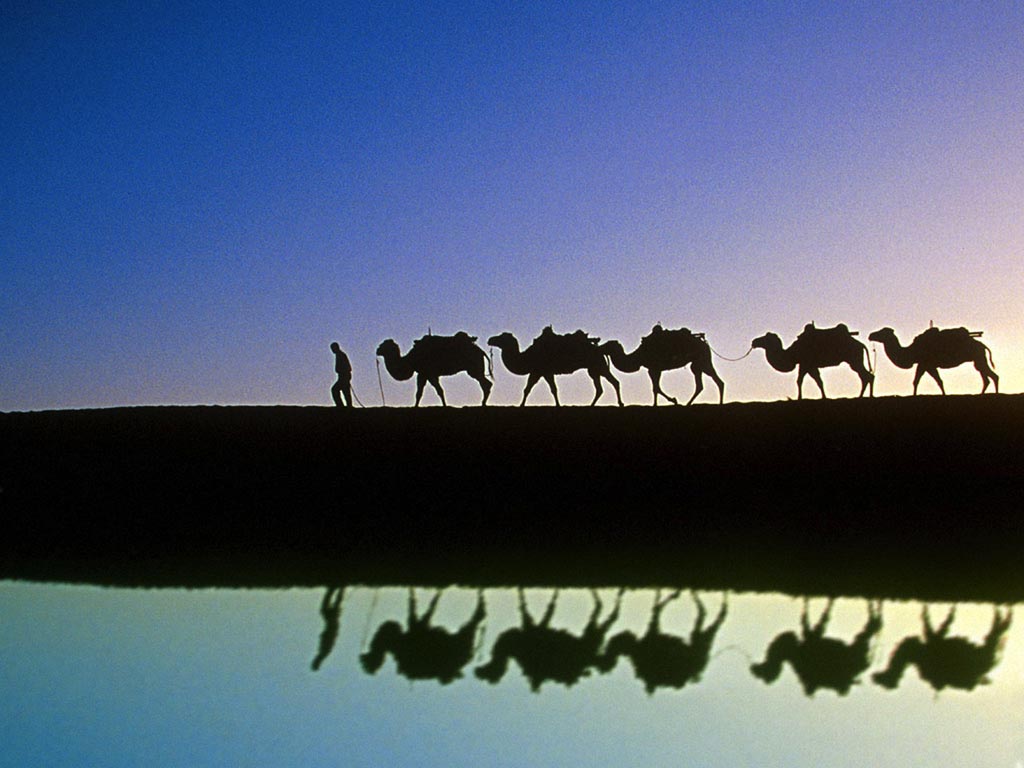
God vows to annihilate an Ammonite city: “I will make Rabbah a pasture for camels!” (v. 5a)

III. Important Verses
3-4: Say to the Ammonites: Hear the word of the Lord GOD! Thus said the Lord GOD: Because you cried “Aha!” over My Sanctuary when it was desecrated, and over the land of Israel when it was laid waste, and over the House of Judah when it went into exile — assuredly, I will deliver you to the Kedemites as a possession. They shall set up their encampments among you and pitch their dwellings in your midst; they shall eat your produce and they shall drink your milk.
6-7: For thus said the Lord GOD: Because you clapped your hands and stamped your feet and rejoiced over the land of Israel with such utter scorn — assuredly, I will stretch out My hand against you and give you as booty to the nations; I will cut you off from among the peoples and wipe you out from among the countries and destroy you. And you shall know that I am the LORD.
8-9: Thus said the Lord GOD: Because Moab and Seir said, “See, the House of Judah is like all other nations” — assuredly, I will lay bare the flank of Moab, all its towns to the last one — Beth-jeshimoth, Baal-meon, and Kiriathaim, the glory of the country.
12-13: Thus said the Lord GOD: Because Edom acted vengefully against the House of Judah and incurred guilt by wreaking revenge upon it — assuredly, thus said the Lord GOD: I will stretch out My hand against Edom and cut off from it man and beast, and I will lay it in ruins; from Tema to Dedan they shall fall by the sword.

IV. Outline
1. Introduction
2-7. The Ammonites will be conquered by the Kedemites
8-11. Moab and Seir (Edom) will suffer the fate of the Ammonites
12-14. The Israelites will destroy Edom
15-17. God will wipe out the Philistines

V. Comment
No comment today. Stay tuned.

VI. Works Used
(see “Commentaries” page)
Allen, Leslie C. “Ezekiel 1-19” Word Biblical Commentary vol. 28 (Waco, Texas: Wordbook, 1994).
Collins, John J. “Introduction to the Hebrew Bible,” (Minneapolis: Fortress Press, 2004).
Hals, Ronald M. “Ezekiel” The forms of the Old Testament Literature vol. 19 (Grand Rapids, Michigan: Eerdmans, 1989)
Photo taken from http://www.deskpicture.com/DPs/Nature/Animals/Camels.jpg

Ezekiel 24 – “God Vows to Cleanse Jerusalem; The Death of Ezekiel’s Wife”

Hebrew-English Text
I. Summary
God vows to purge Jerusalem of its sins and commands Ezekiel not to mourn the death of his wife.

II. Photo
Jerusalem is likened to a dirty pot: “Woe to the city of blood — A cauldron whose scum is in it, whose scum has not been cleaned out!” (v. 6)

III. Important Verses
2: O mortal, record this date, this exact day; for this very day the king of Babylon has laid siege to Jerusalem.
9-13: Assuredly, thus said the Lord GOD: Woe to the city of blood! I in turn will make a great blaze. Pile on the logs, Kindle the fire, Cook the meat through And stew it completely, And let the bones be charred. Let it stand empty on the coals, Until it becomes so hot That the copper glows. Then its uncleanness shall melt away in it, And its rust be consumed. It has frustrated all effort, Its thick scum will not leave it — Into the fire with its scum! For your vile impurity — because I sought to cleanse you of your impurity, but you would not be cleansed — you shall never be clean again until I have satisfied My fury upon you.
16-17: O mortal, I am about to take away the delight of your eyes from you through pestilence; but you shall not lament or weep or let your tears flow. Moan softly; observe no mourning for the dead: Put on your turban and put your sandals on your feet; do not cover over your upper lip, and do not eat the bread of comforters.”

IV. Outline

1-14. Oracle #1
    1. Introduction
    2. The king of Babylon lays siege to Jerusalem
    3-8. Metaphor: Israel is like a grimy pot with choice meats
    9-13. God will burn the grime off the pot with fire
    14. God has made up his mind and will not relent
15-27. Oracle #2
    15. Introduction
    16-17. God tells Ezekiel not to mourn when his wife dies
    18a. Ezekiel does not mourn when his wife dies
    18b-19. The people ask about Ezekiel’s behavior
    20-23. God will destroy the temple and the people will not mourn their dead
    24-27. A fugitive will come to Ezekiel on the day of destruction

V. Comment
No comment today. Stay tuned.

VI. Works Used
(see “Commentaries” page)
Allen, Leslie C. “Ezekiel 1-19” Word Biblical Commentary vol. 28 (Waco, Texas: Wordbook, 1994).
Collins, John J. “Introduction to the Hebrew Bible,” (Minneapolis: Fortress Press, 2004).
Hals, Ronald M. “Ezekiel” The forms of the Old Testament Literature vol. 19 (Grand Rapids, Michigan: Eerdmans, 1989)
Photo taken from http://www.laurelleaffarm.com/photos/h8737.jpg

Ezekiel 23 – “Jerusalem and Samaria: Two Whoring Sisters”

Hebrew-English Text
I. Summary
God likens Jerusalem and Samaria to two sisters killed for their whoring.

II. Photo
Jerusalem will suffer the same fate as Samaria: “The cup of your sister Samaria — you shall drink it and drain it, and gnaw its shards!” (vv. 33b-34a)

III. Important Verses
2-4: O mortal, once there were two women, daughters of one mother. They played the whore in Egypt; they played the whore while still young. There their breasts were squeezed, and there their virgin nipples were handled.  Their names were: the elder one, Oholah; and her sister, Oholibah. They became Mine, and they bore sons and daughters. As for their names, Oholah is Samaria, and Oholibah is Jerusalem.
22-23: Assuredly, Oholibah, thus said the Lord GOD: I am going to rouse against you the lovers from whom you turned in disgust, and I will bring them upon you from all around —  the Babylonians and all the Chaldeans, [the people of] Pekod, Shoa, and Koa, and all the Assyrians with them, all of them handsome young fellows, governors and prefects, officers and warriors, all of them riding on horseback.
32-34: Thus said the Lord GOD: You shall drink of your sister’s cup, So deep and wide; It shall cause derision and scorn, It holds so much. You shall be filled with drunkenness and woe. The cup of desolation and horror, The cup of your sister Samaria — You shall drink it and drain it, And gnaw its shards; And you shall tear your breasts. For I have spoken — declares the Lord GOD.
36-39: Then the LORD said to me: O mortal, arraign Oholah and Oholibah, and charge them with their abominations. For they have committed adultery, and blood is on their hands; truly they have committed adultery with their fetishes, and have even offered to them as food the children they bore to Me. At the same time they also did this to Me: they defiled My Sanctuary and profaned My sabbaths. On the very day that they slaughtered their children to their fetishes, they entered My Sanctuary to desecrate it. That is what they did in My House.

IV. Outline

1. Introduction
2-3. God’s two virgin cities cheated with Egypt
4-10. Samaria was destroyed for cheating with Assyria
11-21. Jerusalem cheated with Assyria and then returned to Egypt
22-35. Jerusalem will suffer the same fate as Samaria
36-39. The specific sins of the cities
    36. Condemnation
    37a. Adultery
    37b. Murder
    37c. Idolatry
    38d. Child sacrifice
    38a. Defiling the sanctuary
    38b. Sabbath desecration
    39. Defiling the sanctuary
40-49. The cities will be punished for their cheating

V. Comment
No comment today. Stay tuned.

VI. Works Used
(see “Commentaries” page)
Allen, Leslie C. “Ezekiel 1-19” Word Biblical Commentary vol. 28 (Waco, Texas: Wordbook, 1994).
Collins, John J. “Introduction to the Hebrew Bible,” (Minneapolis: Fortress Press, 2004).
Hals, Ronald M. “Ezekiel” The forms of the Old Testament Literature vol. 19 (Grand Rapids, Michigan: Eerdmans, 1989)
Photo taken from http://www.potteryrestoration.co.uk/userimages/broken%20cup.jpg