Jeremiah 26 – “Jeremiah is Nearly Killed for his Prophecy”

handcuffs arrest handsHebrew-English Text

I. Summary

Jeremiah is seized after prophesying doom for the Temple. The people debate whether a prophet must be killed for this action. Jeremiah is ultimately protected by Ahikam.

II. Photo

Jeremiah is seized: “ And when Jeremiah finished speaking all that the LORD had commanded him to speak to all the people, the priests and the prophets and all the people seized him, shouting, “You shall die!” (v. 9)

III. Select Verses

7-9: The priests and prophets and all the people heard Jeremiah speaking these words in the House of the LORD. And when Jeremiah finished speaking all that the LORD had commanded him to speak to all the people, the priests and the prophets and all the people seized him, shouting, “You shall die! How dare you prophesy in the name of the LORD that this House shall become like Shiloh and this city be made desolate, without inhabitants?” And all the people crowded about Jeremiah in the House of the LORD.

12-14: Jeremiah said to the officials and to all the people, “It was the LORD who sent me to prophesy against this House and this city all the words you heard. Therefore mend your ways and your acts, and heed the LORD your God, that the LORD may renounce the punishment He has decreed for you. As for me, I am in your hands: do to me what seems good and right to you.

16-19: Then the officials and all the people said to the priests and prophets, “This man does not deserve the death penalty, for he spoke to us in the name of the LORD our God.” And some of the elders of the land arose and said to the entire assemblage of the people, “Micah the Morashtite, who prophesied in the days of King Hezekiah of Judah, said to all the people of Judah: ‘Thus said the LORD of Hosts:  Zion shall be plowed as a field, Jerusalem shall become heaps of ruins And the Temple Mount a shrine in the woods.’ “Did King Hezekiah of Judah, and all Judah, put him to death? Did he not rather fear the LORD and implore the LORD, so that the LORD renounced the punishment He had decreed against them? We are about to do great injury to ourselves!”

20-23: There was also a man prophesying in the name of the LORD, Uriah son of Shemaiah from Kiriath-jearim, who prophesied against this city and this land the same things as Jeremiah. King Jehoiakim and all his warriors and all the officials heard about his address, and the king wanted to put him to death. Uriah heard of this and fled in fear, and came to Egypt. But King Jehoiakim sent men to Egypt, Elnathan son of Achbor and men with him to Egypt. They took Uriah out of Egypt and brought him to King Jehoiakim, who had him put to the sword and his body thrown into the burial place of the common people.

IV. Outline

1-3. Introduction

    1. Date of prophecy

    2-3. Call to prophecy 

4-6. Jeremiah’s prophecy: disobedience will lead to destruction

7-9. Jeremiah is seized

10-11. The death penalty is proposed

12-15. Jeremiah’s response

    12-13. Jeremiah’s assertion of innocence; call to repent

    14. Acceptance of fate

    15. Condemnation

16-23. The people debate Jeremiah’s fate

    16. The people’s change of heart

    17-19. Micah was not killed and he was a catalyst for repentance

    20-23. Uriah was killed for his prophecies

24. Ahikam son of Shapham protects Jeremiah


V. Comment

Our chapter contains one of the rare biblical occurences when another biblical passage is quoted explicitly. In verses 17-19 the elders quote a prophecy of Micah:

And some of the elders of the land arose and said to the entire assemblage of the people, “Micah the Morashtite, who prophesied in the days of King Hezekiah of Judah, said to all the people of Judah: ‘Thus said the LORD of Hosts:  Zion shall be plowed as a field, Jerusalem shall become heaps of ruins And the Temple Mount a shrine in the woods.’ “Did King Hezekiah of Judah, and all Judah, put him to death? Did he not rather fear the LORD and implore the LORD, so that the LORD renounced the punishment He had decreed against them? We are about to do great injury to ourselves!”  (vv. 17-19)

As it turns out, this prophecy does appear word for word in Micah 3:12:

“Therefore because of you Zion shall be plowed as a field; Jerusalem shall become a heap of ruins, and the mountain of the house a wooded height.

Our chapter also refers to the prophecy of a certain Uriah son of Shemaiah from Kiriath-Jearim, but this figure is not known from any other source.

VI. Works Used

(see “Commentaries” page)

Photo copied from http:// allchristiannews.com/wp-content/uploads/2015/02/handcuffs1.jpg

Jeremiah 25 – “The Cup of Wrath for Judah and the Nations”

drinking wine glass tastingHebrew-English Text

I. Summary

Yahweh’s prophets have been ignored. Babylon will be destroyed 70 years after Judah. Jeremiah gives the nations a drink from the cup of wrath, signifying their doom.

II. Photo

Jeremiah gives drink to the nations: “So I took the cup from the hand of the Lord and gave drink to all the nations to whom the Lord had sent me.” (v. 17)

III. Select Verses

3: From the thirteenth year of King Josiah son of Amon of Judah, to this day — these twenty-three years — the word of the LORD has come to me. I have spoken to you persistently, but you would not listen.

11b-14: And those nations shall serve the king of Babylon seventy years. When the seventy years are over, I will punish the king of Babylon and that nation and the land of the Chaldeans for their sins — declares the LORD — and I will make it a desolation for all time. And I will bring upon that land all that I have decreed against it, all that is recorded in this book — that which Jeremiah prophesied against all the nations. For they too shall be enslaved by many nations and great kings; and I will requite them according to their acts and according to their conduct.

17-20: So I took the cup from the hand of the LORD and gave drink to all the nations to whom the LORD had sent me: Jerusalem and the towns of Judah, and its kings and officials, to make them a desolate ruin, an object of hissing and a curse — as is now the case; Pharaoh king of Egypt, his courtiers, his officials, and all his people;  all the mixed peoples; all the kings of the land of Uz; all the kings of the land of the Philistines — Ashkelon, Gaza, Ekron, and what is left of Ashdod…

33: In that day, the earth shall be strewn with the slain of the LORD from one end to the other. They shall not be mourned, or gathered and buried; they shall become dung upon the face of the earth.

IV. Outline

1-2. Prophecy and date (4th year of Jehoiakim, 1st of Nebuchadnezzar)

3. For 23 years Jeremiah’s prophecies have been ignored

4-7. Other prophets, who condemned idols, have been ignored

8-10. Yahweh will send Nebuchadnezzar to devastate the land

11-12. After 70 years Babylon will be destroyed

13-14. Babylon will receive the punishments reserved for Israel

15-29. Symbolic act: the cup of wrath

    15-16. Yahweh shows Jeremiah a cup of wrath to give to the nations

    17. Symbolic act

    18. Judah

    19. Egypt

    20a. The land of Uz

    20b. The Phillistines

    21. Transjordan: Edom, Moab, Ammon

    22-23. The Arabian tribes

    24. Elam and Persia

    25-26. Other kings; Sheshach (Babylon?)

    27-29. The message Jeremiah must recite

30-31. Proclomation: thunderous Yahweh has a case against the nations

32-33. All men will die

34-38. Shepherd analogy: Yahweh will ravage the shepherds and their flocks

V. Comment

No comment today. Stay tuned.

VI. Works Used

(see “Commentaries” page)

Photo copied from http://doubletree3.hilton.com/resources/media/dt/en_US/img/offers/information/image/100057439/DT_stockdtsippwine_677x387_FitToBoxSmallDimension_Center.jpg

Jeremiah 24 – “The Fig Analogy”

ripe delicious figsHebrew-English Text

I. Summary

Yahweh shows Jeremiah a basket of ripe figs to be eaten and a basket of spoiled figs to be discarded. This means that Yahweh will reinstate and bless the Judean exiles but cast off and kill king Zedekiah, his officials, and the Judeans in Egypt.

II. Photo

The analogy is explained: “As with these good figs, so will I single out for good the Judean exiles whom I have driven out from this place to the land of the Chaldeans (Babylon).” (v. 5)

III. Select Verses

2-3: One basket contained very good figs, like first-ripened figs, and the other basket contained very bad figs, so bad that they could not be eaten. And the LORD said to me, “What do you see, Jeremiah?” I answered, “Figs — the good ones are very good, and the bad ones very bad, so bad that they cannot be eaten.”

5-7: Thus said the LORD, the God of Israel: As with these good figs, so will I single out for good the Judean exiles whom I have driven out from this place to the land of the Chaldeans. I will look upon them favorably, and I will bring them back to this land; I will build them and not overthrow them; I will plant them and not uproot them. And I will give them the understanding to acknowledge Me, for I am the LORD. And they shall be My people and I will be their God, when they turn back to Me with all their heart.

8-10: And like the bad figs, which are so bad that they cannot be eaten — thus said the Lord — so will I treat King Zedekiah of Judah and his officials and the remnant of Jerusalem that is left in this land, and those who are living in the land of Egypt: I will make them a horror — an evil — to all the kingdoms of the earth, a disgrace and a proverb, a byword and a curse in all the places to which I banish them. I will send the sword, famine, and pestilence against them until they are exterminated from the land that I gave to them and their fathers.

IV. Outline

1a. Two baskets of figs at the temple

1b. Date: Zedekiah (after Jeconiah’s exile)

2-3. One basket is ripe, the other cannot be eaten

4-7. Yahweh will reinstate and bless the Judaean exiles

8-10. Yahweh will exterminate Zedekiah, his officials, and the Judeans in Egypt

V. Comment

No comment today. Stay tuned.

VI. Works Used

(see “Commentaries” page)

Photo copied from http://www.inspired2cook.com/wp-content/uploads/2009/09/fig-plate2.jpg

Jeremiah 23 – Oracles Condemning the False Prophets

Hammer Rock Smash CrushHebrew-English Text

I. Summary

Yahweh laments the false prophets and vows to punish them.

II. Photo

The prophets are false but Yahweh’s word is truth: “Is not my word like fire, says the Lord, and like a hammer that breaks a rock in pieces?” (v. 29)

III. Select Verses

5-6: The days are surely coming, says the LORD, when I will raise up for David a righteous Branch, and he shall reign as king and deal wisely, and shall execute justice and righteousness in the land.  In his days Judah will be saved and Israel will live in safety. And this is the name by which he will be called: “The LORD is our righteousness.”

13: In the prophets of Samaria I saw a repulsive thing: They prophesied by Baal And led My people Israel astray.

14: But what I see in the prophets of Jerusalem Is something horrifying: Adultery and false dealing. They encourage evildoers, So that no one turns back from his wickedness. To Me they are all like Sodom, And [all] its inhabitants like Gomorrah.

25: I have heard what the prophets have said who prophesy lies in my name, saying, “I have dreamed, I have dreamed!”

29: Is not my word like fire, says the LORD, and like a hammer that breaks a rock in pieces?

31: See, I am against the prophets, says the LORD, who use their own tongues and say, “Says the LORD.”

IV. Outline

1-4. Yahweh will gather the “flock” and replace its “shepherds”

5-6. Yahweh will raise a Davidic leader named “Yahweh Zidqeinu” (Zedekiah?)

7-8. The ingathering will define Israel more than the exodus

9-12. Yahweh laments and pronounces doom for his prophets and priests

13. Samaria’s prophets follow Baal

14. Jerusalem’s prophets do evil

15. Future punishment; rationale

16-18. Do not follow the false prophets

19-20. Future punishment for the wicked

21-22. The prophets are false

23-24. Yahweh is not easy to reach

25-27. The prophets are liars

28-29. Yahweh’s word is true and powerful

30-32. Yahweh opposes the false prophets

33-38. The “Masa of Yahweh” prophecies are false

39-40. Future punishment: exile and shame

V. Comment

No comment today. Stay tuned.

VI. Works Used

(see “Commentaries” page)

Photo copied from http://cache.gizmodo.com/assets/images/4/2010/01/500x_kieranwilson.jpg

Jeremiah 22 – “Doom for Josiah’s Descendants”

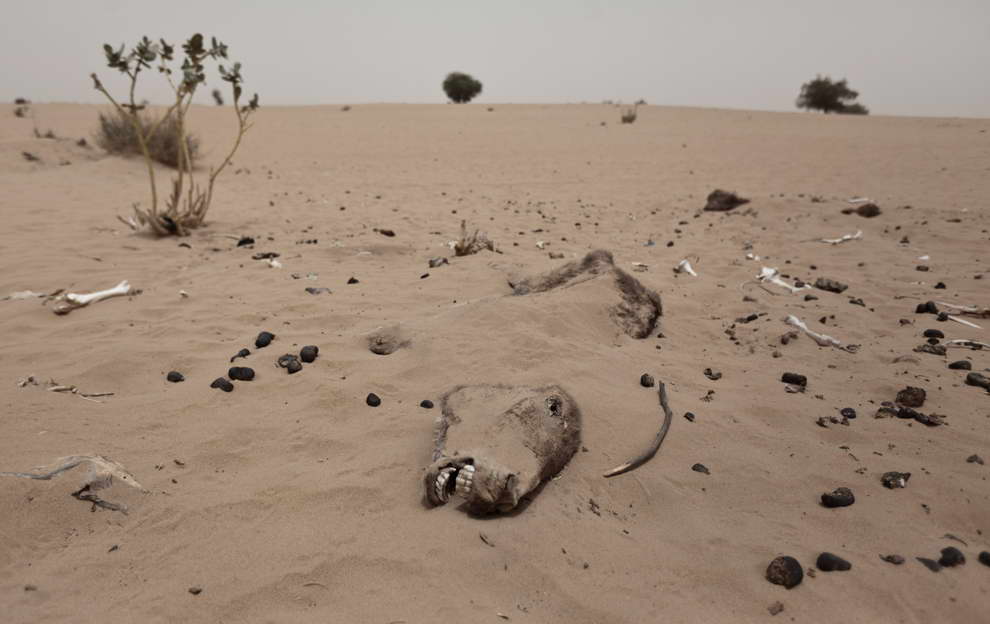
dead donkeyHebrew-English Text

I. Summary

Jeremiah prophesies exile and doom for the descendants of king Josiah.

II. Photo

King Jehoiakim will die ignominiously: “He shall have the burial of an ass, dragged out and left lying outside the gates of Jerusalem.” (v. 19)

III. Select Verses

2-5: Say: “Hear the word of the LORD: O king of Judah, you who sit on the throne of David, and your courtiers and your subjects who enter these gates! Thus said the LORD: Do what is just and right; rescue from the defrauder him who is robbed; do not wrong the stranger, the fatherless, and the widow; commit no lawless act, and do not shed the blood of the innocent in this place. For if you fulfill this command, then through the gates of this palace shall enter kings of David’s line who sit upon his throne, riding horse-drawn chariots, with their courtiers and their subjects. But if you do not heed these commands, I swear by Myself — declares the LORD — that this palace shall become a ruin.”

10-12: Do not weep for the dead And do not lament for him; Weep rather for him who is leaving, For he shall never come back To see the land of his birth!  For thus said the LORD concerning Shallum son of King Josiah of Judah, who succeeded his father Josiah as king, but who has gone forth from this place: He shall never come back. He shall die in the place to which he was exiled, and he shall not see this land again.

18-19: Assuredly, thus said the LORD concerning Jehoiakim son of Josiah, king of Judah: They shall not mourn for him, “Ah, brother! Ah, sister!” They shall not mourn for him, “Ah, lord! Ah, his majesty!”  He shall have the burial of an ass, Dragged out and left lying Outside the gates of Jerusalem.

24-26: As I live — declares the LORD — if you, O King Coniah, son of Jehoiakim, of Judah, were a signet on my right hand, I would tear you off even from there. I will deliver you into the hands of those who seek your life, into the hands of those you dread, into the hands of King Nebuchadrezzar of Babylon and into the hands of the Chaldeans. I will hurl you and the mother who bore you into another land, where you were not born; there you shall both die.

30: Thus said the LORD: Record this man [Coniah] as without succession, One who shall never be found acceptable; For no man of his offspring shall be accepted To sit on the throne of David And to rule again in Judah.

IV. Outline

1-2. Call to prophesy

3-5. Ultimatum: justice brings kingship, failure brings doom

6-9. Future punishments

10-12. Shallum will die in exile

13-16. Josiah’s greatness was justice; his son’s [Shallum’s? Jehoiakim’s?] palace is not great

17. Condemnation

18-19. Jehoiakim will die in ignominy

20-23. Condemnation and future punishment

24-30. Coniah’s (Jehoiachin’s) and his mother’s future exile; the end of the dynasty

V. Comment

No comment today. Stay tuned.

VI. Works Used

(see “Commentaries” page)

Photo copied from

http://lollitop.magicgate.eu/media/LollitopMagicgate_004/lollitop_021_ways_of_the_wind94785692462745345.jpg

Jeremiah 21 – “Doom for Jerusalem”

outstretched arm muscles flexHebrew-English Text

I. Summary

Jeremiah warns king Zedekiah and his prophet that Jerusalem will be destroyed by Nebuchadnezzar and the Babylonians.

II. Photo

Yahweh will join the Babylonians and fight against Jerusalem: “ I Myself will battle against you with an outstretched mighty arm, with anger and rage and great wrath.” (v. 5)

III. Select Verses

1-2: The word which came to Jeremiah from the LORD, when King Zedekiah sent to him Pashhur son of Malchiah and the priest Zephaniah, son of Maaseiah, to say, “Please inquire of the LORD on our behalf, for King Nebuchadrezzar of Babylon is attacking us. Perhaps the LORD will act for our sake in accordance with all His wonders, so that [Nebuchadrezzar] will withdraw from us.”

3-5: Jeremiah answered them, “Thus shall you say to Zedekiah: Thus said the LORD, the God of Israel: I am going to turn around the weapons in your hands with which you are battling outside the wall against those who are besieging you — the king of Babylon and the Chaldeans — and I will take them into the midst of this city; and I Myself will battle against you with an outstretched mighty arm, with anger and rage and great wrath.

8-9: “And to this people you shall say: Thus said the LORD: I set before you the way of life and the way of death. Whoever remains in this city shall die by the sword, by famine, and by pestilence; but whoever leaves and goes over to the Chaldeans who are besieging you shall live; he shall at least gain his life.

12: O House of David, thus said the LORD: Render just verdicts Morning by morning; Rescue him who is robbed From him who defrauded him. Else My wrath will break forth like fire And burn, with none to quench it, Because of your wicked acts.

IV. Outline

1-2. Introduction: prophetic response to Zedekiah and Pashhur about Nebuchadrezzar

3-7. Yahweh will fight on Nebuchadrezzar’s side

8-10. Those in Jerusalem will die and those who go to Babylon will live

11-12. Message to the king: injustice will lead to destruction

13-14. Yahweh will punish those in the valley (Jerusalem?) who think they are invincible

V. Comment

No comment today. Stay tuned.

VI. Works Used

(see “Commentaries” page)

Photo copied from http://th07.deviantart.net/fs70/PRE/i/2012/227/a/6/arm_of_momo_ii_by_unseen62-d5b5kh3.jpg

Jeremiah 20 – “Jeremiah’s Incarceration; Jeremiah’s Psalm-like Petition”

babies nursery hospitalHebrew-English Text

I. Summary

Jeremiah is incarcerated by Pashhur the priest and prophesies against him when he is released. Jeremiah calls on Yahweh to punish his enemies.

II. Photo

Jeremiah curses the day he was born: “Accursed be the day that I was born! Let not the day be blessed when my mother bore me!” (v. 14)

III. Select Verses

1-3a: Pashhur son of Immer, the priest who was chief officer of the House of the LORD, heard Jeremiah prophesy these things. Pashhur thereupon had Jeremiah flogged and put in the cell at the Upper Benjamin Gate in the House of the LORD. The next day, Pashhur released Jeremiah from the cell.

3b-7: But Jeremiah said to him, “The LORD has named you not Pashhur, but Magor-missabib. For thus said the LORD: I am going to deliver you and all your friends over to terror: they will fall by the sword of their enemies while you look on. I will deliver all Judah into the hands of the king of Babylon; he will exile them to Babylon or put them to the sword. And I will deliver all the wealth, all the riches, and all the prized possessions of this city, and I will also deliver all the treasures of the kings of Judah into the hands of their enemies: they shall seize them as plunder and carry them off to Babylon. As for you, Pashhur, and all who live in your house, you shall go into captivity. You shall come to Babylon; there you shall die and there you shall be buried, and so shall all your friends to whom you prophesied falsely.”

9: I thought, “I will not mention Him, No more will I speak in His name” — But [His word] was like a raging fire in my heart, Shut up in my bones; I could not hold it in, I was helpless.

10: I heard the whispers of the crowd — Terror all around: “Inform! Let us inform against him!” All my [supposed] friends Are waiting for me to stumble: “Perhaps he can be entrapped, And we can prevail against him And take our vengeance on him.”

14-15: Accursed be the day That I was born! Let not the day be blessed When my mother bore me! Accursed be the man Who brought my father the news And said, “A boy Is born to you,” And gave him such joy!

IV. Outline

1-6. Jeremiah’s incarceration

    1-2. Pashhur locks up Jeremiah

    3a. Jeremiah is released

    3b-6. Prophecy of exile for Pashhur and Judah

7-18. Jeremiah’s Psalm-like Petition

    7-10. Complaint: Jeremiah’s prophecies are not welcomed by the people

    11. Trust/imprecation

    12. Petition/imprecation

    13. Call to praise and give thanks

    14-18. Curse of Jeremiah’s birth day and birth announcer

V. Comment

No comment today. Stay tuned.

VI. Works Used

(see “Commentaries” page)

Photo copied from 

http://img.timeinc.net/time/daily/2009/0901/360_caesarian_0107.jpg

Jeremiah 19 – “Smashing the Vessel”

dv766095Hebrew-English Text
I. Summary
Jeremiah smashes a vessel to illustrate how Yahweh will smash the people of Judah on account of their idolatry.

II. Photo
Jeremiah smashes the vessel: “Thus said the Lord of Hosts: So will I smash this people and this city, as one smashes a potter’s vessel, which can never be mended.” (v. 11)

III. Select Verses
1-2: Thus said the LORD: Go buy a jug of potter’s ware. And [take] some of the elders of the people and the priests, and go out to the Valley of Ben-hinnom — at the entrance of the Harsith Gate — and proclaim there the words which I will speak to you.
4-5: For they and their fathers and the kings of Judah have forsaken Me, and have made this place alien [to Me]; they have sacrificed in it to other gods whom they have not experienced, and they have filled this place with the blood of the innocent. They have built shrines to Baal, to put their children to the fire as burnt offerings to Baal — which I never commanded, never decreed, and which never came to My mind.
9: And I will cause them to eat the flesh of their sons and the flesh of their daughters, and they shall devour one another’s flesh — because of the desperate straits to which they will be reduced by their enemies, who seek their life.
10-11: Then you shall smash the jug in the sight of the men who go with you, and say to them: “Thus said the LORD of Hosts: So will I smash this people and this city, as one smashes a potter’s vessel, which can never be mended. And they shall bury in Topheth until no room is left for burying.
13: The houses of Jerusalem and the houses of the kings of Judah shall be unclean, like that place Topheth — all the houses on the roofs of which offerings were made to the whole host of heaven and libations were poured out to other gods.”

IV. Outline

1-13. The jug analogy
    1-2. Command to bring a jug and the leaders to Ben-Hinnom
    3. Disaster approaches
    4-5. Rationale: generational idolatry
    6-9. Death and destruction await Jerusalem
    10-11. Pedagogic action: Yahweh will destroy the city as one smashes a jug
    12-13. Jerusalem will be impure as the Topheth worship site (outside of Jerusalem)
14-15. Jeremiah preaches destruction to the rest of the people

V. Comment
No comment today. Stay tuned.

VI. Works Used

(see “Commentaries” page)

Photo copied from http://vanpay.files.wordpress.com/2008/04/broken-vase.jpg

Jeremiah 18 – “Yahweh the Potter; Crime and Punishment; Jeremiah’s Petition/Imprecation”

Potter Crafting Pot on Potter's WheelHebrew-English Text

I. Summary

Yahweh shows Jeremiah that he can build or destroy a nation like a potter can build or destroy a vessel. The people will be exiled because they abandoned Yahweh. Jeremiah calls on Yahweh to kill his enemies.

II. Photo

Yahweh control’s Israel’s fate: “Just like clay in the hands of the potter, so are you in my hands, O House of Israel!” (v. 6)

III. Select Verses

1-10: The word which came to Jeremiah from the LORD: “Go down to the house of a potter, and there I will impart My words to you.” So I went down to the house of a potter, and found him working at the wheel. And if the vessel he was making was spoiled, as happens to clay in the potter’s hands, he would make it into another vessel, such as the potter saw fit to make. Then the word of the LORD came to me: O House of Israel, can I not deal with you like this potter? — says the LORD. Just like clay in the hands of the potter, so are you in My hands, O House of Israel! At one moment I may decree that a nation or a kingdom shall be uprooted and pulled down and destroyed; but if that nation against which I made the decree turns back from its wickedness, I change My mind concerning the punishment I planned to bring on it. At another moment I may decree that a nation or a kingdom shall be built and planted; but if it does what is displeasing to Me and does not obey Me, then I change My mind concerning the good I planned to bestow upon it.

18-21: They said, “Come let us devise a plot against Jeremiah — for instruction shall not fail from the priest, nor counsel from the wise, nor oracle from the prophet. Come, let us strike him with the tongue, and we shall no longer have to listen to all those words of his.” Listen to me, O LORD — And take note of what my enemies say! Should good be repaid with evil? Yet they have dug a pit for me. Remember how I stood before You To plead in their behalf, To turn Your anger away from them! Oh, give their children over to famine, Mow them down by the sword. Let their wives be bereaved Of children and husbands, Let their men be struck down by the plague, And their young men be slain in battle by the sword.

IV. Outline

1-10. Visual analogy
    1-2. Command to go to a potter
    3. Jeremiah goes
    4. The potter’s method
    5-10. Yahweh can build and destroy a nation like a potter to a pot
11. Call for repentance
12. The people will not repent
13-15. Israel had abandoned Yahweh in an unnatural way
16-17. Punishment: desolation and exile
18-. Jeremiah’s petition/imprecation
    18. Complaint about enemies
    19. Petition
    20. Affirmation of commitment
    21-23. Imprecation of enemies

V. Comment

No comment today. Stay tuned.

VI. Works Used

(see “Commentaries” page)

Photo copied from http://2.bp.blogspot.com/-nt-MhJYDAtk/T8TEMJdgXSI/AAAAAAAABYA/TGknZRooU8k/s1600/potters_wheel_13120550.jpg

Jeremiah 17 – “Petition for Divine Justice; Sabbath Prophecy”

An Afghan carries a sack of coal on his back outside KabulHebrew-English Text

I. Summary

Jeremiah affirms that Yahweh carries out justice and asks for justice to be dealt. He then calls upon the people to observe the Sabbath day.

II. Photo

The Sabbath must be observed: “Thus said the Lord: Guard yourselves for your own sake against carrying burdens on the sabbath day, and bringing them through the gates of Jerusalem.” (v. 21)

III. Select Verses

5-8: Thus said the LORD: Cursed is he who trusts in man, Who makes mere flesh his strength, And turns his thoughts from the LORD. He shall be like a bush in the desert, Which does not sense the coming of good: It is set in the scorched places of the wilderness, In a barren land without inhabitant. Blessed is he who trusts in the LORD, Whose trust is the LORD alone. He shall be like a tree planted by waters, Sending forth its roots by a stream: It does not sense the coming of heat, Its leaves are ever fresh; It has no care in a year of drought, It does not cease to yield fruit.

11:  Like a partridge hatching what she did not lay, So is one who amasses wealth by unjust means; In the middle of his life it will leave him, And in the end he will be proved a fool.

15-16: See, they say to me: “Where is the prediction of the LORD? Let it come to pass!”  But I have not evaded Being a shepherd in your service, Nor have I longed for the fatal day. You know the utterances of my lips, They were ever before You.

21-22: Thus said the LORD: Guard yourselves for your own sake against carrying burdens on the sabbath day, and bringing them through the gates of Jerusalem. Nor shall you carry out burdens from your houses on the sabbath day, or do any work, but you shall hallow the sabbath day, as I commanded your fathers.

24-27: If you obey Me — declares the LORD — and do not bring in burdens through the gates of this city on the sabbath day, but hallow the sabbath day and do no work on it,  then through the gates of this city shall enter kings who sit upon the throne of David, with their officers — riding on chariots and horses, they and their officers — and the men of Judah and the inhabitants of Jerusalem. And this city shall be inhabited for all time. And people shall come from the towns of Judah and from the environs of Jerusalem, and from the land of Benjamin, and from the Shephelah, and from the hill country, and from the Negeb, bringing burnt offerings and sacrifices, meal offerings and frankincense, and bringing offerings of thanksgiving to the House of the LORD. But if you do not obey My command to hallow the sabbath day and to carry in no burdens through the gates of Jerusalem on the sabbath day, then I will set fire to its gates; it shall consume the fortresses of Jerusalem and it shall not be extinguished.

IV. Outline

1-3a. Guilt: improper worship
3b-4. Punishment: exile and slavery
5-8. Pedagogic lesson
    5-6. Trusting in man brings doom
    7-8. Trusting in Yahweh brings blessing
9-17. Psalm-like prayer 
    9-10. Yahweh is a knowing judge
    11. Justice is always served
    12. Praise for Yahweh and his throne
    13. Doom for those who do not follow Yahweh
    14. Petition to be saved
    15-16. Affirmation of loyalty
    17. Petition and affirmation of trust
    18. Imprecation of enemies
19-26. Sabbath Prophecy
    19-20. Command to proclaim
    21-22. Prohibition of carrying on the Sabbath
    23. The people do not listen
    24-26. Honoring the Sabbath will bring the Davidic kingship back to Judah
    27. Sabbath violation will bring destruction for Jerusalem

V. Comment

No comment today. Stay tuned.

VI. Works Used

(see “Commentaries” page)

Photo copied from http://online.wsj.com/media/101811pod04_J.jpg