Psalm 40 – “Proclamation of Trust; Petition”

Hebrew-English Text
I. Summary
The psalmist proclaims his devotion to God and asks to be saved from his enemies.

II. Photo
The psalmist was saved: “[God] lifted me out of the miry pit, the slimy clay, and set my feet on a rock, steadied my legs!” (v. 3)

III. Select Verses    
2-4:  I put my hope in the LORD; He inclined toward me, and heeded my cry.  He lifted me out of the miry pit, the slimy clay, and set my feet on a rock, steadied my legs. He put a new song into my mouth, a hymn to our God. May many see it and stand in awe, and trust in the LORD.
5: Happy is the man who makes the LORD his trust, who turns not to the arrogant or to followers of falsehood.
6-8: You, O LORD my God, have done many things; the wonders You have devised for us cannot be set out before You; I would rehearse the tale of them, but they are more than can be told.  You gave me to understand that You do not desire sacrifice and meal offering; You do not ask for burnt offering and sin offering.  Then I said, “See, I will bring a scroll recounting what befell me.”
12-13: O LORD, You will not withhold from me Your compassion; Your steadfast love will protect me always. For misfortunes without number envelop me; my iniquities have caught up with me; I cannot see; they are more than the hairs of my head; I am at my wits’ end.
15-16: Let those who seek to destroy my life be frustrated and disgraced; let those who wish me harm fall back in shame. Let those who say “Aha! Aha!” over me be desolate because of their frustration.

IV. Outline

1. Superscription
2-11. Proclamation of trust/devotion/innocence
    2-4a. Account of trouble, faith, and salvation
    4b. Wish: People will trust in God
    5. Rationale
    6. Invocation, Hymnic praise
    7-9a. Description of service
    9b-11. Proclamation of innocence/faith
12-18. Petition
    12. Initial plea
    13. Complaint
    14. Petition
    15-16. Imprecation
    17. Wish/blessing
    18. Final plea

V. Comment
Like Psalm 27, Psalm 40 appears to be two psalms joined together. Craigie summarizes the argument as follows: “Psalm 40 is commonly identified as a composite psalm containing two originally independent units which have been linked into the present unified whole: A, vv 2–11 and B, vv 12–18 (though there is disagreement among holders of this view concerning where the precise point of transition might be; v 12 and/or v 13 could be viewed as a redactional link). The evidence giving rise to the two-psalm hypothesis is essentially twofold. (1) In formcritical terms, A is an individual thanksgiving psalm and B is an individual lament. (2) Verses 14–18 of this psalm are duplicated (with only minor changes) in Ps 70. If the latter is an independent composition, then Ps 40 might either be a composite work in which two psalms are joined by an editor, or a new composition in which the poet takes an older psalm (Ps 70) and develops it by additions into a new work. The two-psalm hypothesis, whatever its faults, is based on a particular interpretation of the evidence and has many adherents.” (318-319)

Like Gerstenberger, Craigie disagrees with this position: “Yet, for a number of reasons, the two-psalm hypothesis must be rejected. The problem and evidence are directly parallel to those encountered in the study of Ps 27; the argument for unity and the overall interpretation follow essentially along similar lines. First, it should be noted that the language in the two supposed “parts” of the psalm is intimately interrelated. Forms of the following roots are found in both “parts” of the psalm (the list omits duplicate forms in one or other part). (1) bvj (vv 6, 18); (2) Mxo (vv 6, 13); (3) rpsm (vv 6, 13); (4) rma (vv 8, 11, 16, 17); (5) har (vv 4, 13); (6) Xph (vv 7, 9, 15); (7) hxr (vv 9, 14);  howvt (vv 11, 17). The overlap in language and repetitive style strongly suggest a single, unified composition.

“But more persuasive than the argument of language, is that based on form and setting. As was the case in Ps 27, the apparent diversity of form is in reality not diversity at all; the two-psalm hypothesis, in fact, rises in part from too rigid a view of form-critical categories. The essence of Ps 40 is that it is a part of a liturgy, and the formal and substantial changes within the psalm are to be understood against the background of progression within the liturgy. The liturgy begins with thanksgiving, thereby establishing precedent and laying a foundation for what is to follow. It then moves on to lament and prayer; it is only in the prayer that the overall purpose of the liturgy emerges, and the preparatory role of the thanksgiving is clarified.” (319)

VI. Works Used
(see “Commentaries” page)
Collins, John J. “Introduction to the Hebrew Bible,” (Minneapolis: Fortress Press, 2004).
Craigie, Peter C. “Psalms 1-50” Word Biblical Commentary vol. 19 (Waco, Texas: Wordbooks, 1983).
Gerstenberger, Erhard S. “Psalms Part 1 with an Introduction to Cultic Poetry” Forms of Old Testament Literature (Michigan: Eerdmans, 1988).
Photo taken from


Psalm 27 – “Proclamation of Trust; Petition”

Hebrew-English Text
I. Summary
The psalmist puts his trust in God and asks for guidance and support.

II. Photo
The psalmist was orphaned: “Though my father and mother abandon me, the Lord will take me in!” (v. 10)

III. Select Verses    
1b-3: The LORD is my light and my help; whom should I fear? The LORD is the stronghold of my life, whom should I dread? When evil men assail me to devour my flesh — it is they, my foes and my enemies, who stumble and fall. Should an army besiege me, my heart would have no fear; should war beset me, still would I be confident.
4-5: One thing I ask of the LORD, only that do I seek: to live in the house of the LORD all the days of my life, to gaze upon the beauty of the LORD, to frequent His temple. He will shelter me in His pavilion on an evil day, grant me the protection of His tent, raise me high upon a rock.
7: Now is my head high over my enemies roundabout; I sacrifice in His tent with shouts of joy, singing and chanting a hymn to the LORD.
10: Though my father and mother abandon me, the LORD will take me in.
11-12: Show me Your way, O LORD, and lead me on a level path because of my watchful foes. Do not subject me to the will of my foes, for false witnesses and unjust accusers have appeared against me.

IV. Outline

1a. Superscription
1-6. Pedagogic proclamation of trust
    1b-4. Proclamation of confidence
    5-6a. Rationale: God has saved
    6b. Declaration/vow
7-13. Petition
    7. Invocation, initial plea
    8. Affirmation of confidence
    9-12. Petition, complaint
    13. Affirmation of confidence
14. Exhortation to serve God

V. Comment
No comment today. Stay tuned.

VI. Works Used
(see “Commentaries” page)
Collins, John J. “Introduction to the Hebrew Bible,” (Minneapolis: Fortress Press, 2004).
Craigie, Peter C. “Psalms 1-50” Word Biblical Commentary vol. 19 (Waco, Texas: Wordbooks, 1983).
Gerstenberger, Erhard S. “Psalms Part 1 with an Introduction to Cultic Poetry” Forms of Old Testament Literature (Michigan: Eerdmans, 1988).
Photo taken from http://www.jansochor.com/photo-blog/orphan-port-au-prince-haiti.jpg

Psalm 26 – “Petition/Protestation of Innocence”

Hebrew-English Text
I. Summary
The psalmist protests his innocence and begs God to keep him from evil-doers.

II. Photo
The psalmist proclaims his innocence: “I wash my hands in innocence, and walk around your altar, O Lord!” (v. 6)

III. Select Verses    
1b-3: Vindicate me, O LORD, for I have walked without blame; I have trusted in the LORD; I have not faltered. Probe me, O LORD, and try me, test my heart and mind; for my eyes are on Your steadfast love; I have set my course by it.
4-5: I do not consort with scoundrels, or mix with hypocrites;  I detest the company of evil men, and do not consort with the wicked;
8-10: O LORD, I love Your temple abode, the dwelling-place of Your glory. Do not sweep me away with sinners, or [snuff out] my life with murderers, who have schemes at their fingertips, and hands full of bribes.

IV. Outline
1a. Superscription
1b-7. Invocation, Proclamation of innocence and devotion
8. Invocation, affirmation of confidence
9-10. Petition: independence from evil-doers
11-12. Wish, petition, vow

V. Comment
One aspect of psalm-study is determining how a psalm was used in everyday life. Psalm 29, which is mostly a protestation of innocence, mentions temple rites in vv. 6-7: “I wash my hands in innocence, and walk around Your altar, O Lord, raising my voice in thanksgiving, and telling all Your wonders!” It is probably because of these verses that Craigie writes: “The most appropriate interpretation of the psalm’s form and setting is that proposed by Vogt, who identifies the psalm with a ritual for pilgrims at the temple gates. Thus the psalm should be viewed in its original form and setting as part of an entrance liturgy utilized in a ritual at the temple prior to participation in worship… The words of the psalm would be spoken by each worshiper (presumably as a group) in response to an initial question or statement from the priest. And the statements providing the assurance that God has heard their prayer (vv 1b, 12) may have followed certain priestly declarations not contained in the text of the psalm.” (224).

VI. Works Used
(see “Commentaries” page)
Collins, John J. “Introduction to the Hebrew Bible,” (Minneapolis: Fortress Press, 2004).
Craigie, Peter C. “Psalms 1-50” Word Biblical Commentary vol. 19 (Waco, Texas: Wordbooks, 1983).
Gerstenberger, Erhard S. “Psalms Part 1 with an Introduction to Cultic Poetry” Forms of Old Testament Literature (Michigan: Eerdmans, 1988).
Photo copied from http://www.sanjoseca.gov/wellness/images/washing%20hands.JPG

Psalm 25 – “Pedagogic/Hymnic Petition”

Hebrew-English Text
I. Summary
The psalmist praises God and begs to be saved from his enemies.

II. Photo
God shows the way: “[God] guides the lowly in the right path, and teaches the lowly His way.” (v. 9)

III. Select Verses
1b-2a: O LORD, I set my hope on You; my God, in You I trust; may I not be disappointed
4-5: Let me know Your paths, O LORD; teach me Your ways; guide me in Your true way and teach me, for You are God, my deliverer; it is You I look to at all times.
8-10: Good and upright is the LORD; therefore He shows sinners the way. He guides the lowly in the right path, and teaches the lowly His way. All the LORD’S paths are steadfast love for those who keep the decrees of His covenant.
12-13: Whoever fears the LORD, he shall be shown what path to choose. He shall live a happy life, and his children shall inherit the land.
18-20: Look at my affliction and suffering, and forgive all my sins. See how numerous my enemies are, and how unjustly they hate me! Protect me and save me; let me not be disappointed, for I have sought refuge in You.

IV. Outline
1a. Superscription
1b-2a. Proclamation of trust
2b-3a. Petition
3b. Imprecation of enemies
4-7. Devotional petition, confession
8-14. Pedagogic lesson and hymnic praise
15. Proclamation of trust
16. Preliminary petition
17-19. Complaint
20. Personal wish
21. Communal wish

V. Comment
No comment today. Stay tuned.

VI. Works Used
(see “Commentaries” page)
Collins, John J. “Introduction to the Hebrew Bible,” (Minneapolis: Fortress Press, 2004).
Craigie, Peter C. “Psalms 1-50” Word Biblical Commentary vol. 19 (Waco, Texas: Wordbooks, 1983).
Gerstenberger, Erhard S. “Psalms Part 1 with an Introduction to Cultic Poetry” Forms of Old Testament Literature (Michigan: Eerdmans, 1988).
Photo taken from http://www.welovedc.com/wp-content/uploads/2009/10/Highway-1-Intersection-105-110-Los-Angeles-California.jpg

Psalm 24 – “Pedagogic Hymn”

Hebrew-English Text
I. Summary
The psalmist praises God and urges the congregation to behave properly.

II. Photo
The psalmist welcomes God: “O gates, lift up your heads! Up high, you everlasting doors, so the King of glory may come in!” (v. 7)

III. Select Verses    
1b-2: The earth is the LORD’s and all that it holds, the world and its inhabitants. For He founded it upon the ocean, set it on the nether-streams.
3-5:  Who may ascend the mountain of the LORD? Who may stand in His holy place? — He who has clean hands and a pure heart, who has not taken a false oath by My life or sworn deceitfully. He shall carry away a blessing from the LORD, a just reward from God, his deliverer.
7-10: O gates, lift up your heads! Up high, you everlasting doors, so the King of glory may come in! Who is the King of glory? — the LORD, mighty and valiant, the LORD, valiant in battle. O gates, lift up your heads! Lift them up, you everlasting doors, so the King of glory may come in! Who is the King of glory? — the LORD of hosts, He is the King of glory! Selah.

IV. Outline
1a. Superscription
1b. Proclamation of God’s dominion
2. Rationale
3-6. Pedagogic description of the righteous
7-10. Gate entrance liturgy

V. Comment
No comment today. Stay tuned.

VI. Works Used
(see “Commentaries” page)
Collins, John J. “Introduction to the Hebrew Bible,” (Minneapolis: Fortress Press, 2004).
Craigie, Peter C. “Psalms 1-50” Word Biblical Commentary vol. 19 (Waco, Texas: Wordbooks, 1983).
Gerstenberger, Erhard S. “Psalms Part 1 with an Introduction to Cultic Poetry” Forms of Old Testament Literature (Michigan: Eerdmans, 1988).
Photo taken from http://farm3.static.flickr.com/2242/2037314783_e4e6c13563_z.jpg

Psalm 23 – “Affirmation of Confidence”

Hebrew-English Text
I. Summary
The psalmist relates his trust in God.

II. Photo
The psalmist trusts in God: “The Lord is my shepherd – I lack nothing. He makes me lie down in green pastures, leads me to water in places of repose.” (vv. 1b-2)

III. Select Verses    
(The entire psalm.)
1b-3:  The LORD is my shepherd; I lack nothing. He makes me lie down in green pastures; He leads me to water in places of repose; He renews my life; He guides me in right paths as befits His name.
4-5: Though I walk through a valley of deepest darkness, I fear no harm, for You are with me; Your rod and Your staff — they comfort me.  You spread a table for me in full view of my enemies; You anoint my head with oil; my drink is abundant.
6: Only goodness and steadfast love shall pursue me all the days of my life, and I shall dwell in the house of the LORD for many long years.

IV. Outline
1a. Superscription
1b-3. Account of confidence
4-5. Affirmation of confidence
6. Expression of hope (personal blessing?)

V. Comment
No comment today. Stay tuned.

VI. Works Used
(see “Commentaries” page)
Collins, John J. “Introduction to the Hebrew Bible,” (Minneapolis: Fortress Press, 2004).
Craigie, Peter C. “Psalms 1-50” Word Biblical Commentary vol. 19 (Waco, Texas: Wordbooks, 1983).
Gerstenberger, Erhard S. “Psalms Part 1 with an Introduction to Cultic Poetry” Forms of Old Testament Literature (Michigan: Eerdmans, 1988).
Photo taken from http://images.writeitsideways.com/wp-content/uploads/2009/09/Lying_on_grass.jpg

Psalm 22 – “Complaint/Petition; Hymn”

Hebrew-English Text
I. Summary
The psalmist begs God to save him from his enemies and leads the community to praise God.

II. Photo
The psalmist laments: “My heart is like wax, melting within me.” (v. 15b)

III. Select Verses    
2: My God, my God, why have You abandoned me; why so far from delivering me and from my anguished roaring?
7-8: But I am a worm, less than human; scorned by men, despised by people. All who see me mock me; they curl their lips, they shake their heads.
12-17: Do not be far from me, for trouble is near, and there is none to help. Many bulls surround me, mighty ones of Bashan encircle me.  They open their mouths at me like tearing, roaring lions. My life ebbs away: all my bones are disjointed; my heart is like wax, melting within me; my vigor dries up like a shard; my tongue cleaves to my palate; You commit me to the dust of death. Dogs surround me; a pack of evil ones closes in on me, like lions [they] maul my hands and feet.
27: Let the lowly eat and be satisfied; let all who seek the LORD praise Him. Always be of good cheer!
28-29: Let all the ends of the earth pay heed and turn to the LORD, and the peoples of all nations prostrate themselves before You; for kingship is the LORD’s and He rules the nations.
30: All those in full vigor shall eat and prostrate themselves; all those at death’s door, whose spirits flag, shall bend the knee before Him.

IV. Outline

1. Superscription
2-3. Invocation, initial complaint
4-6. Hymnic rationale: God has answered the forebears
7-8. Complaint 
9. Pedagogic imperative
10-11. Hymnic rationale: God helped at childbirth
12-19. Complaint (with many metaphors)
20-22. Petition
23. Rationale: vow for future praise
24-28. Hymn
    24. Call to praise
    25. Rationale: God has not rejected the poor
    26. Vow/description of praise 
    27. Blessing
    28-32. Hymnic prediction

V. Comment
It has been suggested that Psalm 22, which begins with a complaint/petition and ends with a hymn, was once two individual units. Craigie writes: “The initial problem in determining the form of Ps 22 lies in the fact that the psalm contains at least three different kinds of material: (a) lament (vv 2–22), within which there are elements of (b) prayer (vv 12, 20–22), and finally (c) praise and thanksgiving (vv 23–32). The sharp distinction between the two main sections (vv 2–22 and 23–32) has prompted some scholars to suggest that originally there were two separate psalms which were fused into one; while this view is a possibility with respect to the pre-history of the psalm, it fails to take into account the evident unity of the psalm as it now exists. The mixture of forms and types of language suggests strongly that the text of Ps 22 is the basis of a liturgy, in which the worshiper moves from lament to prayer, and finally to praise and thanksgiving. The psalm should probably be interpreted primarily as an individual psalm, though the liturgy sets the problem of the individual in the context of the community as a whole; thus, the liturgy was clearly a communal affair.” (197-198) Similarly, Gerstenberger concludes that the hymn in vv. 24-28 “is therefore not an independent thanksgiving but an anticipatory psalm that belongs to the preceding complaint and apparently was recited together with it in the hour of petition.” (112)

VI. Works Used
(see “Commentaries” page)
Collins, John J. “Introduction to the Hebrew Bible,” (Minneapolis: Fortress Press, 2004).
Craigie, Peter C. “Psalms 1-50” Word Biblical Commentary vol. 19 (Waco, Texas: Wordbooks, 1983).
Gerstenberger, Erhard S. “Psalms Part 1 with an Introduction to Cultic Poetry” Forms of Old Testament Literature (Michigan: Eerdmans, 1988).
Photo taken from http://x46.xanga.com/b71f472ac4230265007408/z210887041.jpg

Psalm 21 – “Praise for the King’s God”

Hebrew-English Text
I. Summary
The psalmist describes God’s support for the king and praises his great might.

II. Photo
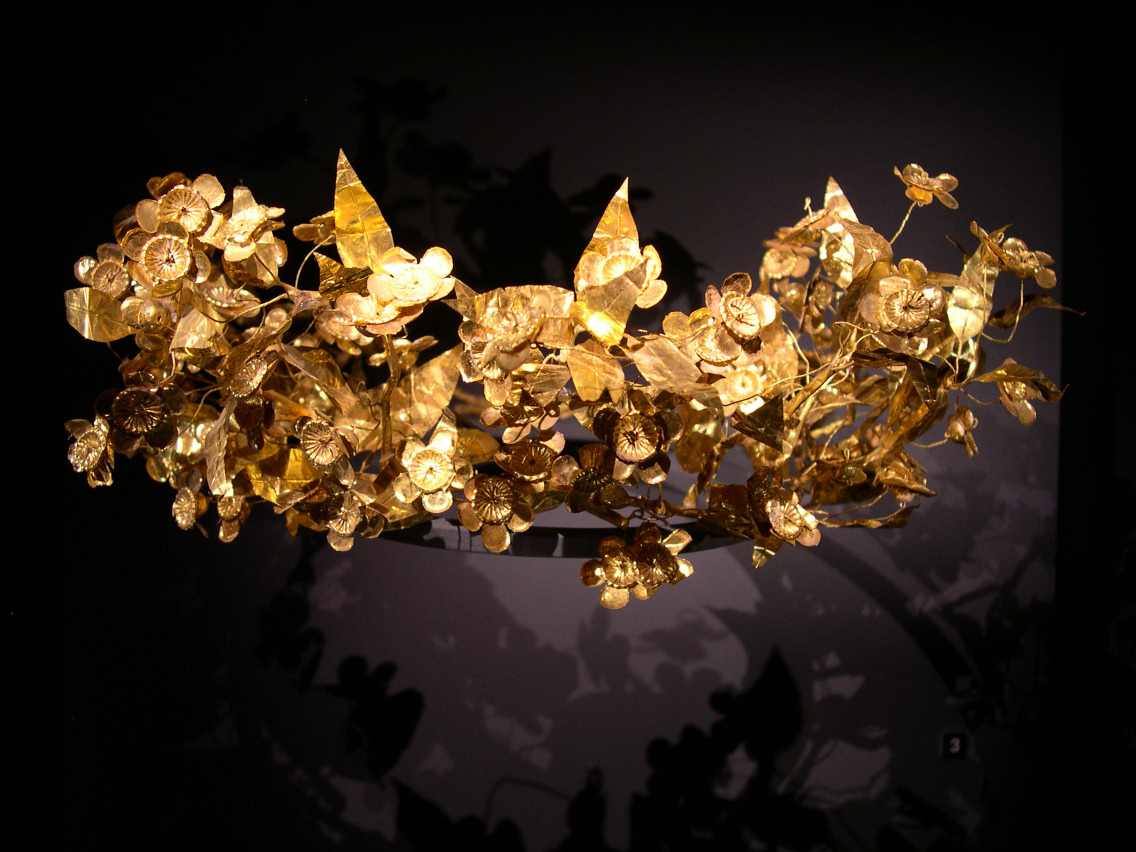
God takes care of the king: “You have proffered him blessings of good things, have set upon his head a crown of fine gold.” (v. 4)

III. Select Verses    
2: O LORD, the king rejoices in Your strength; how greatly he exults in Your victory!
5: He asked You for life; You granted it; a long life, everlasting.
6-7: Great is his glory through Your victory; You have endowed him with splendor and majesty. You have made him blessed forever, gladdened him with the joy of Your presence.
8: For the king trusts in the LORD; Through the faithfulness of the Most High he will not be shaken.
9-11: Your hand is equal to all Your enemies; Your right hand overpowers Your foes. You set them ablaze like a furnace when You show Your presence. The LORD in anger destroys them; fire consumes them. You wipe their offspring from the earth, their issue from among men.

IV. Outline
1. Superscription
2-7. Praise: God has helped the king
8. Blessing for the king
9-14a. Hymnic praise: God is mightier than his enemies
14b. Vow to sing God’s praises

V. Comment
No comment today. Stay tuned.

VI. Works Used
(see “Commentaries” page)
Collins, John J. “Introduction to the Hebrew Bible,” (Minneapolis: Fortress Press, 2004).
Craigie, Peter C. “Psalms 1-50” Word Biblical Commentary vol. 19 (Waco, Texas: Wordbooks, 1983).
Gerstenberger, Erhard S. “Psalms Part 1 with an Introduction to Cultic Poetry” Forms of Old Testament Literature (Michigan: Eerdmans, 1988).
Photo taken from http://upload.wikimedia.org/wikipedia/commons/1/12/Golden_leaf_crown_of_ancient_macedonian_origin,_Thessaloniki,_Greece.jpg

Psalm 20 – “Blessing for Divine Protection”

Hebrew-English Text
I. Summary
The psalmist guarantees divine protection and the people put their trust in God.

II. Photo
The psalmist delivers his blessing: “May [God] grant you your desire, and fulfill your every plan.” (v. 5)

III. Select Verses    
2-5: May the LORD answer you in time of trouble, the name of Jacob’s God keep you safe. May He send you help from the sanctuary, and sustain you from Zion. May He receive the tokens of all your meal offerings, and approve your burnt offerings. Selah. May He grant you your desire, and fulfill your every plan.
6a: May we shout for joy in your victory, arrayed by standards in the name of our God.
8-9: They [call] on chariots, they [call] on horses, but we call on the name of the LORD our God. They collapse and lie fallen, but we rally and gather strength.

IV. Outline
1. Superscription
2-5. Blessing/guarantee of divine protection
6a. Call to praise
6b. Blessing/guarantee
7. Declaration of divine protection
8-9. Proclamation of confidence
10. Petition

V. Comment
Psalm 20 begins with a blessing of divine protection. It has many military features: a “day of distress” (v. 2), standards (v. 7), enemies (vv. 8-9), and a king (v. 10; probably the “annointed one” in v. 7). In light of these occurrences, Craigie writes: “The precise occasion on which this liturgical psalm would have been used remains uncertain. While some scholars propose a setting in an annual festival or anniversary of the kingship, or even a New Year festival, it is more probable that the liturgy was used in a special service prior to the departure of the king and his army for a battle or military campaign… The title verse (v 1), and the indication that this psalm was incorporated in the musical director’s collection, may imply that at a later date, the psalm passed into general liturgical usage and lost its particular associations with the royal ritual preceding a military campaign.” (185)

VI. Works Used
(see “Commentaries” page)
Collins, John J. “Introduction to the Hebrew Bible,” (Minneapolis: Fortress Press, 2004).
Craigie, Peter C. “Psalms 1-50” Word Biblical Commentary vol. 19 (Waco, Texas: Wordbooks, 1983).
Gerstenberger, Erhard S. “Psalms Part 1 with an Introduction to Cultic Poetry” Forms of Old Testament Literature (Michigan: Eerdmans, 1988).
Photo taken from  http://2.bp.blogspot.com/_kLztsMITnwE/TU31GlyI8YI/AAAAAAAAApM/-wO02gSK7Tw/s1600/full+of+happiness+and+joy.jpg

Psalm 19 – “Hymn About the Heavens and the Torah”

Hebrew-English Text
I. Summary
The psalmist praises God’s heavens and Torah and begs to be kept from sin.

II. Photo
The psalmist praises God’s works: “He placed in [the heavens] a tent for the sun, who is like a groom coming forth from the chamber, like a hero, eager to run his course.” (vv. 5b-6)

III. Select Verses    
2-5a: The heavens declare the glory of God, the sky proclaims His handiwork. Day to day makes utterance, night to night speaks out. There is no utterance, there are no words, whose sound goes unheard. Their voice carries throughout the earth, their words to the end of the world.
5b-7: He placed in them a tent for the sun, who is like a groom coming forth from the chamber, like a hero, eager to run his course. His rising-place is at one end of heaven, and his circuit reaches the other; nothing escapes his heat.
8-11: The teaching of the LORD is perfect, renewing life; the decrees of the LORD are enduring, making the simple wise; The precepts of the LORD are just, rejoicing the heart; the instruction of the LORD is lucid, making the eyes light up. The fear of the LORD is pure, abiding forever; the judgments of the LORD are true, righteous altogether, more desirable than gold, than much fine gold; sweeter than honey, than drippings of the comb.
13-14: Who can be aware of errors? Clear me of unperceived guilt, and from willful sins keep Your servant; let them not dominate me; then shall I be blameless and clear of grave offense.

IV. Outline
1. Superscription
2-7. Hymnic praise: the heavens proclaim God’s glory
8-11. Hymnic praise for God’s precepts
12. Proclamation of innocence
13-14. Prayer (petition?) to be free of sin
15. Wish to be heard

V. Comment
Psalm 19 contains two hymns; the first is about God’s heavens and the second is about God’s precepts, i.e., Torah. Some authors believe that the first hymn, which climaxes with a description of the sun (vv. 5b-7), was originally used for sun-worship (see Gerstenberger, 101). Although there is no direct evidence to support this claim,  it is interesting to note that sun-worship did exist in biblical Israel. See the following verses:

  • He rebuilt the shrines that his father Hezekiah had destroyed; he erected altars for Baal and made a sacred post, as King Ahab of Israel had done. He bowed down to all the host of heaven and worshiped them, and he built altars for them in the House of the LORD, of which the LORD had said, “I will establish My name in Jerusalem.” He built altars for all the hosts of heaven in the two courts of the House of the LORD. He consigned his son to the fire; he practiced soothsaying and divination, and consulted ghosts and familiar spirits; he did much that was displeasing to the LORD, to vex Him.  (2 Kgs 21:3-6)
  • He suppressed the idolatrous priests whom the kings of Judah had appointed to make offerings at the shrines in the towns of Judah and in the environs of Jerusalem, and those who made offerings to Baal, to the sun and moon and constellations — all the host of heaven. (2 Kgs 23:5)
  • He did away with the horses that the kings of Judah had dedicated to the sun, at the entrance of the House of the LORD, near the chamber of the eunuch Nathan-melech, which was in the precincts. He burned the chariots of the sun. (2 Kgs 23:11)
  • At that time — declares the LORD — the bones of the kings of Judah, of its officers, of the priests, of the prophets, and of the inhabitants of Jerusalem shall be taken out of their gravesand exposed to the sun, the moon, and all the host of heaven which they loved and served and followed, to which they turned and bowed down. They shall not be gathered for reburial; they shall become dung upon the face of the earth. (Jer 8:1-2)
  • Then He brought me into the inner court of the House of the LORD, and there, at the entrance to the Temple of the LORD, between the portico and the altar, were about twenty-five men, their backs to the Temple of the LORD and their faces to the east; they were bowing low to the sun in the east. (Ezek 8:16)

VI. Works Used
(see “Commentaries” page)
Collins, John J. “Introduction to the Hebrew Bible,” (Minneapolis: Fortress Press, 2004).
Craigie, Peter C. “Psalms 1-50” Word Biblical Commentary vol. 19 (Waco, Texas: Wordbooks, 1983).
Gerstenberger, Erhard S. “Psalms Part 1 with an Introduction to Cultic Poetry” Forms of Old Testament Literature (Michigan: Eerdmans, 1988).
Photo copied from http://www.solarpowerninja.com/wp-content/uploads/2009/01/holding-the-sun.jpg