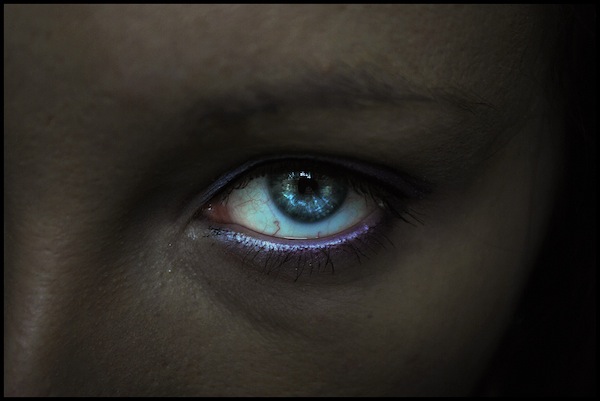
Psalm 18 – “A Psalm of Thanks, Confidence, and Praise”

Hebrew-English Text
I. Summary
The psalmist thanks God for defeating his enemies and for bringing him to a position of greatness.

II. Photo
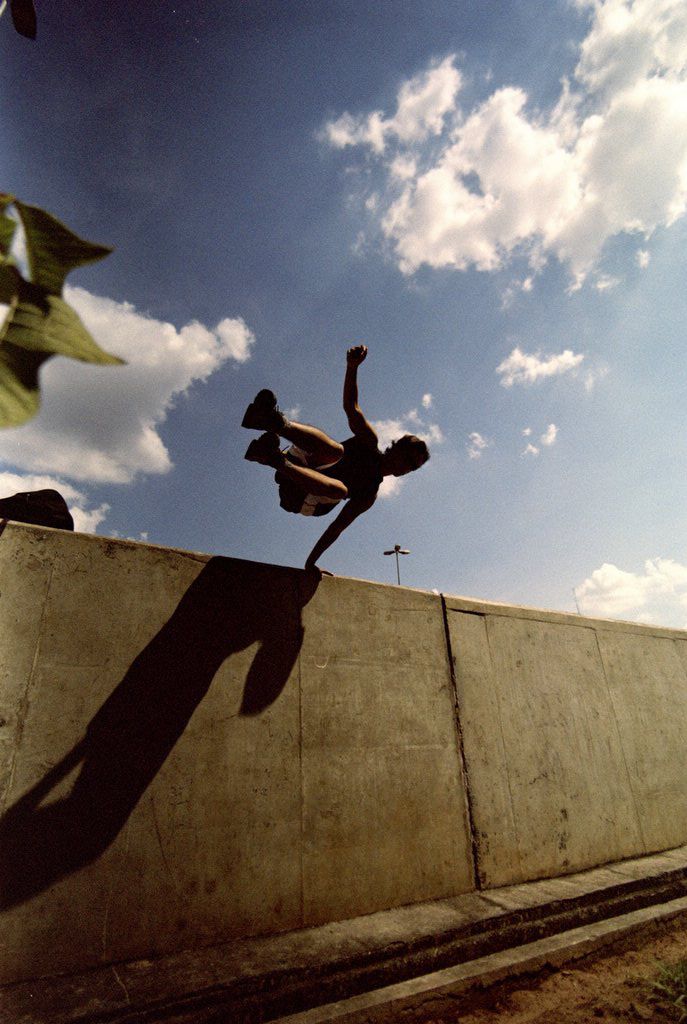
The psalmist puts his trust in God: “With You, I can rush a barrier, with my God, I can scale a wall.” (v. 30)

III. Select Verses    
2b-3: I adore you, O LORD, my strength, O LORD, my crag, my fortress, my rescuer, my God, my rock in whom I seek refuge, my shield, my mighty champion, my haven.
4-7: All praise! I called on the LORD and was delivered from my enemies. Ropes of Death encompassed me; torrents of Belial terrified me; ropes of Sheol encircled me; snares of Death confronted me.  In my distress I called on the LORD, cried out to my God; in His temple He heard my voice; my cry to Him reached His ears.
8-14: Then the earth rocked and quaked; the foundations of the mountains shook, rocked by His indignation; smoke went up from His nostrils, from His mouth came devouring fire; live coals blazed forth from Him. He bent the sky and came down, thick cloud beneath His feet. He mounted a cherub and flew, gliding on the wings of the wind. He made darkness His screen; dark thunderheads, dense clouds of the sky were His pavilion round about Him. Out of the brilliance before Him, hail and fiery coals pierced His clouds. Then the LORD thundered from heaven, the Most High gave forth His voice — hail and fiery coals.
40-41: You have girded me with strength for battle, brought my adversaries low before me, made my enemies turn tail before me; I wiped out my foes.
51: He accords great victories to His king, keeps faith with His anointed, with David and his offspring forever.

IV. Outline
1-2a. Historical superscription
2b-3. Invocation, proclamations of love and trust
4-6. Account of trouble
7. Account of prayer
8-16. Description of god’s appearance
17-20. Account of salvation
21-25. Assertion of innocence
26-28. Pedagogic lesson
29-30. Proclamation of confidence
31-46. Thanks, praise, and confidence.
47-49. Blessing, account of salvation
50. Vow
51. Wish

V. Comment
Psalm 18, which is the third longest psalm in the psalter, contains many elements of the Thanksgiving genre. A parallel text occurs in 2 Samuel 22 and Craigie writes: “In general terms, the texts are the same, though there are numerous minor divergencies between them. There can be no certainty as to which may be the oldest and most authentic of the two texts; it is clear that they represent two variant traditions (perhaps northern and southern?) in the history of the psalm’s transmission. In terms of certain forms and characteristics (e.g. orthographic forms), 2 Sam 22 appears to be the most archaic text, but that is partly to be expected. The text in the Psalter was clearly utilized in the context of Israel’s worship long after the time of its initial composition, and the modernizing of such matters as orthography would be expected, whereas the text in 2 Sam 22 would have a more static history from the time of its incorporation into one of the sources of the Books of Samuel. But it does not follow that the text of Samuel is always the best text, or the nearest to the original. It may not even be proper to talk of an “original” if the initial transmission/composition was oral and the psalm was itself composed orally, in which case a number of variants may represent oral alternatives going back to the earliest period of the text’s history.” (171-172)

VI. Works Used
(see “Commentaries” page)
Collins, John J. “Introduction to the Hebrew Bible,” (Minneapolis: Fortress Press, 2004).
Craigie, Peter C. “Psalms 1-50” Word Biblical Commentary vol. 19 (Waco, Texas: Wordbooks, 1983).
Gerstenberger, Erhard S. “Psalms Part 1 with an Introduction to Cultic Poetry” Forms of Old Testament Literature (Michigan: Eerdmans, 1988).
Photo taken from http://upload.wikimedia.org/wikipedia/commons/8/80/Parkour_fl2006.jpg


Psalm 17 – “Petition for Protection”

Hebrew-English Text

I. Summary
The psalmist declares his innocence and petitions god to protect him and to strike his enemies.

II. Photo
The psalmist petitions god: “Hide me in the shadow of your wings from the wicked who despoil me, my mortal enemies who encircle me!” (vv. 8b-9)

III. Select Verses    
2b-3: Your eyes will behold what is right. You have visited me at night, probed my mind, You have tested me and found nothing amiss; I determined that my mouth should not transgress.
7-9: Display Your faithfulness in wondrous deeds, You who deliver with Your right hand those who seek refuge from assailants. Guard me like the apple of Your eye; hide me in the shadow of Your wings from the wicked who despoil me, my mortal enemies who encircle me.
12: He is like a lion eager for prey, a king of beasts lying in wait.
13:  Rise, O LORD! Go forth to meet him. Bring him down; rescue me from the wicked with Your sword!

IV. Outline
1a. Superscription
1b-2a. Invocation, initial plea
2b-4. Affirmation of innocence
5-9. Petition to be guarded from the enemy
10-11. Description of the enemy
12. Description of god
13-14. Petition/imprecation
15. Wish

V. Comment
No comment today. Stay tuned.

VI. Works Used
(see “Commentaries” page)
Collins, John J. “Introduction to the Hebrew Bible,” (Minneapolis: Fortress Press, 2004).
Craigie, Peter C. “Psalms 1-50” Word Biblical Commentary vol. 19 (Waco, Texas: Wordbooks, 1983).
Gerstenberger, Erhard S. “Psalms Part 1 with an Introduction to Cultic Poetry” Forms of Old Testament Literature (Michigan: Eerdmans, 1988).
Photo taken from http://pixdaus.com/?sort=tag&tag=wings

Psalm 16 – “Affirmation of Confidence”

Hebrew-English Text
I. Summary
The psalmist puts his trust in god.

II. Photo
The psalmist gives thanks: “Delightful country has fallen to my lot; lovely indeed is my estate.” (v. 6)

III. Select Verses    
2: I say to the LORD, “You are my Lord, my benefactor; there is none above You.”
7-8: I bless the LORD who has guided me; my conscience admonishes me at night. I am ever mindful of the LORD’s presence; He is at my right hand; I shall never be shaken.
9-10: So my heart rejoices, my whole being exults, and my body rests secure.  For You will not abandon me to Sheol, or let Your faithful one see the Pit.
11: You will teach me the path of life. In Your presence is perfect joy; delights are ever in Your right hand.

IV. Outline
1a. Superscription
1b. Invocation, initial plea
2. Affirmation of confidence
3-4. Denunciation (?) [Note: the text is difficult]
5-11. Affirmations of confidence, blessings, and rationale

V. Comment
Like the psalm before it, Psalm 16 is very difficult to understand. Craigie summarizes the situation as follows: “Psalm 16 may be classified in the most general terms as a psalm of confidence (cf Pss 4, 5, and 11), but beyond such a descriptive statement, it is difficult to be precise. The difficulty of precise analysis and interpretation follows from the problems in translating the psalm (especially vv 2–4a). There are numerous different interpretations as to its type and initial life setting, and the differences stem largely from the various alternative translations and interpretations of the opening verses. The data giving rise to the classification of the passage as a psalm of confidence are seen clearly in vv 5–11; what is not certain is whether the psalmist expresses confidence in the midst of crisis, or as a result of deliverance from a crisis.” (155-156)

VI. Works Used
(see “Commentaries” page)
Collins, John J. “Introduction to the Hebrew Bible,” (Minneapolis: Fortress Press, 2004).
Craigie, Peter C. “Psalms 1-50” Word Biblical Commentary vol. 19 (Waco, Texas: Wordbooks, 1983).
Gerstenberger, Erhard S. “Psalms Part 1 with an Introduction to Cultic Poetry” Forms of Old Testament Literature (Michigan: Eerdmans, 1988).
Photo taken from http://blog.pearltrees.com/wp-content/2009/05/english-countryside.jpg

Psalm 15 – “Pedagogic Lesson: Characteristics of the Righteous Individual”

Hebrew-English Text
I. Summary
The psalmist describes the characteristics of the righteous individual.

II. Photo
The righteous individual is described: “He has never lent money at interest, or accepted a bribe against the innocent.” (v. 5a)

III. Select Verses    
(Due to its brevity, Psalm 15 will be presented in its entirety.)
vv. 1-5: A psalm of David. LORD, who may sojourn in Your tent, who may dwell on Your holy mountain? He who lives without blame, who does what is right, and in his heart acknowledges the truth; whose tongue is not given to evil; who has never done harm to his fellow, or borne reproach for [his acts toward] his neighbor; for whom a contemptible man is abhorrent, but who honors those who fear the LORD; who stands by his oath even to his hurt; who has never lent money at interest, or accepted a bribe against the innocent. The man who acts thus shall never be shaken.

IV. Outline
1a. Superscription
1b. Invocation
1c-5a. Description of the righteous individual
5b. Blessing

V. Comment
Psalm 15 is comprised of a question addressed to God (v. 1) and an answer provided by the Psalmist (vv. 2-5). The question and answer format seeks to define the characteristics of the righteous individual. As Craigie notes, “Gunkel, and many interpreters since his time, defined Ps 15 as an entrance liturgy. As such, it is characterized by a typical form: (i) the worshipers inquire of the priest as to the qualifications for admission to the holy place (15:1); (ii) the priest responds by specifying the requirements (15:2–5b), and (iii) concludes with a blessing (15:5c). The analysis is suggestive and may well be correct, in which case the psalm would be interpreted in the context of Israel’s formal worship; possibly, such a liturgy might have been utilized upon the arrival of pilgrims at the gates of the sanctuary for participation in one of Israel’s great festivals.” (150) Yet, it must be pointed out that there is no unequivocal evidence that necessitates this conclusion. Indeed, there are no texts in the Hebrew Bible that imply such an entrance procedure existed, and there is nothing in the Psalm that specifically relates to temple entrance. Therefore, the Psalm should be classified for what we know it to be, i.e., a lesson about the righteous individual. As for now, it appears that we will never know exactly how Psalm 15 was used in ancient Israel.

VI. Works Used
(see “Commentaries” page)
Collins, John J. “Introduction to the Hebrew Bible,” (Minneapolis: Fortress Press, 2004).
Craigie, Peter C. “Psalms 1-50” Word Biblical Commentary vol. 19 (Waco, Texas: Wordbooks, 1983).
Gerstenberger, Erhard S. “Psalms Part 1 with an Introduction to Cultic Poetry” Forms of Old Testament Literature (Michigan: Eerdmans, 1988).
Photo taken from http://upload.wikimedia.org/wikipedia/commons/f/f9/Money_Cash.jpg

Psalm 14 – “Pedagogic Lesson: God Will End the Anarchy”

Hebrew-English Text
I. Summary
The psalmist describes a state of lawlessness and puts his trust in God.

II. Photo
God looks down from his abode: “The Lord looks down from heaven on mankind to find a man of understanding, a man mindful of God.” (v. 2)

III. Select Verses    
1b: The fool has said in his heart, “There is no God, they are corrupt, they have done abominable works, there is none who does good.”
2-3: The LORD looks down from heaven on mankind to find a man of understanding, a man mindful of God. All have turned bad, altogether foul; there is none who does good, not even one.
4-5: Are they so witless, all those evildoers, who devour my people as they devour food, and do not invoke the LORD? There they will be seized with fright, for God is present in the circle of the righteous.
7: O that the deliverance of Israel might come from Zion! When the LORD restores the fortunes of His people, Jacob will exult, Israel will rejoice.

IV. Outline
1a. Superscription
1b. Description of the fool
2-3. Description of anarchy
4-6. Pedagogic lesson about the wicked
7. Wish

V. Comment
Psalm 14, which is almost identical to Psalm 53, is one of the most enigmatic psalms in the entire Psalter. According to Gerstenberger, even “Gunkel openly admits that the explanation of this psalm is impossible, apart from a preconceived notion of what the text could mean” (219). The psalm, which has features of the wisdom genre, might also be classified as a lament. Support for interpreting it as a pedagogic lesson can be drawn from the fact that Paul uses it in one of his sermons (Romans 3:10-18).  Gerstenberger believes that the Psalm’s message is about social inequality: “[The psalm is] aimed at justifying and strengthening the miserable peasants and craftsmen organized in precarious groups who had to pay the bills for the luxurious life of the high society” (220).

VI. Works Used
(see “Commentaries” page)
Collins, John J. “Introduction to the Hebrew Bible,” (Minneapolis: Fortress Press, 2004).
Craigie, Peter C. “Psalms 1-50” Word Biblical Commentary vol. 19 (Waco, Texas: Wordbooks, 1983).
Gerstenberger, Erhard S. “Psalms Part 1 with an Introduction to Cultic Poetry” Forms of Old Testament Literature (Michigan: Eerdmans, 1988).
Photo taken from http://4.bp.blogspot.com/_ThDVIY50oe8/TUSfHY15uRI/AAAAAAAAARY/5H7jsN1eSOM/s1600/photo_earth-from-space.jpg

Psalm 13 – “Petition”

Hebrew-English Text

I. Summary    
The Psalmist begs god to restore his health and to protect him from his enemies.

II. Photo
The psalmist begs to be healed: “Look at me, answer me, O Lord, my God! Restore the luster to my eyes, lest I sleep the sleep of death!” (v. 4)

III. Select Verses    
2-3: How long, O LORD; will You ignore me forever? How long will You hide Your face from me? How long will I have cares on my mind, grief in my heart all day? How long will my enemy have the upper hand?
4-6: Look at me, answer me, O LORD, my God! Restore the luster to my eyes, lest I sleep the sleep of death; lest my enemy say, “I have overcome him,” my foes exult when I totter.
6: But I trust in Your faithfulness, my heart will exult in Your deliverance. I will sing to the LORD, for He has been good to me.

IV. Outline
1. Superscription
2-3. Invocation, petition
4-5. Petition, rationale
6. Affirmation of confidence, vow

V. Comment
Many form critics view Psalm 13 to be “a textbook example of [the] individual complaint” (Gerstenberger, 83). The psalm is unique in its fourfold use of the phrase עד אנה “how long?” (vv. 2-3). A major question surrounding the psalm is the change of tone between vv. 1-5, which is anxious and fearful, and v. 6, which is calm and confident. Some suggest that petitioning god brings the psalmist to confidence, but others point out that affirmations of confidence are standard for the genre.

VI. Works Used
(see “Commentaries” page)
Collins, John J. “Introduction to the Hebrew Bible,” (Minneapolis: Fortress Press, 2004).
Craigie, Peter C. “Psalms 1-50” Word Biblical Commentary vol. 19 (Waco, Texas: Wordbooks, 1983).
Gerstenberger, Erhard S. “Psalms Part 1 with an Introduction to Cultic Poetry” Forms of Old Testament Literature (Michigan: Eerdmans, 1988).
Photo taken from http://www.photoble.com/photo-inspiration/20-great-close-up-photos-of-eyes

Psalm 12 – “Petition and Response”

Hebrew-English Text
I. Summary
The psalmist petitions God to help the needy and God promises to do so.

II. Photo
The psalmist trusts in God: “The words of the Lord are pure words, silver purged in an earthen crucible, refined sevenfold.”  (v. 7)

III. Select Verses    
2-4: Help, O LORD! For the faithful are no more; the loyal have vanished from among men. Men speak lies to one another; their speech is smooth; they talk with duplicity. May the LORD cut off all flattering lips, every tongue that speaks arrogance.
6: “Because of the groans of the plundered poor and needy, I will now act,” says the LORD. “I will give help,” He affirms to him.
7: The words of the LORD are pure words, silver purged in an earthen crucible, refined sevenfold.
9: On every side the wicked roam when baseness is exalted among men.

IV. Outline
1. Superscription
2-3. Invocation, petition, complaint
4-5. Wish/imprecation
6. Salvation Oracle
7-9. Affirmation of confidence

V. Comment
No comment. Stay tuned.

VI. Works Used
(see “Commentaries” page)
Collins, John J. “Introduction to the Hebrew Bible,” (Minneapolis: Fortress Press, 2004).
Craigie, Peter C. “Psalms 1-50” Word Biblical Commentary vol. 19 (Waco, Texas: Wordbooks, 1983).
Gerstenberger, Erhard S. “Psalms Part 1 with an Introduction to Cultic Poetry” Forms of Old Testament Literature (Michigan: Eerdmans, 1988).
Photo taken from http://farm4.static.flickr.com/3004/2907703983_a75c27fc6c.jpg

Psalm 11 – “Pedagogic Psalm of Confidence”

Hebrew-English Text
I. Summary
The psalmist asserts that God will destroy the wicked.

II. Photo
God will judge the wicked: “He will rain down upon the wicked blazing coals and sulfur; a scorching wind shall be their lot!” (v. 6)

III. Select Verses    
2-3: For see, the wicked bend the bow, they set their arrow on the string to shoot from the shadows at the upright. When the foundations are destroyed, what can the righteous man do?”
4-6: The LORD is in His holy palace; the LORD — His throne is in heaven; His eyes behold, His gaze searches mankind. The LORD seeks out the righteous man, but loathes the wicked one who loves injustice. He will rain down upon the wicked blazing coals and sulfur; a scorching wind shall be their lot.
7: For the LORD is righteous; He loves righteous deeds; the upright shall behold His face.

IV. Outline
1a. Superscription
1b. Affirmation of confidence
1c. Rhetorical question to an audience
2-3. Description of the wicked
4-6. God will punish the wicked
7. Praise; Confidence

V. Comment
No comment today. Stay tuned.

VI. Works Used
(see “Commentaries” page)
Collins, John J. “Introduction to the Hebrew Bible,” (Minneapolis: Fortress Press, 2004).
Craigie, Peter C. “Psalms 1-50” Word Biblical Commentary vol. 19 (Waco, Texas: Wordbooks, 1983).
Gerstenberger, Erhard S. “Psalms Part 1 with an Introduction to Cultic Poetry” Forms of Old Testament Literature (Michigan: Eerdmans, 1988).
Photo taken from http://photos.surfline.com/albums/userpics/13647/misc002.jpg

Psalm 10 – “Acrostic Petition Part II – May God Punish the Wicked”

Hebrew-English Text
I. Summary
The psalmist describes the wicked people and asks God to punish them.

II. Photo
Psalm 10 completes the alphabetic acrostic begun in Psalm 9.

III. Select Verses    
3-11: The wicked crows about his unbridled lusts; the grasping man reviles and scorns the LORD. The wicked, arrogant as he is, in all his scheming [thinks], “He does not call to account; God does not care.” His ways prosper at all times; Your judgments are far beyond him; he snorts at all his foes. He thinks, “I shall not be shaken, through all time never be in trouble.” His mouth is full of oaths, deceit, and fraud; mischief and evil are under his tongue. He lurks in outlying places; from a covert he slays the innocent; his eyes spy out the hapless. He waits in a covert like a lion in his lair; waits to seize the lowly; he seizes the lowly as he pulls his net shut; he stoops, he crouches, and the hapless fall prey to his might. He thinks, “God is not mindful, He hides His face, He never looks.”
15: O break the power of the wicked and evil man, so that when You look for his wickedness You will find it no more.
16: The LORD is king for ever and ever; the nations will perish from His land.

IV. Outline
1. Invocation, petition
2. Imprecation
3-11. Description of the wicked
12-15. Petition/imprecation/trust
16-18. Praise of God’s social justice

V. Comment
Gerstenberger writes: “The most disturbing aspects of Psalm 9/10 to modern form critics are its alphabetic order, which seems to prohibit its liturgical origin and use, and its overall collective dimension, which supposedly bars any individualistic understanding of the text. Neither supposition is valid. Acrostic poems certainly can be used in rituals, especially if they are the handiwork of skilled, leterary singers or clergyman. And the collective outlook, both in regard to the supplicant’s congregation and to the opponents who were cited, reflects only the community structure of that time…. The poem, then, can be seen i n a synagogal setting.” (75)

VI. Works Used
(see “Commentaries” page)
Collins, John J. “Introduction to the Hebrew Bible,” (Minneapolis: Fortress Press, 2004).
Craigie, Peter C. “Psalms 1-50” Word Biblical Commentary vol. 19 (Waco, Texas: Wordbooks, 1983).
Gerstenberger, Erhard S. “Psalms Part 1 with an Introduction to Cultic Poetry” Forms of Old Testament Literature (Michigan: Eerdmans, 1988).
Photo copied from http-_dailyartmuse.com_wp-content_uploads_2009_07_letters_colorful_crop

Psalm 9 – “Acrostic Petition Part I: May God Judge the People”

Hebrew-English Text
I. Summary
The psalmist praises God’s integrity and asks him to punish the enemy and support the needy.

II. Photo
God punishes the enemy: “The enemy is no more — ruins everlasting; [God] has torn down their cities; their very names are lost.” (v. 7)

III. Select Verses    
6-8: You blast the nations; You destroy the wicked; You blot out their name forever. The enemy is no more — ruins everlasting; You have torn down their cities; their very names are lost. But the LORD abides forever; He has set up His throne for judgment;
10-11: The LORD is a haven for the oppressed, a haven in times of trouble.  Those who know Your name trust You, for You do not abandon those who turn to You, O LORD.
14-15: Have mercy on me, O LORD; see my affliction at the hands of my foes, You who lift me from the gates of death, so that in the gates of Fair Zion I might tell all Your praise, I might exult in Your deliverance.
18: Let the wicked be in Sheol, all the nations who ignore God!
20-21: Rise, O LORD! Let not men have power; let the nations be judged in Your presence. Strike fear into them, O LORD; let the nations know they are only men. Selah.

IV. Outline
1. Superscription
2-3. Invocation, vow
4-11. Praise: God punishes the enemy and helps the oppressed
12. Call to praise
13. Rationale
14. Petition
15. Rationale/vow
16-17. Acknowledgment of divine response
18. Imprecation of enemies
19. Rationale
20-21. Petition/imprecation

V. Comment
Because it is an acrostic poem, Psalm 9 does not fit neatly into any of the form critical categories. Gerstenberger writes, “Most scholars agree that Psalms 9 and 10 originally constituted one unified poem. The LXX [= Septuagint] , from the second century B.C., counts them together as Psalm 9. The original unity of the thirty-eight verses (excluding superscription) with forty-one poetic lines is attested by the overall organization as an Acrostic Psalm (see Psalms 25 and 119): every second line of the MT [= Masoretic Text] begins with a successive letter of the Hebrew alphabet. Psalm 9/10, however, follows the system somewhat imperfectly. With twenty-one letters to the alphabet the poem needed at least forty-two lines. The stichoi opening with d, m, n, s, and s [= d, m, n, s, x]
are entirely missing, or rather, unrecognizable. Other lines are irregular in
length. The passage most uncertain is at the juncture of the two parts (Pss
9:18-10:11). On the other hand, the beginning and end of the original poem (Pss
9:2-17 and 10:12-18), comprising the initial letters ‘ through t [=a through f] and q through t [= q through t], have been well preserved.” (72-73)

VI. Works Used
(see “Commentaries” page)
Collins, John J. “Introduction to the Hebrew Bible,” (Minneapolis: Fortress Press, 2004).
Craigie, Peter C. “Psalms 1-50” Word Biblical Commentary vol. 19 (Waco, Texas: Wordbooks, 1983).
Gerstenberger, Erhard S. “Psalms Part 1 with an Introduction to Cultic Poetry” Forms of Old Testament Literature (Michigan: Eerdmans, 1988).
Photo copied from http://cq-cq.eu/pf_1945_6.jpg