2 Chronicles 16 – “Asa Hires the Arameans; Asa’s Death”

making-the-business-dealHebrew-English Text
I. Summary
When the Israelite king advances against Judah, Asa hires Aramean mercenaries to attack. Although the Israelites are stayed, Asa is rebuked for putting his trust in Aramean soldiers instead of God. The chapter ends with Asa’s death.

II. Photo
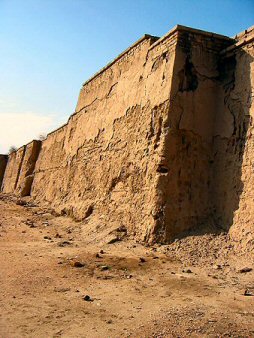
Asa hires mercenaries from the king of Aram: “There is a pact between me and you, as there was between my father and your father. I herewith send you silver and gold; go and break your pact with King Baasha of Israel so that he may withdraw from me.” (v. 3)

III. Important Verses
vv. 7-9: At that time, Hanani the seer came to King Asa of Judah and said to him, “Because you relied on the king of Aram and did not rely on the LORD your God, therefore the army of the king of Aram has slipped out of your hands. The Cushites and Lybians were a mighty army with chariots and horsemen in very great numbers, yet because you relied on the LORD He delivered them into your hands. For the eyes of the LORD range over the entire earth, to give support to those who are wholeheartedly with Him. You have acted foolishly in this matter, and henceforth you will be beset by wars.”
v. 12: In the thirty-ninth year of his reign, Asa suffered from an acute foot ailment; but ill as he was, he still did not turn to the LORD but to physicians.

IV. Outline
1. King Baasha of Israel advances against Judah
2-6. Asa hires the Arameans to attack Baasha
7-9. Hanani rebukes Asa for turning to the Arameans instead of God
10. Asa imprisons Hanani
11. Summary statement
12. Asa suffers from a foot ailment, but turns to the doctors instead of God
13-14. Asa’s death

V. Comment
Chapter 16 is more critical of Asa than the two that preceded it. Asa is blamed for trusting in the Arameans instead of God, imprisoning a prophet, and trusting in doctors instead of God. Dillard makes an important point about the “theology of immediate retribution” that is pervasive in the books of Chronicles: “Though the history of research in Chronicles has been characterized by vigorous debate surrounding the author’s theology, date, and purpose, on one theme of his historiography there is a near consensus. The Chronicler’s adherence to a ‘theology of immediate retribution’ provides his dominant compositional technique, particularly formative in his approach to the history of Judah after the schism. ‘Retribution theology’ refers to the author’s apparent conviction that reward and punishment are not deferred, but rather follow immediately on the heels of the precipitating events. For the Chronicler sin always brings judgment and disaster, while obedience and righteousness yield the fruit of peace and prosperity. Even a cursory reading of the text reveals the contours of the writer’s convictions; they are both (1) specifically articulated and (2) demonstrated in his reshaping of narratives.” (76) The “theology of retribution” can be seen in the speech of Hanani the prophet (vv. 7-9): “At that time, Hanani the seer came to King Asa of Judah and said to him, ‘Because you relied on the king of Aram and did not rely on the LORD your God, therefore the army of the king of Aram has slipped out of your hands. The Cushites and Lybians were a mighty army with chariots and horsemen in very great numbers, yet because you relied on the LORD He delivered them into your hands.For the eyes of the LORD range over the entire earth, to give support to those who are wholeheartedly with Him. You have acted foolishly in this matter, and henceforth you will be beset by wars.’”

VI. Works Used
(see “Commentaries” page)
Dillard, Raymond B. “2 Chronicles” (Waco Texas: Word Books, 1988).
Photo taken from http://www.candidity.org/images/making-the-business-deal.jpg

2 Chronicles 15 – “Asa’s Covenant Renewal”

RopeBridge480Hebrew-English Text
I. Summary
Azariah the prophet stirs the people to repent. Although king Asa and the people undertake a covenant renewal, idolatry is still prevalent.

II. Photo
Azariah speaks about life without God’s protection: “At those times, no wayfarer was safe…” (v. 5)

III. Important Verses
v. 3: Israel has gone many days without the true God, without a priest to give instruction and without Teaching.
v. 8: When Asa heard these words, the prophecy of Oded the prophet, he took courage and removed the abominations from the entire land of Judah and Benjamin and from the cities that he had captured in the hill country of Ephraim. He restored the altar of the LORD in front of the porch of the LORD.
vv. 12-15: They entered into a covenant to worship the LORD God of their fathers with all their heart and with all their soul. Whoever would not worship the LORD God of Israel would be put to death, whether small or great, whether man or woman. So they took an oath to the LORD in a loud voice and with shouts, with trumpeting and blasts of the horn. All Judah rejoiced over the oath, for they swore with all their heart and sought Him with all their will. He responded to them and gave them respite on every side.
v. 17: The shrines, indeed, were not abolished in Israel; however, Asa was wholehearted [with the LORD] all his life.

IV. Outline
1-7. Azariah exhorts Asa to follow God
8. Asa removes idolatry from the land
9-16. The people undertake a covenant renewal; Asa removes the queen mother
17-18. Asa enjoys partial success
19. Peace

V. Comment
No comment today. Stay tuned.

VI. Works Used
(see “Commentaries” page)
Photo taken from http://www.jamesmcquaid.com/RopeBridge480.jpg

2 Chronicles 14 – “Asa’s Reform; Victory Over the Cushites”

camelHebrew-English Text
I. Summary
Asa banishes idolatry from the land, fortifies the cities of Judea, and defeats the Cushite army in battle.

II. Photo
Asa’s men enjoy the spoils of war: “They also ravaged the encampment of herdsmen, capturing much sheep and camels. Then they returned to Jerusalem.” (v. 14)

III. Important Verses
vv. 1-4: Asa did what was good and pleasing to the LORD his God. He abolished the alien altars and shrines; he smashed the pillars and cut down the sacred posts. He ordered Judah to turn to the LORD God of their fathers and to observe the Teaching and the Commandment. He abolished the shrines and the incense stands throughout the cities of Judah, and the kingdom was untroubled under him.
vv. 7-11: Asa had an army of 300,000 men from Judah bearing shields and spears, and 280,000 from Benjamin bearing bucklers and drawing the bow; all these were valiant men. Zerah the Cushite marched out against them with an army of a thousand thousand and 300 chariots. When he reached Mareshah Asa confronted him, and the battle lines were drawn in the valley of Zephat by Mareshah. Asa called to the LORD his God, and said, “O LORD, it is all the same to You to help the numerous and the powerless. Help us, O LORD our God, for we rely on You, and in Your name we have come against this great multitude. You are the LORD our God. Let no mortal hinder You.” So the LORD routed the Cushites before Asa and Judah, and the Cushites fled.

IV. Outline
1-4. Asa turns the people to God
5-6. Asa fortifies the Judean cities
7-14. Asa trusts in God and routs the Cushites

V. Comment
No comment today. Stay tuned.

VI. Works Used
(see “Commentaries” page)
Photo taken from http://www.wonkette.com/politics/camel.jpg

2 Chronicles 13 – “Abijah’s Victorious Reign”

soldiersHebrew-English Text
I. Summary
Abijah takes over as the king of Judah. He rebukes Jeroboam’s forces, musters his own soldiers, and utterly destroys Jeroboam’s army. The chapter ends with Abijah’s death and the appointment of his son Asa as king.

II. Photo
Abijah’s reign is defined by war: “Abijah joined battle with a force of warriors, 400,000 picked men. Jeroboam arrayed for battle against him 800,000 picked men, warriors.” (v. 3)

III. Important Verses
v. 3: Abijah joined battle with a force of warriors, 400,000 picked men. Jeroboam arrayed for battle against him 800,000 picked men, warriors.
vv. 8-11: Now you are bent on opposing the kingdom of the LORD, which is in the charge of the sons of David, because you are a great multitude and possess the golden calves that Jeroboam made for you as gods. Did you not banish the priests of the LORD, the sons of Aaron and the Levites, and, like the peoples of the land, appoint your own priests? Anyone who offered himself for ordination with a young bull of the herd and seven rams became a priest of no-gods!  As for us, the LORD is our God, and we have not forsaken Him. The priests who minister to the LORD are the sons of Aaron, and the Levites are at their tasks. They offer burnt offerings in smoke each morning and each evening, and the aromatic incense, the rows of bread on the pure table; they kindle the golden lampstand with its lamps burning each evening, for we keep the charge of the LORD our God, while you have forsaken it.

IV. Outline
1-2a. Abijah becomes king
2b-3. Battle situation
4-12. Abijah rebukes Jeroboam and his followers
13-19. The battle: God delivers Jeroboam’s forces into Abijah’s hand
20. Jeroboam loses power and dies
21. Abijah’s family
22-23a. Summary of Abijah’s reign; Death
23b. Asa becomes king; Peace

V. Comment
No comment today. Stay tuned.

VI. Works Used
(see “Commentaries” page)
De Vries, Simon J. “1 and 2 Chronicles,” The Forms of Old Testament Literature vol. 11 (Grand Rapids, Michigan: Wm. B. Eerdmans Publishing Co., 1989).
Photo taken from http://www.sikyon.com/Sparta/images/soldiers.jpg

2 Chronicles 12 – “Jerusalem is Plundered; Rehoboam’s Death”

DSC09659Hebrew-English Text
I. Summary
When the people abandon God’s teachings the Egyptian king is sent to plunder Judea. Rehoboam eventually repents, and Jerusalem isn’t destroyed. The chapter ends with his death.

II. Photo
Judea is attacked: “King Shishak of Egypt marched against Jerusalem… with 1,200 chariots…” (vv. 2-3)

III. Important Verses
v. 1-2: When the kingship of Rehoboam was firmly established, and he grew strong, he abandoned the Teaching of the LORD, he and all Israel with him. In the fifth year of King Rehoboam, King Shishak of Egypt marched against Jerusalem — for they had trespassed against the LORD.
vv. 5-6: The prophet Shemaiah came to Rehoboam and the officers of Judah, who had assembled in Jerusalem because of Shishak, and said to them, “Thus said the LORD: You have abandoned Me, so I am abandoning you to Shishak.” Then the officers of Israel and the king humbled themselves and declared, “The LORD is in the right.”
v. 9: [Shishak] took away the treasures of the House of the LORD and the treasures of the royal palace; he took away everything; he took away the golden shields that Solomon had made.
v. 12: After he had humbled himself, the anger of the LORD was averted and He did not destroy him entirely; in Judah, too, good things were found.
v. 15: The deeds of Rehoboam, early and late, are recorded in the chronicles of the prophet Shemaiah and Iddo the seer, in the manner of genealogy. There was continuous war between Rehoboam and Jeroboam.

IV. Outline
1. Rehoboam strays
2-4. Shishak of Egypt conquers Judah
5-8. God punishes Jerusalem, but doesn’t destroy it
9. Shishak steals the vessels from the temple and royal palace
10-11. Rehoboam’s bronze shields
12. Conclusion
13-15. Summary of Rehoboam’s reign
16. Rehoboam’s death

V. Comment
No comment today. Stay tuned.

VI. Works Used

Photo taken from http://brownstoner.com/brownstoner/archives/DSC09659.JPG

2 Chronicles 11 – “Rehoboam Fortifies Judah”

6a00d8341fdefb53ef00e54f4f8cc18833-800wiHebrew-English Text
I. Summary
Although Rehoboam prepares to battle Jeroboam, he heeds a prophecy that tells him to desist. He then fortifies the cities of Judah and appoints his family members to positions of power.

II. Photo
Rehoboam favors one of his wives: “Rehoboam loved Maacah daughter of Absalom more than his other wives and concubines — for he took eighteen wives and sixty concubines; he begot twenty-eight sons and sixty daughters.” (v. 21)

III. Important Verses
vv. 1-4: When Rehoboam arrived in Jerusalem, he mustered the house of Judah and Benjamin, 180,000 picked fighting men, to make war with Israel in order to restore the kingdom to Rehoboam. But the word of the LORD came to Shemaiah, the man of God: “Say to Rehoboam son of Solomon king of Judah, and to all Israel in Judah and Benjamin: Thus said the LORD: You shall not set out to make war on your kinsmen. Let every man return to his home, for this thing has been brought about by Me.” They heeded the words of the LORD and refrained from marching against Jeroboam.
vv. 11-12: He strengthened the fortified towns and put commanders in them, along with stores of food, oil, and wine, and shields and spears in every town. He strengthened them exceedingly; thus Judah and Benjamin were his.
vv. 14-15: The Levites had left their pasturelands and their holdings and had set out for Judah and Jerusalem, for Jeroboam and his sons had prevented them from serving the LORD, having appointed his own priests for the shrines, goat-demons, and calves which he had made.

IV. Outline
1. Rehoboam prepares for battle
2-4. The Judahites desist because of Shemaiah’s prophecy
5-12. Rehoboam fortifies the Judean cities
13-17. Levites, Priests, and members from other tribes join Rehoboam
18-21. Rehoboam’s family
22-23. Rehoboam appoints his family members to positions of power

V. Comment
No comment today. Stay tuned.

VI. Works Used
(see “Commentaries” page)
Photo taken from http://bigpappa.typepad.com/my_weblog/images/love_hands.jpg

2 Chronicles 10 – “The Schism”

hand_stone_2Hebrew-English Text
I. Summary
Rehoboam is anointed as the next king. When Jeroboam and the people ask king Rehoboam for a mitigation of labor, he spurns their request. The people then rebel and kill one of his emissaries.

II. Photo
The people rebel: “King Rehoboam sent out Hadoram, who was in charge of the forced labor, but the Israelites pelted him to death with stones…” (v. 18)

III. Important Verses
vv. 1-4: Rehoboam went to Shechem, for all Israel had come to Shechem to acclaim him king. Jeroboam son of Nebat learned of it while he was in Egypt where he had fled from King Solomon, and Jeroboam returned from Egypt. They sent for him; and Jeroboam and all Israel came and spoke to Rehoboam as follows:  “Your father made our yoke heavy. Now lighten the harsh labor and the heavy yoke that your father laid on us, and we will serve you.”
vv. 13-14: The king answered them harshly; thus King Rehoboam ignored the elders’ counsel. He spoke to them in accordance with the counsel of the young men, and said, “I will make your yoke heavy, and I will add to it; my father flogged you with whips, but I [will do so] with scorpions.”
v. 16: When all Israel [saw] that the king had not listened to them, the people answered the king: “We have no portion in David, No share in Jesse’s son! To your tents, O Israel! Now look to your own house, O David.” So all Israel returned to their homes.
vv. 18-19: King Rehoboam sent out Hadoram, who was in charge of the forced labor, but the Israelites pelted him to death with stones. Thereupon, King Rehoboam hurriedly mounted his chariot and fled to Jerusalem. Israel has been in revolt against the house of David to this day.

IV. Outline
1. Rehoboam is anointed king
2-4. Jeroboam and the people demand a mitigation of labor
6-11. Rehoboam consults his advisers
12-17. The people reject Rehoboam’s harsh reply
18. Violence
19. Conclusion

V. Comment
Chapter 10 recounts how the Jeroboam and the Israelites rebel against king Rehoboam, and it is based on 1 Kgs 12:1–19. De Vries notes that this chapter is the turning point in the book of Chronicles. He writes: “This is the anticlimactic section of [the Chronicler’s] history… The section on ‘Solomon in his glory,’ following the account of his building and dedication of the temple, was the climax. Thematically speaking, that section defined, once and for all, how things ought to be in the perfect new Israel that [the Chronicler] hoped to see restored. But first the story of the Judahite kings, with their many failures and ultimate ruin of nation and temple, must be told. Its interest is less to inform than to exhort, so that the history of failure be not repeated.” (274)

VI. Works Used
(see “Commentaries” page)
De Vries, Simon J. “1 and 2 Chronicles,” The Forms of Old Testament Literature vol. 11 (Grand Rapids, Michigan: Wm. B. Eerdmans Publishing Co., 1989).
Dillard, Raymond B. “2 Chronicles” (Waco Texas: Word Books, 1988).
Photo taken from http://www.phoenixdataprocessing.com/Phoenix_slices/hand_rock_slices/hand_stone_2.jpg

2 Chronicles 9 – “The Queen of Sheba; Solomon’s Wisdom and Wealth; Solomon’s Death”

SpicesHebrew-English Text
I. Summary
The queen of Sheba visits Solomon and gives him an abundance of gifts. The chapter then describes Solomon’s great wisdom and wealth, and concludes with his death.

II. Photo
Solomon impresses the queen of Sheba: “She presented the king with 120 talents of gold, and a vast quantity of spices and precious stones. There were no such spices as those which the queen of Sheba gave to King Solomon.” (v. 9)

III. Important Verses
vv. 1-2: The queen of Sheba heard of Solomon’s fame, and came to Jerusalem to test Solomon with hard questions, accompanied by a very large retinue, including camels bearing spices, a great quantity of gold, and precious stones. When she came to Solomon, she spoke to him of all that she had on her mind. Solomon had answers for all her questions; there was nothing that Solomon did not know, nothing to which he could not give her an answer.
v. 8: [She said:] “Blessed is the LORD your God, who favored you and set you on His throne as a king before the LORD. It is because of your God’s love for Israel and in order to establish them forever that He made you king over them to execute righteous justice.”
v. 9: She presented the king with 120 talents of gold, and a vast quantity of spices and precious stones. There were no such spices as those which the queen of Sheba gave to King Solomon
v. 15: King Solomon made 200 shields of beaten gold — 600 shekels of beaten gold for each shield
vv. 17-19: The king also made a large throne of ivory, overlaid with pure gold. Six steps led up to the throne; and the throne had a golden footstool attached to it, and arms on either side of the seat. Two lions stood beside the arms, and twelve lions stood on the six steps, six on either side. None such was ever made for any other kingdom.
vv. 22-23: King Solomon surpassed all the kings of the earth in wealth and wisdom. All the kings of the earth came to pay homage to Solomon and to listen to the wisdom with which God had endowed him.
v. 26: He ruled over all the kings from the Euphrates to the land of the Philistines and to the border of Egypt.
vv. 30-31: Solomon reigned forty years over all Israel in Jerusalem. Solomon slept with his fathers and was buried in the city of his father David; his son Rehoboam succeeded him as king.

IV. Outline
1-12. Solomon impresses the queen of Sheba; The two exchange gifts
13-28. Solomon’s wealth and glory
13-14. Annual import
15. Golden shields
17-19. Ivory throne
20-21. Other objects
22. Surpassing wealth and wisdom
23-24. Foreign admireres
25. Horses
26. Area of rulership
27-28. Further wealth
29-31. Summary statement; Death

V. Comment
Chapter 9 describes the visit of the queen of Sheba, Solomon’s great wisdom and wealth, and Solomon’s death. It has been shown that the David and Solomon are portrayed more piously in the books of Chronicles than in the books of Samuel and Kings, and this chapter is no exception. Dillard writes: “Chap. 9 closely follows the parallel account in 1 Kgs 10:1–28, 11:41–43 apart from some minor modifications. The major change from the parallel material is the omission of 1 Kgs 11:1–40, a passage which reports Solomon’s straying due to his foreign wives, the LORD’s subsequent anger and determination to wrest most of the kingdom from him, the raising of adversaries who freed Edom and Aram from Israelite sovereignty, and the rebellion of Jeroboam. All of these matters are out of accord with the Chronicler’s portrayal of Solomon’s glorious, peaceful, and righteous reign; the Chronicler prefers to conclude his account of Solomon by introducing the note, not paralleled at this point in Kings (cf. 1 Kgs 5:1), that Solomon ruled from the Euphrates to the border of Egypt (9:26).” (70)

Some of the more condemnatory verses that Dillard was referring to are 1 Kgs 11:1-8: King Solomon loved many foreign women in addition to Pharaoh’s daughter — Moabite, Ammonite, Edomite, Phoenician, and Hittite women, from the nations of which the LORD had said to the Israelites, “None of you shall join them and none of them shall join you, lest they turn your heart away to follow their gods.” Such Solomon clung to and loved. He had seven hundred royal wives and three hundred concubines; and his wives turned his heart away. In his old age, his wives turned away Solomon’s heart after other gods, and he was not as wholeheartedly devoted to the LORD his God as his father David had been. Solomon followed Ashtoreth the goddess of the Phoenicians, and Milcom the abomination of the Ammonites.
Solomon did what was displeasing to the LORD and did not remain loyal to the LORD like his father David. At that time, Solomon built a shrine for Chemosh the abomination of Moab on the hill near Jerusalem, and one for Molech the abomination of the Ammonites. And he did the same for all his foreign wives who offered and sacrificed to their gods.

Dillard attempts to explain why the accounts of Chronicles and Kings are so disparate: “The concluding portions of the Solomon narrative in Kings and Chronicles are a study in contrasts. Where the one reports Solomon’s lack of wisdom shown in his apostasy with his gentile wives, the other ends with Solomon’s wisdom displayed before a gentile woman (9:1–12) and admired by the nations (9:22–26). Where the one reports the tokens of divine displeasure seen in the announcement of the division of the kingdom and in the disintegration of the empire through successful rebellions (1 Kgs 11:9–40), the other brings Solomon to his death in tranquility, enjoying the submission of his vassals, the honor of other nations, and ruling over his empire at its maximal extent (9:22–26). The compiler of Kings wrote a tract for exiles, answering to the ‘why’ for the great exile and captivity, judgment to which even David and Solomon contributed; the Chronicler provided a description of the past in terms of his aspirations for the future.” (74-75)

VI. Works Used
(see “Commentaries” page)
De Vries, Simon J. “1 and 2 Chronicles,” The Forms of Old Testament Literature vol. 11 (Grand Rapids, Michigan: Wm. B. Eerdmans Publishing Co., 1989).
Dillard, Raymond B. “2 Chronicles” (Waco Texas: Word Books, 1988).
Photo taken from http://www.thenibble.com/reviews/main/salts/images/ground-spices-230_006.jpg

2 Chronicles 8 – “Securing the Land; A Sea Venture”

ancient-wallHebrew-English Text
I. Summary
Solomon embarks on an ambitious building campaign, builds a palace for Pharaoh’s daughter, and administers the temples service. He then sends his men to distant lands, and they bring back a large stockpile of gold.

II. Photo
Solomon embarks on an ambitious building campaign: “He built Tadmor in the desert and all the garrison towns that he built in Hamath.” (v. 4)

III. Important Verses
vv. 1-2: At the end of twenty years, during which Solomon constructed the House of the LORD and his palace — Solomon also rebuilt the cities that Huram had given to him, and settled Israelites in them.
vv. 7-9: All the people that were left of the Hittites, Amorites, Perizzites, Hivites, and Jebusites, none of whom were of Israelite stock — those of their descendants who were left after them in the land, whom the Israelites had not annihilated — these Solomon subjected to forced labor, as is still the case. But the Israelites, none of whom Solomon enslaved for his works, served as soldiers and as his chief officers, and as commanders of his chariotry and cavalry.
v. 11: Solomon brought up Pharaoh’s daughter from the City of David to the palace that he had built for her, for he said, “No wife of mine shall dwell in a palace of King David of Israel, for [the area] is sacred since the Ark of the LORD has entered it.”
vv. 17-18: At that time Solomon went to Ezion-geber and to Eloth on the seacoast of the land of Edom.  Huram sent him, under the charge of servants, a fleet with a crew of expert seamen; they went with Solomon’s men to Ophir, and obtained gold there in the amount of 450 talents, which they brought to King Solomon.

IV. Outline
1-6. Resettling the cities; Construction
7-10. Forced labor
11. The palace for Pharaoh’s daughter
12-15. Solomon administers the temple service
16. Conclusion
17-18. A sea venture sponsored by King Huram

V. Comment
Chapter 8 describes what some might call Solomon’s “sanctification” of the land. He settles many cities, removes Pharaoh’s daughter from David’s palace, and administers the temple service. A sea venture is described in vv. 17-18: “At that time Solomon went to Ezion-geber and to Eloth on the seacoast of the land of Edom.  Huram sent him, under the charge of servants, a fleet with a crew of expert seamen; they went with Solomon’s men to Ophir, and obtained gold there in the amount of 450 talents, which they brought to King Solomon.” What is the meaning of “Ophir gold”? As has been previously mentioned in the comment to 1 Chr 29, Baker writes that Ophir was “a maritime nation which was a source of gold from at least the reign of Solomon (1 Kgs 9:28; 22:49; 2 Chr 8:18). It also provided fine wood and precious stones (1 Kgs 10:11; 2 Chr 9:10; Job 28:16). All of these were delivered to Israel by ship through the port of Ezion-geber on the Red Sea. The gold seems to have been of a particularly high quality since in some of the passages it is used in conjunction with more specific Hebrew terms for fine, choice gold (Job 22:24; Ps 45:10[—Eng 45:9]; Isa 13:12). Ophir became so associated with this rare metal that the name Ophir itself, without any further qualifier, is to be understood as “gold” in Job 22:24. Gold from this source is also known from an extrabiblical inscription from Israel.” (“Ophir (Place)” in Anchor Bible Dictionary, Vol. V, pp. 26-27) Baker also points out that the whereabouts of biblical Ophir remain unknown. While some (including Josephus) associate it with India, it was most likely a site in eastern Africa or western Arabia.

VI. Works Used
(see “Commentaries” page)
Baker, David W. “Ophir (Place)” in Anchor Bible Dictionary, Vol. V, pp. 26-27.
De Vries, Simon J. “1 and 2 Chronicles,” The Forms of Old Testament Literature vol. 11 (Grand Rapids, Michigan: Wm. B. Eerdmans Publishing Co., 1989).

Photo taken from http://www.mullings.com/ancient-wall.jpg

2 Chronicles 7 – “The Temple’s Dedication; Solomon’s Dream”

droughtHebrew-English Text
I. Summary
The people celebrate with sacrifice and song when God’s fire fills the temple. They subsequently celebrate the Feast of Tabernacles (Sukkot) and return to their homes. God then appears to Solomon and warns him to follow in His ways.

II. Photo
God speaks to Solomon in a dream: “If I shut up the heavens and there is no rain… when My people, who bear My name, humble themselves, pray, and seek My favor and turn from their evil ways, I will hear in My heavenly abode and forgive their sins and heal their land.”

III. Important Verses
vv. 1-3: When Solomon finished praying, fire descended from heaven and consumed the burnt offering and the sacrifices, and the glory of the LORD filled the House. The priests could not enter the House of the LORD, for the glory of the LORD filled the House of the LORD. All the Israelites witnessed the descent of the fire and the glory of the LORD on the House; they knelt with their faces to the ground and prostrated themselves, praising the LORD, “For He is good, for His steadfast love is eternal.”
v. 5: King Solomon offered as sacrifices 22,000 oxen and 120,000 sheep; thus the king and all the people dedicated the House of God.
v. 6: The priests stood at their watches; the Levites with the instruments for the LORD’s music that King David had made to praise the LORD, “For His steadfast love is eternal,” by means of the psalms of David that they knew. The priests opposite them blew trumpets while all Israel were standing.
vv. 8-9: At that time Solomon kept the Feast for seven days — all Israel with him — a great assemblage from Lebo-hamath to the Wadi of Egypt. On the eighth day they held a solemn gathering; they observed the dedication of the altar seven days, and the Feast seven days.
vv. 12-14: The LORD appeared to Solomon at night and said to him, “I have heard your prayer and have chosen this site as My House of sacrifice. If I shut up the heavens and there is no rain; if I command the locusts to ravage the land; or if I let loose pestilence against My people, when My people, who bear My name, humble themselves, pray, and seek My favor and turn from their evil ways, I will hear in My heavenly abode and forgive their sins and heal their land.

IV. Outline

1-11. The temple is consecrated
    1-3. God’s fire fills the temple
    4-6. The people dedicate the temple with sacrifice and song
    7. Solomon consecrates the courtyard
    8-9. Sukkot in the temple
    10-11. The people are dismissed; Conclusion
12-22. Solomon’s Dream
    12-16. God guarantees to dwell in the temple and listen to prayer
    17-22. Conditional promises; Threat

V. Comment
Chapter 7 is the final chapter that deals with the temple’s consecration, and verses 8-9 describe the celebration of Sukkot: “At that time Solomon kept the Feast for seven days — all Israel with him — a great assemblage from Lebo-hamath to the Wadi of Egypt. On the eighth day they held a solemn gathering; they observed the dedication of the altar seven days, and the Feast seven days.” Dillard makes a few important points about the style of this Chronicler’s prose that relate to these verses. He writes: “The Feast of Tabernacles was a pilgrimage festival (Lev 23:33–43) and would have brought many celebrants to Jerusalem; perhaps the scheduling of the dedication of the temple in the preceding week sought to take advantage of the large congregation that would come. The assembly provided another occasion for one of the Chronicler’s favorite themes, that “all Israel” united in the observance (1 Chr 9:1; 11:1–4; 12:38–40; 13:1–8; 14:8; 15:3, 28; 16:1–3; 18:14; 19:17; 21:1–5; 22:17; 23:1–2; 28:1–8; 29:21–26; 2 Chr 1:1–3; 5:2–6; 6:3–13; 7:8–10; 9:30; 10:1–3, 16; 11:3, 13–17; 12:1; 13:4, 15; 18:16; 24:5; 28:23; 29:24; 30:1–13, 23–27; 31:6; 34:6–9, 33).

“Another of the Chronicler’s distinctive emphases is also present: his desire to parallel David and Solomon as much as possible; see “Solomon as a Second David” in the introductory essay, “The Chronicler’s Solomon.” He modifies his Vorlage at 1 Kgs 8:66 (“David his servant”) by speaking instead of “David and Solomon” (cf. 2 Chr 11:17). Although he follows 1 Kgs 8:66 in mentioning that the congregation had come from the maximum extent of the kingdom, at 1 Chr 13:5 he had already modified the parallel text (2 Sam 6:1) to show David presiding over an assembly from the same extent (“from the Shihor of Egypt to Lebo-hamath”), thereby further perfecting the parallel of David and Solomon.” (57)

It is interesting to note that the Day of Atonement would have occurred during the temple’s dedication period (it occurs on the 10th day of the seventh month, cf. Lev 23:26–32; Lev 16), but the Chronicler is noticeably silent about it. It is also interesting to note that 2 Chr 21-23 speaks of a similar back-to-back holiday during the times of Hezekiah: “The Israelites who were in Jerusalem kept the Feast of Unleavened Bread seven days, with great rejoicing, the Levites and the priests praising the LORD daily with powerful instruments for the LORD. Hezekiah persuaded all the Levites who performed skillfully for the LORD to spend the seven days of the festival making offerings of well-being, and confessing to the LORD God of their fathers. All the congregation resolved to keep seven more days, so they kept seven more days of rejoicing.”

VI. Works Used
(see “Commentaries” page)
De Vries, Simon J. “1 and 2 Chronicles,” The Forms of Old Testament Literature vol. 11 (Grand Rapids, Michigan: Wm. B. Eerdmans Publishing Co., 1989).
Dillard, Raymond B. “2 Chronicles” (Waco Texas: Word Books, 1988).
Photo taken from http://www.worldchanging.com/archives/drought.jpg