Isaiah 16 – “A Lament for Moab – Part II”

Hebrew-English Text
I. Summary
The Moabites will find shelter, their farmlands will be destroyed, and their population will dwindle.

II. Photo
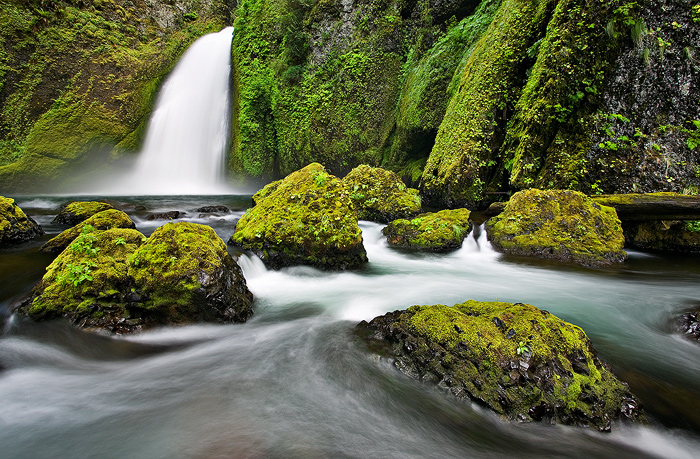
Moab’s farmland is destroyed: “Rejoicing and gladness are gone from the farm land; In the vineyards no shouting or cheering is heard. No more does the treader tread wine in the presses — the shouts have been silenced.” (v. 10)

III. Important Verses
1-4a: Dispatch as messenger The ruler of the land, From Sela in the wilderness To the mount of Fair Zion:  “Like fugitive birds, Like nestlings driven away, Moab’s villagers linger By the fords of the Arnon. Give advice, Offer counsel. At high noon make Your shadow like night: Conceal the outcasts, Betray not the fugitives. Let Moab’s outcasts Find asylum in you; Be a shelter for them Against the despoiler.”
9-11: Therefore, As I weep for Jazer, So I weep for Sibmah’s vines; O Heshbon and Elealeh, I drench you with my tears. Ended are the shouts Over your fig and grain harvests. Rejoicing and gladness Are gone from the farm land; In the vineyards no shouting Or cheering is heard. No more does the treader Tread wine in the presses — The shouts have been silenced. Therefore, Like a lyre my heart moans for Moab, And my very soul for Kir-heres.
12: And when it has become apparent that Moab has gained nothing in the outdoor shrine, he shall come to pray in his temple — but to no avail.
14: And now the LORD has spoken: In three years, fixed like the years of a hired laborer, Moab’s population, with all its huge multitude, shall shrink. Only a remnant shall be left, of no consequence.

IV. Outline
1-4a. The Moabites shall find shelter
4b-5. Reason: equity has come to the land
6-8. Moab has been humbled
9-11. Lament for Moab
12. Futile temples
13-14. God will shrink Moab’s population

V. Comment
No comment today. Stay tuned.

VI. Works Used
(see “Commentaries” page)
Blenkinsopp, Joseph. “Isaiah 1-39” The Anchor Bible vol. 19 (New York: Doubleday, 2000).
Collins, John J. “Introduction to the Hebrew Bible,” (Minneapolis: Fortress Press, 2004).
Sweeney, Marvin A. “Isaiah 1-39 with an Introduction to Prophetic Literature” The Forms of Old Testament Literature vol. 16 (Grand Rapids, Michigan: William B. Eerdmans, 1996).
Photo taken from http://dulich.tuoitre.vn/ImageView.aspx?ThumbnailID=408026

Isaiah 15 – “A Lament for Moab”

Hebrew-English Text
I. Summary
Moab’s survivors lament a devastating nocturnal attack.

II. Photo
The land of Moab is desiccated: “The grass is sear, the herbage is gone, vegetation is vanished.” (v. 6b)

III. Important Verses
1: The “Moab” Pronouncement. Ah, in the night Ar was sacked, Moab was ruined; Ah, in the night Kir was sacked, Moab was ruined.
2-3: He went up to the temple to weep, Dibon [went] to the outdoor shrines. Over Nebo and Medeba Moab is wailing; On every head is baldness, Every beard is shorn. In its streets, they are girt with sackcloth; On its roofs, in its squares, Everyone is wailing, Streaming with tears.
5a: My heart cries out for Moab — His fugitives flee down to Zoar, To Eglath-shelishiyah.
9: Ah, the waters of Dimon are full of blood For I pour added [water] on Dimon; I drench it — for Moab’s refugees — With soil for its remnant.

IV. Outline
1a. Introduction
1b. The night of Moab’s sacking
2-4. The people mourn their fate
5a. Pity for Moab
5b. The Moabites flee
6-8. The wailing of Moab
9. The Moabite bloodbath

V. Comment
No comment today. Stay tuned.

VI. Works Used
(see “Commentaries” page)
Blenkinsopp, Joseph. “Isaiah 1-39” The Anchor Bible vol. 19 (New York: Doubleday, 2000).
Collins, John J. “Introduction to the Hebrew Bible,” (Minneapolis: Fortress Press, 2004).
Sweeney, Marvin A. “Isaiah 1-39 with an Introduction to Prophetic Literature” The Forms of Old Testament Literature vol. 16 (Grand Rapids, Michigan: William B. Eerdmans, 1996).
Photo taken from http://farm2.static.flickr.com/1325/787755833_bef1c9b5fc.jpg

Isaiah 14 – “A Song About Babylon; Doom for Philistia”

Hebrew-English Text
I. Summary
Israel will return from Babylon and sing a song that mocks their former rulers. Philistia will be punished.

II. Photo
Babylon is castigated for its pride: “Once you thought in your heart, ‘I will climb to the sky; Higher than the stars of God I will set my throne. I will sit in the mount of assembly, On the summit of Zaphon: I will mount the back of a cloud — I will match the Most High.” (vv. 13-14)

III. Important Verses
3-4a: And when the LORD has given you rest from your sorrow and trouble, and from the hard service that you were made to serve, you shall recite this song of scorn over the king of Babylon…
7-8: All the earth is calm, untroubled; Loudly it cheers. Even pines rejoice at your fate, And cedars of Lebanon: “Now that you have lain down, None shall come up to fell us.”
12-17: How are you fallen from heaven, O Shining One, son of Dawn! How are you felled to earth, O vanquisher of nations! Once you thought in your heart, “I will climb to the sky; Higher than the stars of God I will set my throne. I will sit in the mount of assembly, On the summit of Zaphon: I will mount the back of a cloud — I will match the Most High.” Instead, you are brought down to Sheol, To the bottom of the Pit.  They who behold you stare; They peer at you closely: “Is this the man Who shook the earth, Who made realms tremble, Who made the world like a waste And wrecked its towns, Who never released his prisoners to their homes?”
20b-21: Let the breed of evildoers Nevermore be named! Prepare a slaughtering block for his sons Because of the guilt of their father. Let them not arise to possess the earth! Then the world’s face shall be covered with towns.

IV. Outline

1-27. Israel’s triumph over Babylon
    1-2. Israel will return from exile
    3-4a. Directive to recite the Babylon song
    4b-21. The song of Babylon
        4b-6. How the mighty have fallen
        7-8. The earth is calm and the trees are joyous
        9-11. Sheol and its inhabitants await the Babylonians
        12-15. How the mighty have fallen
        16-20a. An object of scorn
    20b-21. Imperative: let the descendants die out
    22-23. Oracle #1: God’s promise to destroy Babylon
    24-25a. Oracle #2: God’s promise to destroy Assyria
    25b-27. Affirmation
28-32. A pronouncement concerning Philistia
    28. Introduction
    29-32. Philistia will be broken and the oppressed will rise to power

V. Comment
No comment today. Stay tuned.

VI. Works Used
(see “Commentaries” page)
Blenkinsopp, Joseph. “Isaiah 1-39” The Anchor Bible vol. 19 (New York: Doubleday, 2000).
Collins, John J. “Introduction to the Hebrew Bible,” (Minneapolis: Fortress Press, 2004).
Sweeney, Marvin A. “Isaiah 1-39 with an Introduction to Prophetic Literature” The Forms of Old Testament Literature vol. 16 (Grand Rapids, Michigan: William B. Eerdmans, 1996).
Photo taken from http://www.brokendream.net/wallpapers/adventure_sports/Climbing_Thin_Ice,_The_Needles,_California.jpg

Isaiah 13 – “Doom for Babylon”

Hebrew-English Text
I. Summary
Babylon’s men will be murdered, its women will be raped, and its children will be slain. The city will lie in ruins for all time to come.

II. Photo
Babylon will experience a day of dread: “The stars and constellations of heaven shall not give off their light; The sun shall be dark when it rises, and the moon shall diffuse no glow.” (v. 10)

III. Important Verses
4-5: Hark! a tumult on the mountains — As of a mighty force; Hark! an uproar of kingdoms, Nations assembling! The LORD of Hosts is mustering A host for war. They come from a distant land, From the end of the sky — The LORD with the weapons of His wrath — To ravage all the earth!
9-10: Lo! The day of the LORD is coming With pitiless fury and wrath, To make the earth a desolation, To wipe out the sinners upon it. The stars and constellations of heaven Shall not give off their light; The sun shall be dark when it rises, And the moon shall diffuse no glow.
14-16: Then like gazelles that are chased, And like sheep that no man gathers, Each man shall turn back to his people, They shall flee every one to his land. All who remain shall be pierced through, All who are caught Shall fall by the sword. And their babes shall be dashed to pieces in their sight, Their homes shall be plundered, And their wives shall be raped.
17-18: “Behold, I stir up the Medes against them, Who do not value silver Or delight in gold. Their bows shall shatter the young; They shall show no pity to infants, They shall not spare the children.”
19-20: And Babylon, glory of kingdoms, Proud splendor of the Chaldeans, Shall become like Sodom and Gomorrah Overturned by God. Nevermore shall it be settled Nor dwelt in through all the ages. No Arab shall pitch his tent there, No shepherds make flocks lie down there.

IV. Outline
1. Introduction: an oracle against Babylon
2-5. God assembles an army for war
6-8. The day of the Lord will be terrifying
9-13. The wicked will perish; The population will dwindle
14-16. The survivors will see their children killed and their wives raped
17-18. The Medes will conquer Babylon
19-22a. Babylon will become a desolate heap
22b. The imminence of the event

V. Comment
Chapter 13, which is an oracle delivered by Isaiah against Babylon, is the first in a group of prophetic pronouncements against the nations. Verse 1 introduces the oracle: “The Babylon Pronouncement, a prophecy of Isaiah son of Amoz.” This type of introduction (i.e. the word massa “pronouncement” followed by a proper name) can be found in the following verses:

  • This pronouncement was made in the year that King Ahaz died: Rejoice not, all Philistia… (14:28-29a)
  • The “Moab” Pronouncement. Ah, in the night Ar was sacked, Moab was ruined; Ah, in the night Kir was sacked, Moab was ruined… (15:1)
  • The “Damascus” Pronouncement. Behold, Damascus shall cease to be a city; It shall become a heap of ruins… (17:1)
  • The “Egypt” Pronouncement. Mounted on a swift cloud, The LORD will come to Egypt; Egypt’s idols shall tremble before Him, And the heart of the Egyptians shall sink within them… (19:1)
  • The “Desert of the Sea” Pronouncement. Like the gales That race through the Negeb, It comes from the desert, The terrible land… (21:1)
  • The “In the Steppe” Pronouncement. In the scrub, in the steppe, you will lodge, O caravans of the Dedanites!  (21:13)
  • The “Valley of Vision” Pronouncement. What can have happened to you That you have gone, all of you, up on the roofs… (22:1)
  • The “Tyre” Pronouncement. Howl, you ships of Tarshish! For havoc has been wrought, not a house is left; As they came from the land of Kittim, This was revealed to them… (23:1)

Verses 17-18 describe how “the day of the Lord” (v. 6) will be brought about: “Behold, I stir up the Medes against them, Who do not value silver Or delight in gold. Their bows shall shatter the young; They shall show no pity to infants, They shall not spare the children.” While the Medes (= Persians) did conquer Babylon, it was in the year 539 BCE. Yet, Isaiah, who lived in the 8th century BCE, writes that this event is imminent: “Her hour is close at hand; Her days will not be long” (v. 22b). As Blenkinsopp writes, this apparent inconsistency has led scholars to view this oracle as a vaticinium ex eventu (i.e. a “prediction” written with the knowledge of the event having occurred): “The final verses have led several commentators to conclude that the poem is predictive of an event to take place in the near future, and must therefore have been composed shortly before the fall of Babylon in 539 B.C.E.” (277)

Yet, Blenkinsopp also points out the weaknesses in this argument: “Commentators who read it as a vaticinium ex eventu are, on the other hand, left with the problem of squaring the poet’s description with known historical events and circumstances. The Cyrus Cylinder talks about the Persian army strolling into the city with their weapons tucked away (ANET, 315), a description that admittedly does not make a good fit with the scenario of violence and bloodshed described here.” (ibid.)

VI. Works Used
(see “Commentaries” page)
Blenkinsopp, Joseph. “Isaiah 1-39” The Anchor Bible vol. 19 (New York: Doubleday, 2000).
Collins, John J. “Introduction to the Hebrew Bible,” (Minneapolis: Fortress Press, 2004).
Sweeney, Marvin A. “Isaiah 1-39 with an Introduction to Prophetic Literature” The Forms of Old Testament Literature vol. 16 (Grand Rapids, Michigan: William B. Eerdmans, 1996).
Photo taken from http://farm2.static.flickr.com/1013/706706348_df47c29a1f.jpg

Isaiah 12 – “Anticipated Joy and Thanks”

Hebrew-English Text
I. Summary
The people will thank God when he delivers them from the Assyrians.

II. Photo
Isaiah predicts a period of joy: “Joyfully shall you draw water from the fountains of triumph!” (v. 3)

III. Important Verses
1-2: In that day, you shall say: “I give thanks to You, O LORD! Although You were wroth with me, Your wrath has turned back and You comfort me, Behold the God who gives me triumph! I am confident, unafraid; For Yah the LORD is my strength and might, And He has been my deliverance.”
3-6: Joyfully shall you draw water From the fountains of triumph, And you shall say on that day: “Praise the LORD, proclaim His name. Make His deeds known among the peoples; Declare that His name is exalted. Hymn the LORD, For He has done gloriously; Let this be made known In all the world! Oh, shout for joy, You who dwell in Zion! For great in your midst Is the Holy One of Israel.”

IV. Outline
1-2. Anticipated thanks
3-5. Anticipated praise
6. Exhortation for others to join

V. Comment
No comment today. Stay tuned.

VI. Works Used
(see “Commentaries” page)
Blenkinsopp, Joseph. “Isaiah 1-39” The Anchor Bible vol. 19 (New York: Doubleday, 2000).
Collins, John J. “Introduction to the Hebrew Bible,” (Minneapolis: Fortress Press, 2004).
Sweeney, Marvin A. “Isaiah 1-39 with an Introduction to Prophetic Literature” The Forms of Old Testament Literature vol. 16 (Grand Rapids, Michigan: William B. Eerdmans, 1996).
Photo taken from http://www.lightharmony.com/admin/ext/spring-rainforest.jpg

Isaiah 11 – “A Righteous Ruler To Come”

Hebrew-English Text
I. Summary
A wise and righteous ruler will bring glory to Jerusalem. The exiles will be ingathered, Judah and Samaria will be reunited, and the Israelites will conquer their enemies.

II. Photo
Isaiah predicts a period of peace: “The wolf shall dwell with the lamb.” (v. 6a)

III. Important Verses
1-5: But a shoot shall grow out of the stump of Jesse, A twig shall sprout from his stock. The spirit of the LORD shall alight upon him: A spirit of wisdom and insight, A spirit of counsel and valor, A spirit of devotion and reverence for the LORD. He shall sense the truth by his reverence for the LORD: He shall not judge by what his eyes behold, Nor decide by what his ears perceive. Thus he shall judge the poor with equity And decide with justice for the lowly of the land. He shall strike down a land with the rod of his mouth And slay the wicked with the breath of his lips. Justice shall be the girdle of his loins, And faithfulness the girdle of his waist.
6-8: The wolf shall dwell with the lamb, The leopard lie down with the kid; The calf, the beast of prey, and the fatling together, With a little boy to herd them. The cow and the bear shall graze, Their young shall lie down together; And the lion, like the ox, shall eat straw. A babe shall play Over a viper’s hole, And an infant pass his hand Over an adder’s den.
9: In all of My sacred mount Nothing evil or vile shall be done; For the land shall be filled with devotion to the LORD As water covers the sea.
12-13:  He will hold up a signal to the nations And assemble the banished of Israel, And gather the dispersed of Judah From the four corners of the earth.  Then Ephraim’s envy shall cease And Judah’s harassment shall end; Ephraim shall not envy Judah, And Judah shall not harass Ephraim.
15-16:  The LORD will dry up the tongue of the Egyptian sea. — He will raise His hand over the Euphrates with the might of His wind and break it into seven wadis, so that it can be trodden dry-shod. Thus there shall be a highway for the other part of His people out of Assyria, such as there was for Israel when it left the land of Egypt.

IV. Outline
1. A ruler will rise from the stock of Jesse
2-3. The ruler will have divine wisdom
4-5. He will judge with righteousness
6-8. A time of a complete peace
9. The people will be devoted to God
10. The ruler will be revered by foreigners
11-12. The exiles will be brought back
13-14. Judah and Samaria will be reunited and conquer their enemies
15-16. The exiles will return miraculously

V. Comment
No comment today. Stay tuned.

VI. Works Used
(see “Commentaries” page)
Blenkinsopp, Joseph. “Isaiah 1-39” The Anchor Bible vol. 19 (New York: Doubleday, 2000).
Collins, John J. “Introduction to the Hebrew Bible,” (Minneapolis: Fortress Press, 2004).
Sweeney, Marvin A. “Isaiah 1-39 with an Introduction to Prophetic Literature” The Forms of Old Testament Literature vol. 16 (Grand Rapids, Michigan: William B. Eerdmans, 1996).
Photo taken from http://businessesgrow.com/wp-content/uploads/2009/04/wolf.jpg

Isaiah 10 – “Prophetic Announcements Concerning Assyria and Jerusalem”

Hebrew-English Text
I. Summary
God will punish those who take advantage of the needy, Assyria will be punished for its excessive pride, and only a remnant of the Judean population will return to Jerusalem.

II. Photo
The king of Assyria boasts: “I was able to seize, like a nest, the wealth of peoples; As one gathers abandoned eggs, so I gathered all the earth: nothing so much as flapped a wing or opened a mouth to peep.” (v. 14)

III. Important Verses
1-4a: Ha! Those who write out evil writs And compose iniquitous documents, To subvert the cause of the poor, To rob of their rights the needy of My people; That widows may be their spoil, And fatherless children their booty! What will you do on the day of punishment, When the calamity comes from afar? To whom will you flee for help, And how will you save your carcasses From collapsing under [fellow] prisoners, From falling beneath the slain?
5-6: Ha! Assyria, rod of My anger, In whose hand, as a staff, is My fury! I send him against an ungodly nation, I charge him against a people that provokes Me, To take its spoil and to seize its booty And to make it a thing trampled Like the mire of the streets.
7-12: But he has evil plans, His mind harbors evil designs; For he means to destroy, To wipe out nations, not a few. For he thinks, “After all, I have kings as my captains! Was Calno any different from Carchemish? Or Hamath from Arpad? Or Samaria from Damascus? Since I was able to seize The insignificant kingdoms, Whose images exceeded Jersualem’s and Samaria’s, Shall I not do to Jerusalem and her images What I did to Samaria and her idols?” But when my Lord has carried out all his purpose on Mount Zion and in Jerusalem, He will punish the majestic pride and overbearing arrogance of the king of Assyria.
15: Does an ax boast over him who hews with it, Or a saw magnify itself above him who wields it? As though the rod raised him who lifts it, As though the staff lifted the man!
20: And in that day, The remnant of Israel And the escaped of the House of Jacob Shall lean no more upon him that beats it, But shall lean sincerely On the LORD, the Holy One of Israel.
22: Even if your people, O Israel, Should be as the sands of the sea, Only a remnant of it shall return. Destruction is decreed; Retribution comes like a flood!

IV. Outline

1-4. God’s wrath (continued)
    1-4a. Warning to those who take advantage of the needy
    4b. God’s wrath will not stop
5-19. The fate of Assyria
    5-6. Assyria as God’s tool to exact revenge
    7-11. Assyria’s evil confidence
    12-14. God will punish Assyria for its excessive pride
    15. Rhetorical question: does Assyria have a reason to be proud?
    16-19. Allegorical description of Assyria’s demise
20-27. Prophecy about Jerusalem
    20. Israel will rely on God
    21-23. Only a remnant of Israel will return
    24-27. Reassurance to Jerusalem: God will punish Assyria
28-32a. Poem about an enemy’s advance
33-32. Deforestation metaphor

V. Comment
No comment today. Stay tuned.

VI. Works Used
(see “Commentaries” page)
Blenkinsopp, Joseph. “Isaiah 1-39” The Anchor Bible vol. 19 (New York: Doubleday, 2000).
Collins, John J. “Introduction to the Hebrew Bible,” (Minneapolis: Fortress Press, 2004).
Sweeney, Marvin A. “Isaiah 1-39 with an Introduction to Prophetic Literature” The Forms of Old Testament Literature vol. 16 (Grand Rapids, Michigan: William B. Eerdmans, 1996).
Photo taken from http://www.thedailygreen.com/cm/thedailygreen/images/Iu/nest-eggs-bird-lg.jpg

Isaiah 9 – “The Coming of a New Ruler; God Exacts Revenge on Samaria”

Hebrew-English Text
I. Summary
Isaiah predicts a period of peace that is to be ushered in with the birth of a new leader. Isaiah describes the sins of Samaria, its deplorable state, and how God will continue to punish it.

II. Photo
God will exact revenge on Samaria: “So the Lord will cut off from Israel head and tail, palm branch and reed, in a single day. Elders and magnates — such are the heads; Prophets who give false instruction, such are the tails.” (vv. 13-14)

III. Important Verses

1:  The people that walked in darkness Have seen a brilliant light; On those who dwelt in a land of gloom Light has dawned.
2: You have magnified that nation, Have given it great joy; They have rejoiced before You As they rejoice at reaping time, As they exult When dividing spoil.
5-6: For a child has been born to us, A son has been given us. And authority has settled on his shoulders. He has been named “The Mighty God is planning grace; The Eternal Father, a peaceable ruler” — In token of abundant authority And of peace without limit Upon David’s throne and kingdom, That it may be firmly established In justice and in equity Now and evermore. The zeal of the LORD of Hosts Shall bring this to pass.
7-11: My Lord Let loose a word against Jacob And it fell upon Israel. But all the people noted — Ephraim and the inhabitants of Samaria — In arrogance and haughtiness:  “Bricks have fallen — We’ll rebuild with dressed stone; Sycamores have been felled — We’ll grow cedars instead!” So the LORD let the enemies of Rezin Triumph over it And stirred up its foes —  Aram from the east And Philistia from the west — Who devoured Israel With greedy mouths. Yet His anger has not turned back, And His arm is outstretched still.
13-14: So the LORD will cut off from Israel Head and tail, Palm branch and reed, In a single day. Elders and magnates — Such are the heads; Prophets who give false instruction, Such are the tails

IV. Outline

1-6. A new ruler
    1-2. The people will eventually rejoice
    3. The painful oppression
    4-6. A child that will bring peace has been born
7-20. God’s wrath at Samaria
    7-11a. God sends his wrath against Samaria
        7-8. God’s initial warning
        9. The people’s response
        10-11a. God sends enemies upon Samaria
    11b-16. Iniquity and punishment
        11b. More wrath to come
        12. The sin of Samaria: not returning to God
        13-16. Parable: God will annihilate young and old alike
    17. God will not hold back
    18-20. The deplorable state of Samaria
    20b. God will not hold back

V. Comment
No comment today. Stay tuned.

VI. Works Used
(see “Commentaries” page)
Blenkinsopp, Joseph. “Isaiah 1-39” The Anchor Bible vol. 19 (New York: Doubleday, 2000).
Collins, John J. “Introduction to the Hebrew Bible,” (Minneapolis: Fortress Press, 2004).
Sweeney, Marvin A. “Isaiah 1-39 with an Introduction to Prophetic Literature” The Forms of Old Testament Literature vol. 16 (Grand Rapids, Michigan: William B. Eerdmans, 1996).
Photo taken from http://www.gbcb.org/home/140002342/140002342/palm.jpg

Isaiah 8 – “Unfavorable Prophecies”

Hebrew-English Text
I. Summary
Isaiah predicts the fall of Damascus and Samaria. He rebukes the people for abandoning God, warns them of the upcoming Assyrian attack, and berates them for their misguided ways.

II. Photo
Isaiah warns the people of Judah: “Assuredly, my Lord will bring up against them the mighty, massive waters of the Euphrates, the king of Assyria and all his multitude. It shall rise above all its channels, and flow over all its beds, and swirl through Judah like a flash flood reaching up to the neck.” (vv. 7-8a)

III. Important Verses
1-4: The LORD said to me, “Get yourself a large sheet and write on it in common script ‘For Maher-shalal-hash-baz’; and call reliable witnesses, the priest Uriah and Zechariah son of Jeberechiah, to witness for Me.” I was intimate with the prophetess, and she conceived and bore a son; and the LORD said to me, “Name him Maher-shalal-hash-baz. For before the boy learns to call ‘Father’ and ‘Mother,’ the wealth of Damascus and the spoils of Samaria, and the delights of Rezin and of the son of Remaliah, shall be carried off before the king of Assyria.”
6-8a:  “Because that people has spurned The gently flowing waters of Siloam” — Assuredly, My Lord will bring up against them The mighty, massive waters of the Euphrates, The king of Assyria and all his multitude. It shall rise above all its channels, And flow over all its beds, And swirl through Judah like a flash flood Reaching up to the neck.”
13: None but the LORD of Hosts Shall you account holy; Give reverence to Him alone, Hold Him alone in awe.
17-18: So I will wait for the LORD, who is hiding His face from the House of Jacob, and I will trust in Him. Here stand I and the children the LORD has given me as signs and portents in Israel from the LORD of Hosts, who dwells on Mount Zion.
21-22: [A false diviner] shall go about in it wretched and hungry; and when he is hungry, he shall rage and revolt against his king and his divine beings. He may turn his face upward or he may look below, but behold, Distress and darkness, with no daybreak; Straitness and gloom, with no dawn.

IV. Outline
1-4. Isaiah’s son’s name and the implications for Aram and Samaria
5-8. Parable: Israel will face the wrath of Assyria for rejecting God
9-10. Quotation of Immanuel slogan
11-16. Isaiah’s message to his disciples: God alone is to be trusted
17-18. Isaiah’s trust in God
19-22. The diviners are doomed to distress and darkness
23. A message regarding the north and the transjordan

V. Comment
No comment today. Stay tuned.

VI. Works Used
(see “Commentaries” page)
Blenkinsopp, Joseph. “Isaiah 1-39” The Anchor Bible vol. 19 (New York: Doubleday, 2000).
Collins, John J. “Introduction to the Hebrew Bible,” (Minneapolis: Fortress Press, 2004).
Sweeney, Marvin A. “Isaiah 1-39 with an Introduction to Prophetic Literature” The Forms of Old Testament Literature vol. 16 (Grand Rapids, Michigan: William B. Eerdmans, 1996).
Photo taken from http://www.allenneighborhoodcenter.org/images/flood_harton.jpg

Isaiah 7 – “Aram and Israel March on Jerusalem; A Prophetic Warning Concerning Assyria”

Hebrew-English Text
I. Summary
The people panic when an Aramean and Israelite army marches towards Jerusalem. Although Isaiah tells the people to stay calm, he describes how the Assyrians will destroy their land and decimate the population.

II. Photo
The people are terrified: “Now, when it was reported to the House of David that Aram had allied itself with Ephraim, their hearts and the hearts of their people trembled as trees of the forest sway before a wind.” (v. 2)

III. Important Verses
2: Now, when it was reported to the House of David that Aram had allied itself with Ephraim, their hearts and the hearts of their people trembled as trees of the forest sway before a wind.
10-12: The LORD spoke further to Ahaz:  “Ask for a sign from the LORD your God, anywhere down to Sheol or up to the sky.” But Ahaz replied, “I will not ask, and I will not test the LORD.”
13-17: “Listen, House of David,” [Isaiah] retorted, “is it not enough for you to treat men as helpless that you also treat my God as helpless? Assuredly, my Lord will give you a sign of His own accord! Look, the young woman is with child and about to give birth to a son. Let her name him Immanuel. (By the time he learns to reject the bad and choose the good, people will be feeding on curds and honey.) For before the lad knows to reject the bad and choose the good, the ground whose two kings you dread shall be abandoned. The LORD will cause to come upon you and your people and your ancestral house such days as never have come since Ephraim turned away from Judah — that selfsame king of Assyria!
23-24: For in that day, every spot where there could stand a thousand vines worth a thousand shekels of silver shall become a wilderness of thornbush and thistle. One will have to go there with bow and arrows, for the country shall be all thornbushes and thistles.

IV. Outline
1. The Arameans and Israelites march on Jerusalem
2. The people are terrified
3-9. God’s message to Ahaz: do not be afraid
10-11. Ahaz is told to ask for a sign
12. Ahaz trusts in God
13-17. Isaiah warns of worse things to come, i.e. the Assyrians
18-25. Assyria will decimate the population and turn the fields to wilderness

V. Comment
Chapter 7 concerns the events mentioned in 2 Kings 16, namely the advance of Aram and the destruction of Damascus:

  • Then King Rezin of Aram and King Pekah son of Remaliah of Israel advanced on Jerusalem for battle. They besieged Ahaz, but could not overcome [him]. At that time King Rezin of Aram recovered Elath for Aram; he drove out the Judites from Elath, and Edomites came to Elath and settled there, as is still the case. Ahaz sent messengers to King Tiglath-pileser of Assyria to say, ‘I am your servant and your son; come and deliver me from the hands of the king of Aram and from the hands of the king of Israel, who are attacking me.’ Ahaz took the gold and silver that were on hand in the House of the LORD and in the treasuries of the royal palace and sent them as a gift to the king of Assyria. The king of Assyria responded to his request; the king of Assyria marched against Damascus and captured it. He deported its inhabitants to Kir and put Rezin to death.

Although Isaiah tells the people of Jerusalem to stay calm, he warns them of the ominous threat posed by the Assyrian army. Indeed, the Assyrians pose a much greater threat than the kings of Israel and Aram.

Although they appear in a positive context elsewhere, there are two aspects of our chapter that are meant to be viewed as a threat instead of a blessing. Verse 3 mentions Isaiah’s son Shear-yashub (“a remnant shall return”): “But the LORD said to Isaiah, ‘Go out with your son Shear-jashub to meet Ahaz at the end of the conduit of the Upper Pool, by the road of the Fuller’s Field.’” Collins writes: “Isaiah’s children, like those of Hosea, are walking billboards, bearing their father’s message. In the following chapter we shall meet Maher-shalal-hash-baz (‘hasten for spoil, hurry for plunder’). The implication of the name Shear-yashub is that only a remnant shall return. At a time when no Judeans had been taken into exile, this seems like a disastrous prospect. Later, of course, the survival of a remnant would be the seed of hope. But the initial force of the child’s name was to prophesy deportation and exile.” (312)

The second aspect is the threat in vv. 15 and 22, i.e. that the people will “eat curds and honey.” While the phrase “milk and honey” conjures up an image of blessings in Exodus 3:8, 17; 13:5 etc., in our chapter it is meant as a curse. Collins writes: “Fat and milk were generally regarded as signs of abundance in the ancient Near East, and milk and honey were used in cultic activity in Mesopotamia…. [Yet,] this is brought out in a series of additions to the passage, each introduced by the formula ‘on that day.’ Isaiah 7:21-25 explains that ‘on that day’ everyone will eat curds and honey because the population will be decimated. Moreover, the vineyards will be ravaged and there will be little agriculture, but cattle will be let loose and people will live off the natural produce of the land. They will still have milk and honey, but not the vineyards and wine to which they have become accustomed.” (313) For more on this, see chapter 1 in “Nature in Our Biblical Heritage” by Nogah Hareuveni (trans. H. Frenkley; Israel: Neot Kedumim, 1980) 11-26.

VI. Works Used
(see “Commentaries” page)
Blenkinsopp, Joseph. “Isaiah 1-39” The Anchor Bible vol. 19 (New York: Doubleday, 2000).
Collins, John J. “Introduction to the Hebrew Bible,” (Minneapolis: Fortress Press, 2004).
Sweeney, Marvin A. “Isaiah 1-39 with an Introduction to Prophetic Literature” The Forms of Old Testament Literature vol. 16 (Grand Rapids, Michigan: William B. Eerdmans, 1996).
Photo taken from http://farm1.static.flickr.com/72/154838561_cae0919460.jpg