Isaiah 26 – “A Song of Devotion, Praise, and Imprecation”

Hebrew-English Text
I. Summary
The people praise God, profess their devotion to him, and ask that he punish the impious.

II. Photo
God tells the people to wait: “Go, my people, enter your chambers, and lock your doors behind you. Hide but a little moment, until the indignation passes.” (v. 20)

III. Important Verses
1-2: In that day, this song shall be sung In the land of Judah: Ours is a mighty city; He makes victory our inner and outer wall. Open the gates, and let A righteous nation enter, A nation that keeps faith.
7: The path is level for the righteous man; O Just One, You make smooth the course of the righteous.
9: At night I yearn for You with all my being, I seek You with all the spirit within me. For when Your judgments are wrought on earth, The inhabitants of the world learn righteousness.
10-11: But when the scoundrel is spared, he learns not righteousness; In a place of integrity, he does wrong — He ignores the majesty of the LORD. O LORD! They see not Your hand exalted. Let them be shamed as they behold Your zeal for Your people And fire consuming Your adversaries.
16-18: O LORD! In their distress, they sought You; Your chastisement reduced them To anguished whispered prayer. Like a woman with child Approaching childbirth, Writhing and screaming in her pangs, So are we become because of You, O LORD. We were with child, we writhed — It is as though we had given birth to wind; We have won no victory on earth; The inhabitants of the world have not come to life!

IV. Outline

1a. Introduction: A song to be sung in Judah
1b-6. Praise
    1b. The strength of Jerusalem
    2-3. The opening of the gates; Safety
    4. Exhortation: Trust in God
    5-6. Rationale: God has destroyed the proud city
7-9. Affirmation of confidence
    7. Praise for the righteous
    8-9. Yearning for God
10-19. Imprecation of the enemy
    10-11. Imprecation of the irreligious
    12. Petition for peace
    13-14a. Trust in God and not other rulers
    14b. The futility of dead beings
    15. God’s glory in extending Israel’s boundaries
    16-18a. The people long for God like a woman giving birth
    18b-19. Petition to the deceased
20-21. Prophetic pronouncement: God will reward his followers and punish the sinners

V. Comment

No comment today. Stay tuned.

VI. Works Used
(see “Commentaries” page)
Blenkinsopp, Joseph. “Isaiah 1-39” The Anchor Bible vol. 19 (New York: Doubleday, 2000).
Collins, John J. “Introduction to the Hebrew Bible,” (Minneapolis: Fortress Press, 2004).
Sweeney, Marvin A. “Isaiah 1-39 with an Introduction to Prophetic Literature” The Forms of Old Testament Literature vol. 16 (Grand Rapids, Michigan: William B. Eerdmans, 1996).
Photo taken from http://ncbm.org/wp-content/uploads/2009/04/home.jpg

Isaiah 25 – “Praise for God; Doom for Moab”

Hebrew-English Text
I. Summary
God is praised for destroying a powerful city and for protecting the needy. Isaiah predicts prosperity in Jerusalem, the end of death, and the destruction of Moab.

II. Photo
God will turn his wrath against Moab: “Then He will spread out His hands in their homeland, As a swimmer spreads his hands out to swim.” (v. 11a)

III. Important Verses
1-2: O LORD, You are my God; I will extol You, I will praise Your name. For You planned graciousness of old, Counsels of steadfast faithfulness.  For You have turned a city into a stone heap, A walled town into a ruin, The citadel of strangers into rubble, Never to be rebuilt.
4-5: For You have been a refuge for the poor man, A shelter for the needy man in his distress — Shelter from rainstorm, shade from heat. When the fury of tyrants was like a winter rainstorm, The rage of strangers like heat in the desert, You subdued the heat with the shade of clouds, The singing of the tyrants was vanquished.
8-9: [God] will destroy death forever. My Lord GOD will wipe the tears away From all faces And will put an end to the reproach of His people Over all the earth — For it is the LORD who has spoken.  In that day they shall say: This is our God; We trusted in Him, and He delivered us. This is the LORD, in whom we trusted; Let us rejoice and exult in His deliverance!
10: For the hand of the LORD shall descend Upon this mount, And Moab shall be trampled under Him As straw is threshed to bits at Madmenah.

IV. Outline
1a. Invocation
1b. Anticipated praise
1c-3. Praise: God destroyed a powerful city
4-5. Praise: God protects the needy
6-8. God will provide bounty and destroy death
9. Anticipated praise of God
10-12. God will destroy Moab

V. Comment
No comment today. Stay tuned.

VI. Works Used
(see “Commentaries” page)
Blenkinsopp, Joseph. “Isaiah 1-39” The Anchor Bible vol. 19 (New York: Doubleday, 2000).
Collins, John J. “Introduction to the Hebrew Bible,” (Minneapolis: Fortress Press, 2004).
Sweeney, Marvin A. “Isaiah 1-39 with an Introduction to Prophetic Literature” The Forms of Old Testament Literature vol. 16 (Grand Rapids, Michigan: William B. Eerdmans, 1996).
Photo taken from http://www.iam-retireebenefits.com/assets/swimmer.jpg

Isaiah 24 – “The Land Punishes Its People”

Hebrew-English Text
I. Summary
The land will punish the people for their sins, the survivors will praise God, and God will punish the earthly kings and the divine beings.

II. Photo
The earth will quake: “The earth is breaking, breaking! The earth is crumbling, crumbling! The earth is tottering, tottering! The earth is swaying like a drunkard!” (vv. 19-20a)

III. Important Verses
1-3: Behold, The LORD will strip the earth bare, And lay it waste, And twist its surface, And scatter its inhabitants. Layman and priest shall fare alike, Slave and master, Handmaid and mistress, Buyer and seller, Lender and borrower, Creditor and debtor. The earth shall be bare, bare; It shall be plundered, plundered; For it is the LORD who spoke this word.
4-6: The earth is withered, sear; The world languishes, it is sear; The most exalted people of the earth languish. For the earth was defiled Under its inhabitants; Because they transgressed teachings, Violated laws, Broke the ancient covenant. That is why a curse consumes the earth, And its inhabitants pay the penalty; That is why earth’s dwellers have dwindled, And but few men are left.
13: For thus shall it be among the peoples In the midst of the earth: As when the olive tree is beaten out, Like gleanings when the vintage is over.
14: These shall lift up their voices, Exult in the majesty of the LORD. They shall shout from the sea:
19-20: The earth is breaking, breaking; The earth is crumbling, crumbling. The earth is tottering, tottering; The earth is swaying like a drunkard; It is rocking to and fro like a hut. Its iniquity shall weigh it down, And it shall fall, to rise no more.

IV. Outline
1-3. God will destroy the land
4-6. The people have defiled the earth and will be punished
7-12. Wine will not bring joy
13. The earth will shake off its inhabitants like olives from a tree
14-16a. The survivors will praise God from the sea
16b-20. The land will destroy its people
21-23. God will reign and punish the earthly and divine beings

V. Comment
No comment today. Stay tuned.

VI. Works Used
(see “Commentaries” page)
Blenkinsopp, Joseph. “Isaiah 1-39” The Anchor Bible vol. 19 (New York: Doubleday, 2000).
Collins, John J. “Introduction to the Hebrew Bible,” (Minneapolis: Fortress Press, 2004).
Sweeney, Marvin A. “Isaiah 1-39 with an Introduction to Prophetic Literature” The Forms of Old Testament Literature vol. 16 (Grand Rapids, Michigan: William B. Eerdmans, 1996).
Photo taken from http://internationalprotectionconsulting.com/kobe_earthquake_courier.jpg

Isaiah 23 – “Lamenting Tyre”

Hebrew-English Text
I. Summary
The people of Tyre are urged to lament their city’s demise. They are told that God planned the destruction and that he will rebuild the city in 70 years.

II. Photo
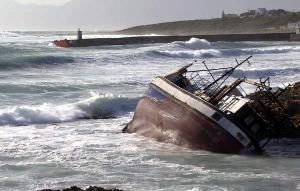
The Tyrinians are forced to move inland: “Traverse your land like the Nile, fair Tarshish; This is a harbor no more!” (v. 10)

III. Important Verses
1b: Howl, you ships of Tarshish! For havoc has been wrought, not a house is left; As they came from the land of Kittim, This was revealed to them.
7-9: Was such your merry city In former times, of yore? Did her feet carry her off To sojourn far away? Who was it that planned this For crown-wearing Tyre, Whose merchants were nobles, Whose traders the world honored? The LORD of Hosts planned it — To defile all glorious beauty, To shame all the honored of the world.
15-17:  In that day, Tyre shall remain forgotten for seventy years, equaling the lifetime of one king. After a lapse of seventy years, it shall go with Tyre as with the harlot in the ditty: Take a lyre, go about the town, Harlot long forgotten; Sweetly play, make much music, To bring you back to mind.  For after a lapse of seventy years, the LORD will take note of Tyre, and she shall resume her “fee-taking” and “play the harlot” with all the kingdoms of the world, on the face of the earth.

IV. Outline
1a. Introduction: the Tyre pronouncement
1b-6. Calls to lament
7-9. God’s plan
10-14. Lament for Tyre
15-18. Tyre will be prosper after 70 years

V. Comment
No comment today. Stay tuned.

VI. Works Used
(see “Commentaries” page)
Blenkinsopp, Joseph. “Isaiah 1-39” The Anchor Bible vol. 19 (New York: Doubleday, 2000).
Collins, John J. “Introduction to the Hebrew Bible,” (Minneapolis: Fortress Press, 2004).
Sweeney, Marvin A. “Isaiah 1-39 with an Introduction to Prophetic Literature” The Forms of Old Testament Literature vol. 16 (Grand Rapids, Michigan: William B. Eerdmans, 1996).
Photo taken from http://www-tc.pbs.org/kqed/oceanadventures/episodes/sharks/images/shipwreck.jpg

Isaiah 22 – “Rebuke for Not Trusting God; A Diatribe for Shebna”

Hebrew-English Text
I. Summary
God is enraged at the people for not putting their trust in him. Isaiah tells Shebna that God will kill him for attempting to build an extravagant tomb for himself.

II. Photo
Isaiah has harsh words for Shebna: “Indeed, [God] will wind you about Him as a headdress, a turban. Off to a broad land! There shall you die, and there shall be the chariots bearing your body, O shame of your master’s house!” (v. 18)

III. Important Verses
6-7, 11b-14: While Elam bore the quiver In troops of mounted men, And Kir bared the shield — And your choicest lowlands Were filled with chariots and horsemen: They stormed at Judah’s gateway…But you gave no thought to Him who planned it, You took no note of Him who designed it long before. My Lord GOD of Hosts summoned on that day To weeping and lamenting, To tonsuring and girding with sackcloth. Instead, there was rejoicing and merriment, Killing of cattle and slaughtering of sheep, Eating of meat and drinking of wine: “Eat and drink, for tomorrow we die!” Then the LORD of Hosts revealed Himself to my ears: “This iniquity shall never be forgiven you Until you die,” said my Lord GOD of Hosts.
15-16: Thus said my Lord GOD of Hosts: Go in to see that steward, that Shebna, in charge of the palace:  What have you here, and whom have you here, That you have hewn out a tomb for yourself here? — O you who have hewn your tomb on high; O you who have hollowed out for yourself an abode in the cliff!
20-22: And in that day, I will summon My servant Eliakim son of Hilkiah, and I will invest him with your tunic, gird him with your sash, and deliver your authority into his hand; and he shall be a father to the inhabitants of Jerusalem and the men of Judah. I will place the keys of David’s palace on his shoulders; and what he unlocks none may shut, and what he locks none may open.

IV. Outline

1a. Introduction: the ‘Valley of Vision’ pronouncement
1b-14. Rebuke for not trusting in God
    1b-4. A city in distress
    5-7a. The Assyrian threat
    7b-11a. Fear and desires to capitulate
    11b-13. God had planned the salvation
    14. Israel will not be forgiven for renouncing God
15-25. Shebna’s downfall
    15. Introduction: God sends Isaiah to Shebna
    16. Confrontation regarding the building of a tomb
    17-19. Shebna will be punished and buried disgracefully
    20-24. Isaiah will place his servant in charge of the palace
    25. Prophetic warning

V. Comment
No comment today. Stay tuned.

VI. Works Used
(see “Commentaries” page)
Blenkinsopp, Joseph. “Isaiah 1-39” The Anchor Bible vol. 19 (New York: Doubleday, 2000).
Collins, John J. “Introduction to the Hebrew Bible,” (Minneapolis: Fortress Press, 2004).
Sweeney, Marvin A. “Isaiah 1-39 with an Introduction to Prophetic Literature” The Forms of Old Testament Literature vol. 16 (Grand Rapids, Michigan: William B. Eerdmans, 1996).
Photo taken from http://www.mercedsunstar.com/2009/05/30/873194/how-to-wrap-a-turban.html#http://media.mercedsunstar.com/smedia/2009/05/29/18/127-N30turbanwrap9.standalone.prod_affiliate.111.jpg

Isaiah 21 – “The Fall of Babylon; Two Pronouncements for the Inhabitants of Arabia”

Hebrew-English Text
I. Summary
Isaiah predicts the fall of Babylon and provides an eyewitness account of the event. He also delivers a message to the peoples of northwest Arabia.

II. Photo
A message for the desert-dwellers: “Meet the thirsty with water, You who dwell in the land of Tema; Greet the fugitive with bread!” (v. 15)

III. Important Verses
2: A harsh prophecy Has been announced to me: “The betrayer is betraying, The ravager ravaging. Advance, Elam! Lay siege, Media! I have put an end To all her sighing.”
3-4: Therefore my loins Are seized with trembling; I am gripped by pangs Like a woman in travail, Too anguished to hear, Too frightened to see. My mind is confused, I shudder in panic. My night of pleasure He has turned to terror.
9: And there they come, mounted men — Horsemen in pairs!” Then he spoke up and said, “Fallen, fallen is Babylon, And all the images of her gods Have crashed to the ground!”
16-17: For thus my Lord has said to me: “In another year, fixed like the years of a hired laborer, all the multitude of Kedar shall vanish; the remaining bows of Kedar’s warriors shall be few in number; for the LORD, the God of Israel, has spoken.

IV. Outline

1-10. The fall of Babylon pronouncement
    1a. Introduction: The “Wilderness of the Sea” pronouncement
    1b-2a. A harsh prophecy coming from the desert
    2b. Oracle: Elam and Media will attack Babylon
    3-5. The terror of the prophecy
    6-9. A witness’ account of Babylon’s fall
    10. The truth of the prophecy
11-12. The Dumah pronouncement
    11a. Introduction: The “Dumah” pronouncement
    11b. A question from Seir to the watchman
    12. The watchman’s reply
13-17. The Arabia pronouncement
    13a. Introduction: The Arabia pronouncement
    13b-15. The Arabians should meet the thirsty with water
    16-17. The warriors of Kedar will fall

V. Comment
Chapter 21 contains three pronouncements, and each begins with an enigmatic introduction: verse 1 mentions “The ‘Desert of the Sea’ Pronouncement,” verse 11 mentions “The ‘Dumah’ Pronouncement,” and verse 13 mentions  “The “Arabia” Pronouncement.” Who are the subjects of these pronouncements? Sweeney writes about the first pronouncement: “In its present form as part of the 5th-century edition of the books of Isaiah, 21:1-10 constitutes one of the oracles against the nations in chs. 13-23. Although there is some confusion as to the meaning of the superscription, ‘Pronouncement concerning the Wilderness of the Sea,’ the passage is generally taken as an oracle concerning the fall of Babylon, based on the reference to its fall in v. [9].” (279)

Although they do not concern Mesopotamia proper, the next two pronouncements – which describe desert nomads and a group called the Kedarites – are also tied up with Babylonian affairs. Sweeney writes: “Sennacherib’s campaigns against the nomads of the deserts west of Babylonia in 691-689 B.C.E. included the capture of Dumat al-Jandal and the defeat of various Arab tribes including the Kedarites. The Dedanites and the Temanites who aid the gufitive Kedarites in this passage inhabited the cities of Dedan and Tema and the surrounding region. Their location in the northwestern Saudi Arabian peninsula is just south of Edom or Seir, mentioned in 21:11-12. This locale indicates flight away from Babylon, which Sennacherib also destroyed at this time. Isa 21:13-17 apparently presupposes this defeat.” (287)

VI. Works Used
(see “Commentaries” page)
Blenkinsopp, Joseph. “Isaiah 1-39” The Anchor Bible vol. 19 (New York: Doubleday, 2000).
Collins, John J. “Introduction to the Hebrew Bible,” (Minneapolis: Fortress Press, 2004).
Sweeney, Marvin A. “Isaiah 1-39 with an Introduction to Prophetic Literature” The Forms of Old Testament Literature vol. 16 (Grand Rapids, Michigan: William B. Eerdmans, 1996).
Photo taken from http://th02.deviantart.com/fs31/300W/i/2008/226/9/a/Bread_and_water_by_spacedlaw.jpg

Isaiah 20 – “The Shame of Egypt and Ethiopia”

Hebrew-English Text
I. Summary
Isaiah heeds God’s command and goes naked and barefoot for three years. This act portends the way in which the Egyptians and Ethiopians will be sent away naked and barefoot by the Assyrians.

II. Photo
Isaiah listens to God: “Previously, the Lord had spoken to Isaiah son of Amoz, saying, ‘Go, untie the sackcloth from your loins and take your sandals off your feet,’ which he had done, going naked and barefoot.” (v. 2)

III. Important Verses
2-4: Previously, the LORD had spoken to Isaiah son of Amoz, saying, “Go, untie the sackcloth from your loins and take your sandals off your feet,” which he had done, going naked and barefoot. And now the LORD said, “It is a sign and a portent for Egypt and Nubia. Just as My servant Isaiah has gone naked and barefoot for three years, so shall the king of Assyria drive off the captives of Egypt and the exiles of Nubia, young and old, naked and barefoot and with bared buttocks — to the shame of Egypt!
6: In that day, the dwellers of this coastland shall say, ‘If this could happen to those we looked to, to whom we fled for help and rescue from the king of Assyria, how can we ourselves escape?’”

IV. Outline
1. Historical note
2. God tells Isaiah to strip himself of his clothes
3-5. The Egyptians and Ethiopians will be sent off naked by the Assyrians
6. The coastal people will realize the futility of relying on Egypt

V. Comment
No comment today. Stay tuned.

VI. Works Used
(see “Commentaries” page)
Blenkinsopp, Joseph. “Isaiah 1-39” The Anchor Bible vol. 19 (New York: Doubleday, 2000).
Collins, John J. “Introduction to the Hebrew Bible,” (Minneapolis: Fortress Press, 2004).
Sweeney, Marvin A. “Isaiah 1-39 with an Introduction to Prophetic Literature” The Forms of Old Testament Literature vol. 16 (Grand Rapids, Michigan: William B. Eerdmans, 1996).
Photo taken from http://www.lifecoach-for-your-success.com/images/Feet_walking_.jpg

Isaiah 19 – “The Fate of Egypt”

Hebrew-English Text
I. Summary
Egypt will be purged of its idols, afflicted with drought, and ruled by a tyrant. Its people will turn to God and serve him along with the Assyrians and Israelites.

II. Photo
The Nile will run dry: “The fishermen shall lament; All who cast lines in the Nile shall mourn, And those who spread nets on the water shall languish.” (v. 8 )

III. Important Verses
2-4:  “I will incite Egyptian against Egyptian: They shall war with each other, Every man with his fellow, City with city And kingdom with kingdom. Egypt shall be drained of spirit, And I will confound its plans; So they will consult the idols and the shades And the ghosts and the familiar spirits. And I will place the Egyptians At the mercy of a harsh master, And a ruthless king shall rule them” — declares the Sovereign, the LORD of Hosts.
6-7: Channels turn foul as they ebb, And Egypt’s canals run dry. Reed and rush shall decay, And the Nile papyrus by the Nile-side And everything sown by the Nile Shall wither, blow away, and vanish.
16: In that day, the Egyptians shall be like women, trembling and terrified because the LORD of Hosts will raise His hand against them.
18: In that day, there shall be several towns in the land of Egypt speaking the language of Canaan and swearing loyalty to the LORD of Hosts; one shall be called Town of Heres.
19-20: In that day, there shall be an altar to the LORD inside the land of Egypt and a pillar to the LORD at its border. They shall serve as a symbol and reminder of the LORD of Hosts in the land of Egypt, so that when [the Egyptians] cry out to the LORD against oppressors, He will send them a savior and champion to deliver them.
23-25: In that day, there shall be a highway from Egypt to Assyria. The Assyrians shall join with the Egyptians and Egyptians with the Assyrians, and then the Egyptians together with the Assyrians shall serve [the LORD]. In that day, Israel shall be a third partner with Egypt and Assyria as a blessing on earth; for the LORD of Hosts will bless them, saying, “Blessed be My people Egypt, My handiwork Assyria, and My very own Israel.”

IV. Outline

1a. Introduction: The Egypt pronouncement
1b. The idols of Egypt will fall before God
2-4. Oracle
    2. Civil war
    3. Turning to magic
    4. A harsh ruler
5-10. Drought
11-15. Egypt’s sages have misled her
16. Egyptian fear
17. Judah will cause trouble for Egypt
18. A Canaanite presence in Egypt
19-22. The Egyptians will turn to God, set up pillars for him, and serve him
23-24. Egypt, Assyria, and Israel will serve God

V. Comment
No comment today. Stay tuned.

VI. Works Used
(see “Commentaries” page)
Blenkinsopp, Joseph. “Isaiah 1-39” The Anchor Bible vol. 19 (New York: Doubleday, 2000).
Collins, John J. “Introduction to the Hebrew Bible,” (Minneapolis: Fortress Press, 2004).
Sweeney, Marvin A. “Isaiah 1-39 with an Introduction to Prophetic Literature” The Forms of Old Testament Literature vol. 16 (Grand Rapids, Michigan: William B. Eerdmans, 1996).
Photo taken from http://www.theepochtimes.com/n2/images/stories/large/2008/08/11/drought_53251729.jpg

Isaiah 18 – “A Message for Ethiopia”

Hebrew-English Text
I. Summary
A group of Ethiopians are told that God will reduce Israel’s population and accept an Ethiopian tribute in Jerusalem.

II. Photo
The Ethiopians are given an order: “Go, swift messengers, to a nation far and remote… whose land is cut off by streams.” (v. 2a)

III. Important Verses
1-2: Ah, land in the deep shadow of wings, Beyond the rivers of Nubia! Go, swift messengers, To a nation far and remote, To a people thrust forth and away — A nation of gibber and chatter — Whose land is cut off by streams; Which sends out envoys by sea, In papyrus vessels upon the water!
5-6: For before the harvest, yet after the budding, When the blossom has hardened into berries, He will trim away the twigs with pruning hooks, And lop off the trailing branches. They shall all be left To the kites of the hills And to the beasts of the earth; The kites shall summer on them And all the beasts of the earth shall winter on them.
7: In that time, Tribute shall be brought to the LORD of Hosts [From] a people far and remote, From a people thrust forth and away — A nation of gibber and chatter, Whose land is cut off by streams — At the place where the name of the LORD of Hosts abides, At Mount Zion.

IV. Outline

1. Introduction regarding Ethiopia
2. Directive to send messengers
3-6. The message
    3. Take note
    4. God is secure
    5-6. Pruning metaphor
7. The Ethiopians will pay tribute on Mt. Zion

V. Comment
Isaiah 18, which is directed towards a group of Ethiopian messengers, begins as follows: “Go, swift messengers, To a nation far and remote, To a people thrust forth and away — A nation of gibber and chatter — Whose land is cut off by streams; Which sends out envoys by sea, In papyrus vessels upon the water!” (v. 2) This verse is enigmatic: to whom is the message being directed (i.e. what is the land baze’u neharim “divided by rivers”)? Two views regarding the identity of this land will now be presented.

Scholars such as Watts believe that a message is being given to an Ethiopian envoy on its way to Assyria. Watts explains that Ethiopia and Assyria were allies at the time: “Cush is the land of Ethiopia or Nubia, which at this time had its capital at Napata above the fourth cataract… In 716 B.C.E., Shabaka succeeded his brother to the Ethiopian throne and began immediately to consolidate Ethiopian control of Lower Egypt. An initial success was achieved by 715 B.C.E. This period, 716–715 B.C.E., was one of feverish political activity as he sought allies for his attempt to gain control of the Nile delta. This activity apparently reached as far as Jerusalem… At this time (716 B.C.E.) Cush (Ethiopia) and Egypt are not one and the same. There is evidence that after the Ethiopian dynasty gained control they were on friendly terms with the Assyrians. When in 712 B.C.E. Sargon attacked Ashdod, its ruler Iamani fled to Egypt, now under Ethiopian rule. There Shabaka, ‘the Pharaoh of Egypt,’ ‘which land now belongs to Cush,’ obligingly extradited the fugitive Iamani to the Assyrian’s satisfaction. If this is true, the vision of friendly relations between Egypt under an Ethiopian ruler and Assyria (Isa 19:23–25) finds its basis in historical fact. So the best interpretation appears to be that the envoys from Shabaka are sent on to Assyria to try to arrange for support or at least a promise not to interfere, as he presses his claims to authority over all Egypt.” (303) Thus, Isaiah is sending a message to the Assyrians by way of their allies, the Ethiopians. The phrase “a land divided by rivers” is referencing the Tigris and Euphrates rivers.

There is, however, another way to understand this chapter. Scholars such as Sweeney view the message to be directed toward Ethiopia itself. Sweeney writes: “Although these messengers are frequently identified as Ethiopian messengers received in the Judean court, the use of the imperative leku ‘go,’ indicates that these messengers are sent, not received. As Judah undoubtedly carried on diplomatic relations with Egypt, ruled by an Ethiopian dynasty in this period, the overall concern of 17:1-18:7 with Israel suggests that this statement refers to the embassy sent by King Hoshea of Israel to King So of Egypt in preparation for the revolt against Assyria in 724 B.C.E. (2 Kgs 17:4).” (257) Indeed, Hakham explains how Ethiopia could be described as a “land divided by rivers.” First off, the “rivers of Ethiopia” are mentioned in v. 1: “Ah, land in the deep shadow of wings, Beyond the rivers of Nubia!” Second, he describes the lands geography (translation my own): “The rivers of Ethiopia – these are the the great rivers in the land of Ethiopia such as the Atbarah, the Blue Nile, and the White Nile.” (190)

VI. Works Used
(see “Commentaries” page)
Blenkinsopp, Joseph. “Isaiah 1-39” The Anchor Bible vol. 19 (New York: Doubleday, 2000).

Collins, John J. “Introduction to the Hebrew Bible,” (Minneapolis: Fortress Press, 2004).

Hakham, Amos. “Sefer Yeshayahu” vol. I, Daat Miqra (Jerusalem: Mosad Harav Kook, 1984).

Sweeney, Marvin A. “Isaiah 1-39 with an Introduction to Prophetic Literature” The Forms of Old Testament Literature vol. 16 (Grand Rapids, Michigan: William B. Eerdmans, 1996).
Watts, John D. W. “Isaiah 1-33 (Revised Edition)” Word Biblical Commentary (Wordbooks, 2005).

Photo taken from http://timetravelafrica.com/images/okavango-delta1-720.jpg

Isaiah 17 – “Doom for Damascus”

Hebrew-English Text
I. Summary
Damascus will be destroyed, its population will dwindle, and its people will turn to God.

II. Photo
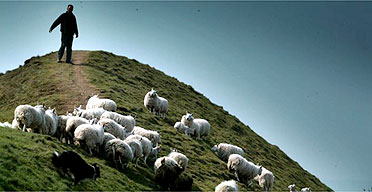
Destruction awaits the Arameans: “The towns of Aroer shall be deserted; They shall be a place for flocks to lie down, with none disturbing.” (v. 2)

III. Important Verses
1: The “Damascus” Pronouncement. Behold, Damascus shall cease to be a city; It shall become a heap of ruins.
4-6: In that day, The mass of Jacob shall dwindle, And the fatness of his body become lean: After being like the standing grain Harvested by the reaper — Who reaps ears by the armful — He shall be like the ears that are gleaned In the Valley of Rephaim. Only gleanings shall be left of him, As when one beats an olive tree: Two berries or three on the topmost branch, Four or five on the boughs of the crown — declares the LORD, the God of Israel.
7-8: In that day, men shall turn to their Maker, their eyes look to the Holy One of Israel; they shall not turn to the altars that their own hands made, or look to the sacred posts and incense stands that their own fingers wrought.
10-11: Truly, you have forgotten the God who saves you And have not remembered the Rock who shelters you; That is why, though you plant a delightful sapling, What you sow proves a disappointing slip. On the day that you plant, you see it grow; On the morning you sow, you see it bud — But the branches wither away On a day of sickness and mortal agony.

IV. Outline
1a. Introduction: the Damascus pronouncement
1b-2. Damascus will be destroyed
3-6. The people will become as sparse as the Israelites
7-8. The people will turn to God
9. The coming destruction
10-11. Accusation: the people have abandoned God
12-14. The chaos of the attack

V. Comment
No comment today. Stay tuned.

VI. Works Used
(see “Commentaries” page)
Blenkinsopp, Joseph. “Isaiah 1-39” The Anchor Bible vol. 19 (New York: Doubleday, 2000).
Collins, John J. “Introduction to the Hebrew Bible,” (Minneapolis: Fortress Press, 2004).
Sweeney, Marvin A. “Isaiah 1-39 with an Introduction to Prophetic Literature” The Forms of Old Testament Literature vol. 16 (Grand Rapids, Michigan: William B. Eerdmans, 1996).
Photo taken from http://static.guim.co.uk/sys-images/Guardian/Pix/arts/2003/04/25/thomond_sheep3.jpg